


The world is running out of effective antibiotics!
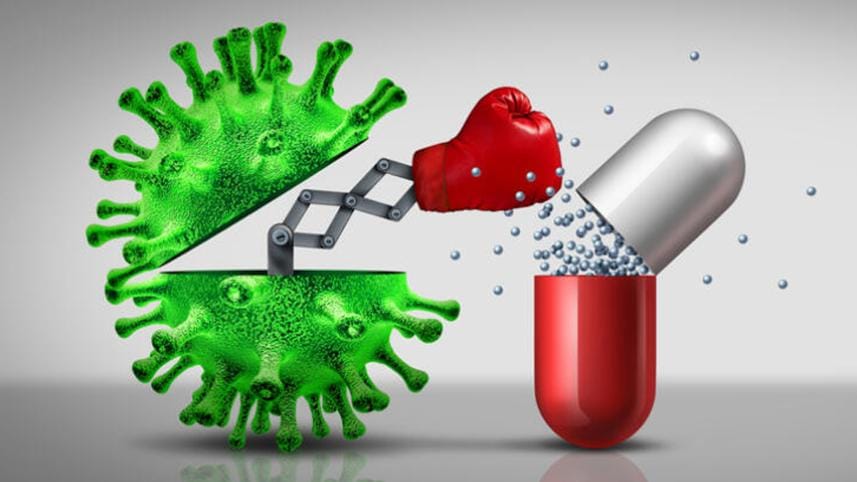
On October 13, The Guardian published an alarming report titled 'Sharp global rise in antibiotic-resistant infections in hospitals, WHO finds.' The World Health Organisation (WHO) warned that infections once easily curable with conventional antibiotics are now becoming untreatable. Physicians fear that in the coming years, antibiotic resistance will make even common infections dangerously difficult to treat.
According to a 2023 global survey, one in six laboratory-confirmed infections is now resistant to antibiotics. About 40% of infections of the blood, intestines, urinary tract and reproductive system show resistance to common antibiotics. Most concerningly, antibiotics are proving ineffective against Gram-negative bacteria. Experts predict that by 2050, antibiotic resistance may reach 70% worldwide, threatening to reverse decades of medical progress.
 For all latest news, follow The Daily Star's Google News channel.
 This crisis is not new. Back in 2017, WHO warned that 'the world is running out of antibiotics.' Its report, Antibacterial Agents in Clinical Development Including Tuberculosis, revealed a stagnation in the discovery of new antibiotics. Most existing antibiotics are merely modified chemical versions of older drugs—offering temporary relief but no lasting solution. As bacteria evolve rapidly, effective antibiotics are disappearing even faster. Without new drugs, doctors may soon face situations where minor surgeries become life-threatening due to resistant infections.
Among the most dangerous pathogens today are Escherichia coli (E. coli) and Mycobacterium tuberculosis, responsible for urinary tract infections and tuberculosis (TB). WHO has identified 12 priority bacterial species that are multidrug-resistant, including strains that cause pneumonia and hospital-acquired infections! Against many of these, no effective antibiotics remain.
WHO currently lists 51 antibiotics under development, but only eight are expected to make a meaningful clinical impact. For life-threatening infections such as multidrug-resistant TB, Klebsiella pneumoniae and E. coli, doctors are left with few or no treatment options. These superbugs often spread in hospitals and nursing homes, causing fatal infections. WHO's Director of Essential Medicines, Dr Suzanne Hill, has called for urgent investment in antibiotic research, warning that 'humanity is left with almost no shield against these deadly pathogens.'
A recent Lancet article titled 'Antibiotic Resistance: Need for a Global Solution' underscored the magnitude of the crisis. Twenty-six leading scientists and clinicians warned that within two to three decades, humanity may return to a pre-antibiotic era, where simple bacterial infections cause mass fatalities and routine surgeries become impossible. Despite global concern, little tangible progress has been made, especially in developing countries.
Developing a single antibiotic costs hundreds of millions of dollars, yet the return on investment is minimal. Patients use antibiotics for only a few days—unlike lifelong drugs for diabetes or hypertension. Moreover, when a new antibiotic quickly encounters resistance, the commercial incentive collapses. Regulatory hurdles add further delays. As a result, most companies have withdrawn from antibiotic research, leaving patients vulnerable and resistant bacteria triumphant.
In this context, World Antimicrobial Resistance (AMR) Awareness Week 2025, held from 18 to 24 November 2025, carries particular urgency. The 2025 theme—"Act Now: Protect Our Present, Secure Our Future"—emphasises that AMR is not merely a future threat but a current crisis affecting health, food systems, the environment and economies worldwide.
The writer is a professor in the Department of Pharmacy at Daffodil International University and the former dean of the Faculty of Pharmacy at the University of Dhaka.
Comments