


For those who left but never departed: Nazrul’s ‘Ami chirotore dure chole jabo’

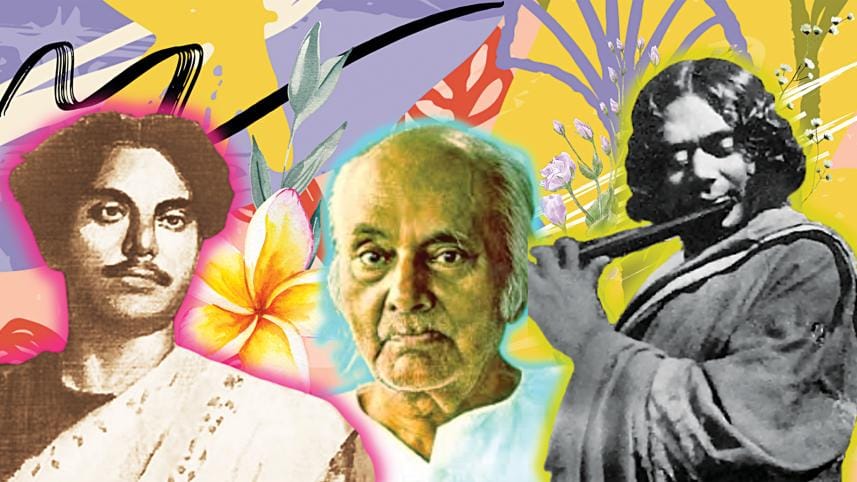
With age, certain songs begin to echo to us, lodging between memory and marrow.
“Ami chirotore dure chole jabo…” Not a plea, not a sigh, nor the conventional genuflection of the bereft lover at the altar of farewell, but a declaration, almost prosecutorial in its composure.
 For all latest news, follow The Daily Star's Google News channel.
 Such is the epitome of Kazi Nazrul Islam’s inventive penchant -- even before his words are understood intellectually, they are absorbed emotionally, almost biologically.
But age is a cruel translator.
What once sounded poetic begins, over the years, to sound terrifyingly literal.
“আমি চিরতরে দূরে চলে যাব
তবু আমারে দেব না ভুলিতে…”
“I shall go far away forever,
Yet I shall not let you forget me.”
It is among the most arresting declarations ever written in Bengali music. Not merely because it speaks of departure, but because it rejects disappearance. Nazrul is not composing a farewell here. He is composing an afterlife.
And in the incomparable rendition of Firoza Begum, that afterlife acquires flesh, breath and spectral permanence.
There was always something uncannily unearthly about Firoza Begum’s rendition. She sang Nazrul not with theatrical depth but with astonishing restraint, and that restraint is precisely what renders the song devastating.

Her voice in this song resembles someone standing at the threshold between worlds, neither entirely alive nor fully absent.
The result is haunting in the purest literary sense of the word. Not spooky. Not gothic. Haunted.
The departed promises to return not as body but as atmosphere.
“আমি বাতাস হইয়া জড়াইব কেশ…”
“I shall become the wind and entwine your hair…”
Nazrul transforms memory into meteorology. There is something almost Sufi-like in this dissolution of the self into elements. The lover no longer remains a person. They become a recurring presence.
And perhaps this is why the song grows more unsettling with time. As children, we encounter absence abstractly. Death is ceremonial then, distant and draped in adult vocabulary. But advancing years acquaint us with vanishing. Friends disappear. Parents age. Familiar roads lose familiar faces. Entire eras of one’s life quietly collapse without obituary.
Then suddenly Nazrul’s lines cease being metaphor. They become reportage.
One begins recalling people not through photographs but through inexplicable sensations. A certain scent. A tune heard from another room. A winter afternoon. Human beings, after all, rarely survive in memory through chronology. They survive atmospherically.
Nazrul understood this decades before psychologists would speak of emotional residue and grief memory. That is what makes the song so exceptional.
And this persistence carries within it something faintly horrifying. Because forgetting, in many ways, is mercy.
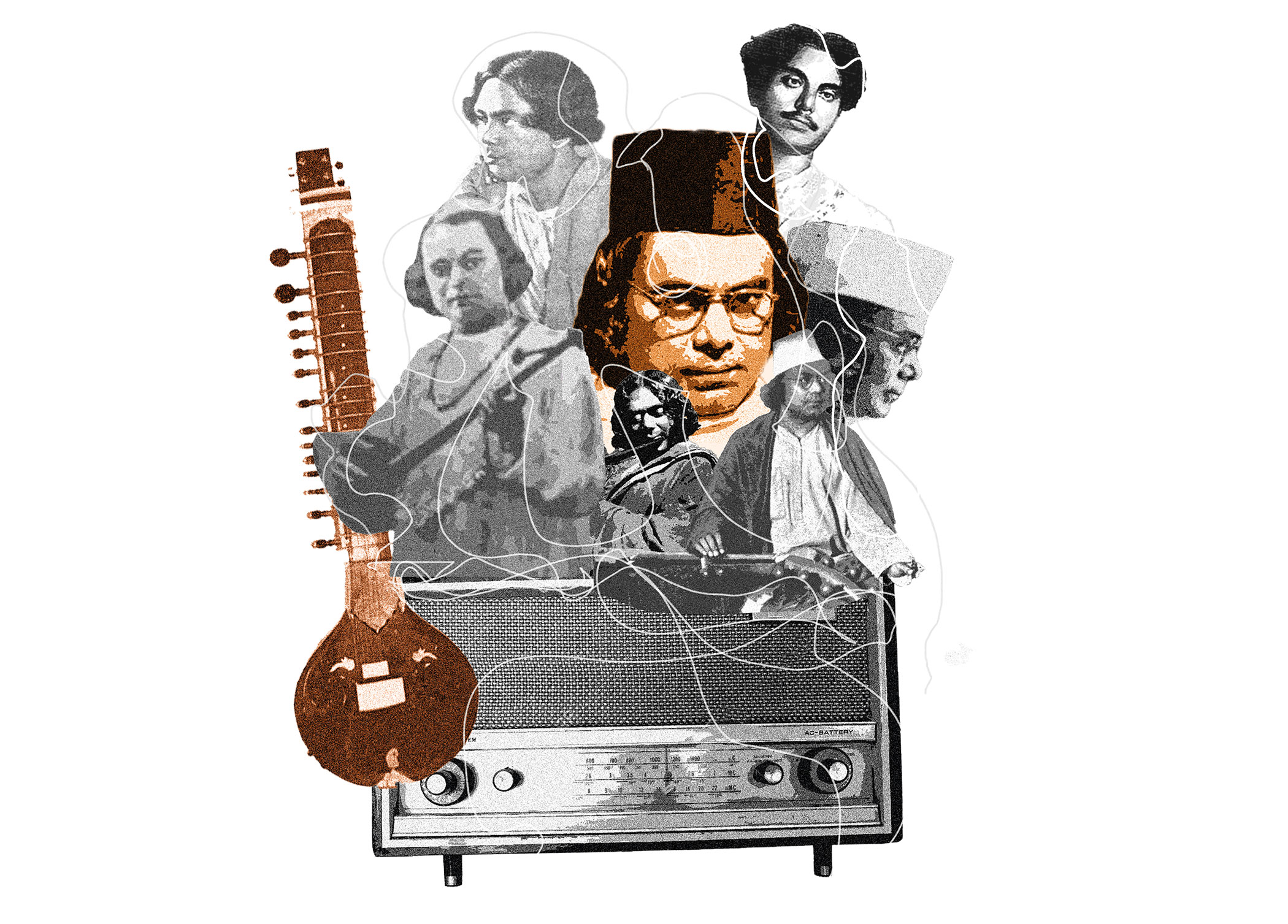
To never fully leave another person is both romantic and cruel. The song’s emotional brilliance lies in this ambiguity. Is the poet/singer comforting the beloved or condemning them to perpetual remembrance? Is this devotion or intrusion? Love or possession?
Nazrul leaves the question suspended like smoke of incense.
Then comes perhaps the song’s most devastating stanza:
“তোমার কুঞ্জ-পথে যেতে হায়
চমকি’ থামিয়া যাবে বেদনায়
দেখিবে কে যেন ম’রে মিশে আছে
তোমার পথের ধূলিতে।। ”
Not resurrection but dissolution; merging into dust upon the beloved’s path. One does not merely remember the departed; one walks over their remains unknowingly every day.
There is something profoundly Bengali about this emotional grammar -- an intimate relationship with sorrow. Nazrul, however, brought a uniquely combustible quality to this tradition.
On his birth anniversary, “Ami chirotore dure chole jabo” feels particularly resonant because Nazrul himself has, in a sense, fulfilled the song’s prophecy.
That may ultimately be the true genius of great art. It evolves as we do.
As children, we hear melody.
As adults, we hear meaning.
As we grow older still, we begin to distill the silences in between.
Comments