


Two-minute dramas reshape India’s streaming economy
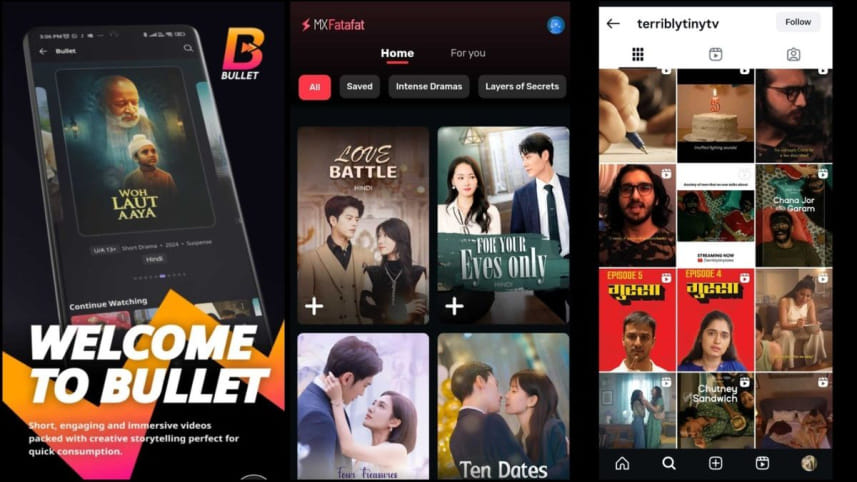
Ultra-short dramas—often under two minutes per episode—are rapidly transforming viewing habits in India, signalling a broader shift toward mobile-first entertainment.
Built for smartphone screens, these micro-dramas compress high-stakes storytelling into bite-sized episodes, spanning genres from revenge thrillers to romance and fantasy. The format mirrors changing consumption patterns, where audiences favour quick, continuous engagement over long-form narratives.
 For all latest news, follow The Daily Star's Google News channel.
Industry estimates place India’s micro-drama market at roughly $300 million, with projections suggesting it could expand to $4–5 billion by the end of the decade, according to venture capital analyses including reports by Lumikai.
The format draws heavily from China’s “duanju” model, where short-form episodic content has already become a dominant digital entertainment category. Several global apps have demonstrated its scalability, prompting Indian startups and media companies to experiment with similar formats.
Major entertainment players—including Yash Raj Films and Red Chillies Entertainment—are increasingly exploring short-form and digital-first strategies, while broadcasters such as Zee Entertainment Enterprises and Balaji Telefilms continue expanding their presence in the OTT space.
Analysts attribute the rise of micro-dramas to four factors: time efficiency, high narrative intensity driven by cliffhangers, simplified storytelling, and a mobile-first design tailored to younger audiences.
Production economics also favour the format. A typical series may run 50–80 episodes, with comparatively low budgets, allowing platforms to scale content quickly.
However, the model comes with risks. Audience retention is fragile, and oversupply has raised concerns about repetitive plots and declining quality. Industry observers note that sustaining growth will depend on stronger writing, better production values and clearer platform strategies.
Comments