


The realities for female university athletes

A tale as old as time, where misogyny, both internalised and obvious, is what keeps places that are deserving for women out of their grasp. For women athletes, university-level sport is not just about practice and competition. It is about succeeding without support, trying their best, and not being able to have conversations about their challenges.
Women have shown, time and again, that they can dominate courts and fields. The problem is that institutions and society at large still treat their victories as secondary. At universities across the country, women's sports exist but often in the shadows: underfunded, under-recognised, and undervalued.
 For all latest news, follow The Daily Star's Google News channel.
 "We do not have enough facilities, like a fixed coach; we have no rewards for bringing pride to the institution's teams. Even though the women's team has brought multiple championships nationally, there is not much recognition or appreciation," explains Tazreen Khan, captain of the North South University (NSU) women's basketball team. "Basketball is barely spoken about or given media attention. So, the growth of the sport after a certain point is stunted," she adds.
This structural neglect remains one of the most glaring issues in women's sports at the university level. In contrast, male athletes are often given access to proper coaches, stable facilities, and financial rewards. Their victories even lead to scholarships and media coverage. By contrast, female athletes are applauded on stage but left unsupported in practice. The lack of recognition is unsustainable and discriminatory. Without proper investment, women athletes hit a glass ceiling, unable to develop beyond a certain point.
The problem extends beyond the campus. Media coverage of women's sport remains minimal, leaving athletes invisible to the wider public. Without coverage, there is little public awareness; without awareness, there is little incentive for sponsors or institutions to invest. The cycle repeats itself: invisibility breeds underfunding, pushing them further to the fringes.
"As a female athlete, I have faced challenges to raise funding, resources, and proper facilities initially," Farzeen Ghani, a 23-year-old US State Department alumna, ESPNW Internationally Certified Basketball Coach, and student athlete of Independent University Bangladesh (IUB), explains. "However, as time went by, and people saw changes in women's sports, I had the wonderful opportunity to go to the US on a full sports scholarship to train under ESPN, and people around me started to realise that it was worth investing in women's sports. After I came back, I decided I wanted to grow this sport and become a basketball coach, and a lot of people started reaching out to me seriously to train their children."
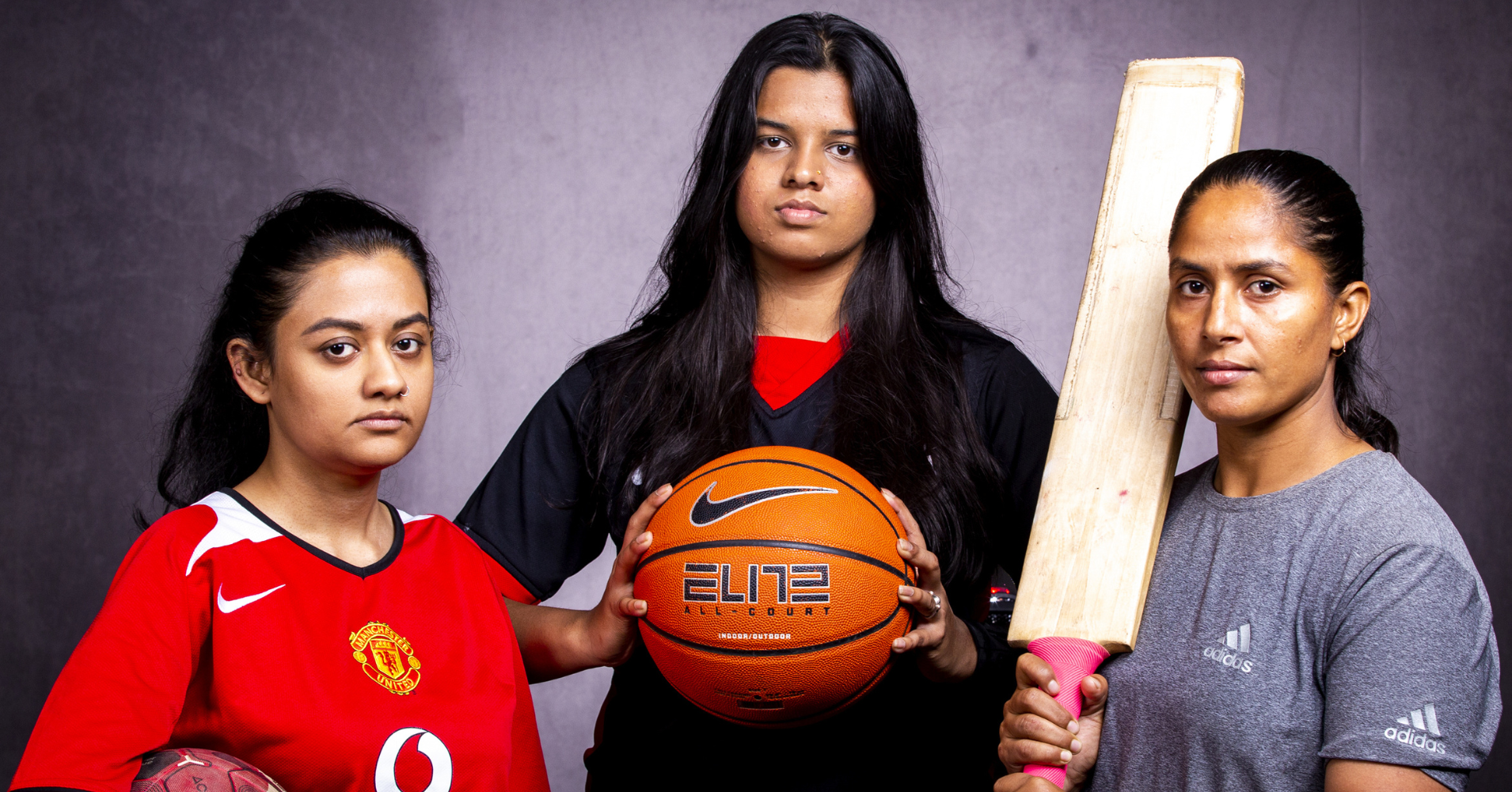
Her journey highlights two essential points. First, women athletes often need "external" validation before their worth is even acknowledged at home. Second, when a university provides consistent encouragement, it changes not only the athlete's experience but also the broader perception of women's sports. "Media and overall promotion play a huge role in women's sports. My university in particular, IUB, has been very supportive and encouraging to female athletes," she adds. This culture of recognition demonstrates what is possible when institutions move beyond token applause and commit to long-term support.
The contrast highlights the central issue: women's success is not determined by talent alone; rather, it hinges on whether their respective institutions invent in them. If support is present, athletes can grow, inspire others, and change perceptions.
When discussing other challenges female athletes face, Nabila Sultana, a business student at Jahangirnagar University (JU), says, "The main challenges for female sports participation and success at our university are the lack of motivation, limited promotion, insufficient gymnasium facilities, and the absence of a proper coach or manager."
She believes that there's also a need for a dedicated sports club for female athletes, which she is currently trying to establish.

Nabila's experience reflects a structural disconnect. She describes how organising an event requires multiple levels of permissions from teachers, the proctor, administrators, and gym staff.
"For organising sports events such as tournaments, the club is mainly responsible for managing sponsorships and overall arrangements, while the university provides the space and basic support. The authority is generally encouraging," she adds. "But the university should be more engaged, especially in networking, event organisation, and guiding students." A clear takeaway is that enthusiasm often gets entangled with bureaucracy.
She has a simple, effective suggestion: a centralised sports committee that includes both men's and women's sports, with clear guidelines for event approvals, funding, and facility usage. She believes that such a structure would reduce the need for students to navigate the bureaucratic hurdles posed by multiple levels of authorisations.
She believes that regular coordination meetings between club leaders and the administration could also help identify and address issues faster. In terms of sponsorships, having a formal partnership policy or a liaison office to connect clubs with potential sponsors could make a big difference as well.
"Sponsors are more likely to stay involved when they see continuity, visibility, and proper recognition, such as logo placement, media coverage, and appreciation events. Transparency in fund use and maintaining a professional relationship with sponsors also help in building long-term trust and retention," she explains. To her, institutional efficiency determines progress.
The need for such a structure speaks to a deeper gap in university culture: while most sports communities are often longstanding and well-connected, female-led clubs are newer, sometimes existing in isolation without administrative anchors.
Nabiha Tahsin Islam, a student from Batch 31 of the Institute of Business Administration (IBA), Dhaka University (DU), explains, "In this scope, different universities function on different layers." Primarily, IBA Sports Club doesn't work with the IBA authorities for any event. We have many opportunities in the club, but very few enthusiastic people to actually form a team and participate. This lack of enthusiasm comes from a fear of embarrassment and inconsistent participation throughout the course of the students' lives."
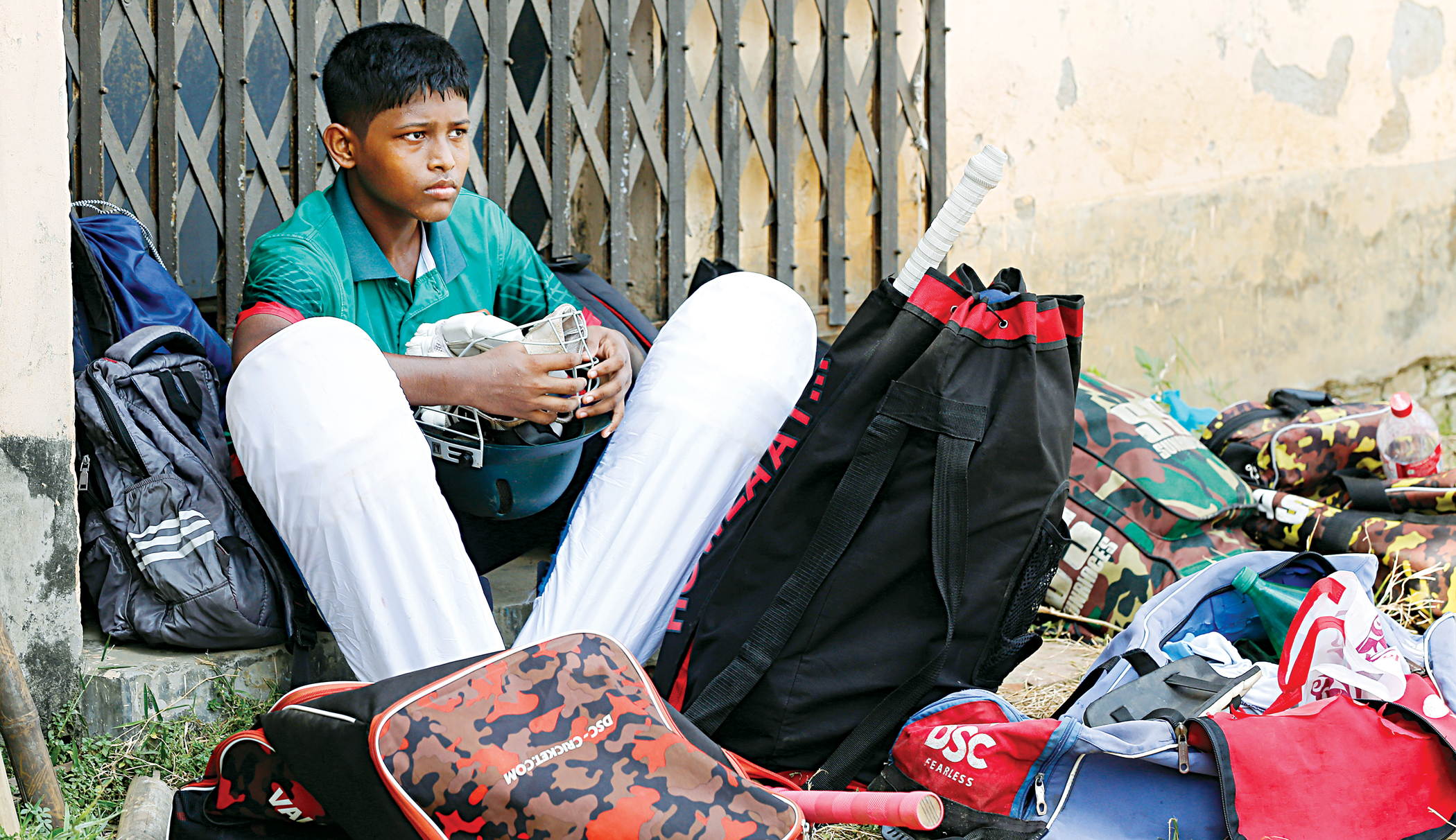
Systemic barriers are only half the story; the rest lies in internalised fear and lack of confidence shaped by years of discouragement.
Still, progress is visible. "It's actually gradually increasing," Nabiha notes. "It's all thanks to the supportive community and the awareness of the masses. Also, previously in executive roles of clubs, women were confined to Assistant Vice-President or Vice-President of female sports only. But it's changing now, and that will surely attract more female participants in the upcoming days."
Representation off the field matters as much as it does on it. When women begin to hold broader leadership roles in sports administration, event planning, and finance, the culture around participation begins to shift. Visibility at the decision-making level shows that sport is a legitimate space for women to lead, manage, and excel.
An anonymous officer from the external affairs of a private university explained the process. "It is important to ensure proper participation and facilitation for female athletes," the officer explains. "We encourage clubs to host recruitment annually or even twice a year. Try-outs are open to everyone, especially beginners, and we help club executives organise inter-university tournaments to boost presence. We are also actively involved in ensuring proper sponsorship and media attention, and if club executives need any help or permission, they have all the chances to do so."

Such measures are a reminder that institutional engagement, when consistent, builds confidence. Open try-outs, equal opportunities, and visible recruitment signal inclusion long before a competition begins. Recruitment also functions as a social equaliser: when young athletes see diversity of skill and background on the same team, there's little to no lingering fear of not being qualified enough.
Cultural and societal attitudes weigh heavily on female athletes too. Sport is still seen as a male domain in many families, where daughters are discouraged from pursuing competitive athletics out of fear of distraction, injury, or reputational risk. Without visible role models and media stories, these beliefs remain unchallenged. Women athletes are forced to prove themselves on the court and fight against stereotypes that question why they are competing in the first place.
A student at BRAC University who wishes to remain anonymous discussed her experience. "We have little to no teamwork alignment. Practice does happen a lot, but we aren't used to strategising. This might be because we are still adjusting to a new campus. The facilities are fantastic; it's the organisation that's the issue. It's really unfair because we have a lot of potential in our university, and it goes to waste. I'm hopeful that with time, we might have more active participation."
Even when resources exist, structural disorganisation prevents them from being used meaningfully. Policies are only as strong as the systems that enact them, and without coordination, even the best facilities fall flat.
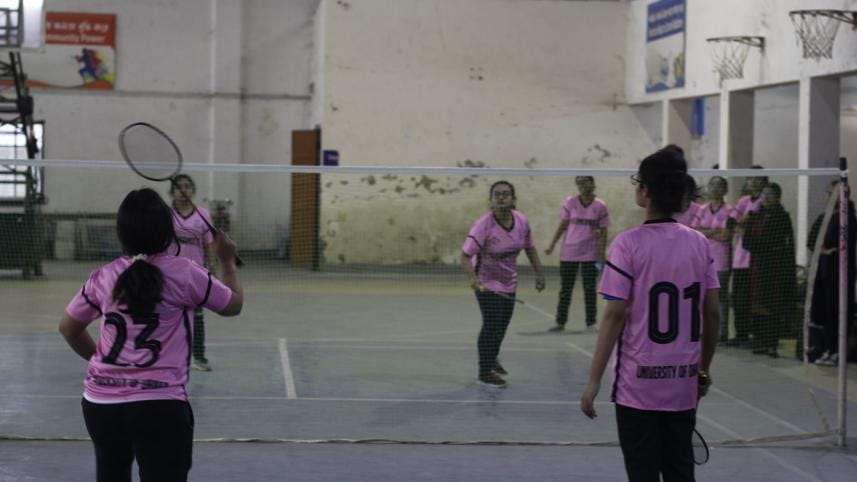
What is often forgotten is that sports, at its core, is an education in confidence. The leadership, teamwork, and self-worth built through athletics have ripple effects that extend into classrooms, careers, and communities. Ignoring women's sports means stunting not only athletic growth but also the very qualities universities claim to cultivate — discipline, perseverance, and equality of opportunity.
None of these issues are unsolvable. Universities can choose differently. They can allocate funding equally, offer scholarships based on achievement rather than gendered bias, and ensure access to full-time coaches. They can demand fair media coverage of women's sports, not as a special favour but as a standard practice. They can also integrate holistic support systems that address the unique academic, physical, and psychological needs of athletes. And they can create spaces where athletes feel empowered to speak up about inequalities without fear of being dismissed.
The importance of such changes goes beyond winning matches. Supporting women in sport means nurturing leadership, confidence, and equality on campus. It means challenging a culture that sidelines women's achievements and reinforcing the idea that universities are places where all students can thrive. The choice now rests with authorities: continue treating women's victories as an afterthought, or begin building a system where every athlete, regardless of gender, is valued.
Tinath Zaeba is an optimistic daydreamer, a cat mom of 5 and a student of Economics at North South University. Get in touch via mailing to tinathzaeba25@gmail.com
Comments