


How Bangladeshi universities can adapt to a changing world
North South University (NSU) Vice-Chancellor Dr Abdul Hannan Chowdhury leads the institution’s strategic vision in teaching, research, and innovation. Campus, recently, had the opportunity to speak with Dr Chowdhury to explore how Bangladeshi universities can navigate rapid technological change, responsibly integrate artificial intelligence (AI), and equip students for future challenges.
Campus (C): What steps do you think universities in Bangladesh should take to keep up with this rapidly changing education landscape?
 For all latest news, follow The Daily Star's Google News channel.
 Dr Abdul Hannan Chowdhury (A): We are living in a world where technology changes heavily, where interactions are intertwined and interlinked. In academic institutions, this convergence has a huge impact: it helps humanity solve problems for society in health, education, and other areas. The question then becomes how academic institutions can adopt and apply these technologies so that the current and upcoming generation of students can benefit.
One example is the adoption of modern technology for students and teachers. NSU uses the Canvas LMS, which adheres to global standards. Through this system, students and faculty members connect every semester, from course outlines to course outcomes, chronological learning, problems, cases, and examinations. Faculty members can customise materials for their own cohorts, using technology to optimise time and flexibility.
It is also important that universities ensure students are up to date with global changes. For example, NSU has started to offer AI training courses and provides AI integration and learning in course outlines for software programming-related degrees.
Universities can also ensure teachers are aligned with this changing world. Through teachers’ learning or faculty development programmes, technological efficiencies using AI can be adopted. These programmes help improve writing, teaching, prior checking, and the relevance of topics.
While technology-based plagiarism is not allowed, these platforms offer plenty of learning benefits for students and teachers alike. The development of technology is inevitable, and institutions must adapt to it flexibly.
C: How can universities encourage academic research while also supporting employability?
A: Often, when students pursue undergraduate or postgraduate education, they see it as a means to secure jobs. In Bangladesh, students, parents, guardians, and society itself heavily link university degrees to employability. However, from the service delivery point of view, an academic institution does not exist only to produce graduates who will get jobs.
I believe the greater goal of a university is to transform a human being into a composed, value-added visionary and leading thinker. Job-seeking is one part of the component we focus on, but it is not the only measure of success. Societal impact should not always be counted by employment status. Even self-employed individuals or those working on community-driven projects or with non-government organisations can create a meaningful impact. University education should, therefore, allow students to apply knowledge gained through the academic system across different professions and life paths.
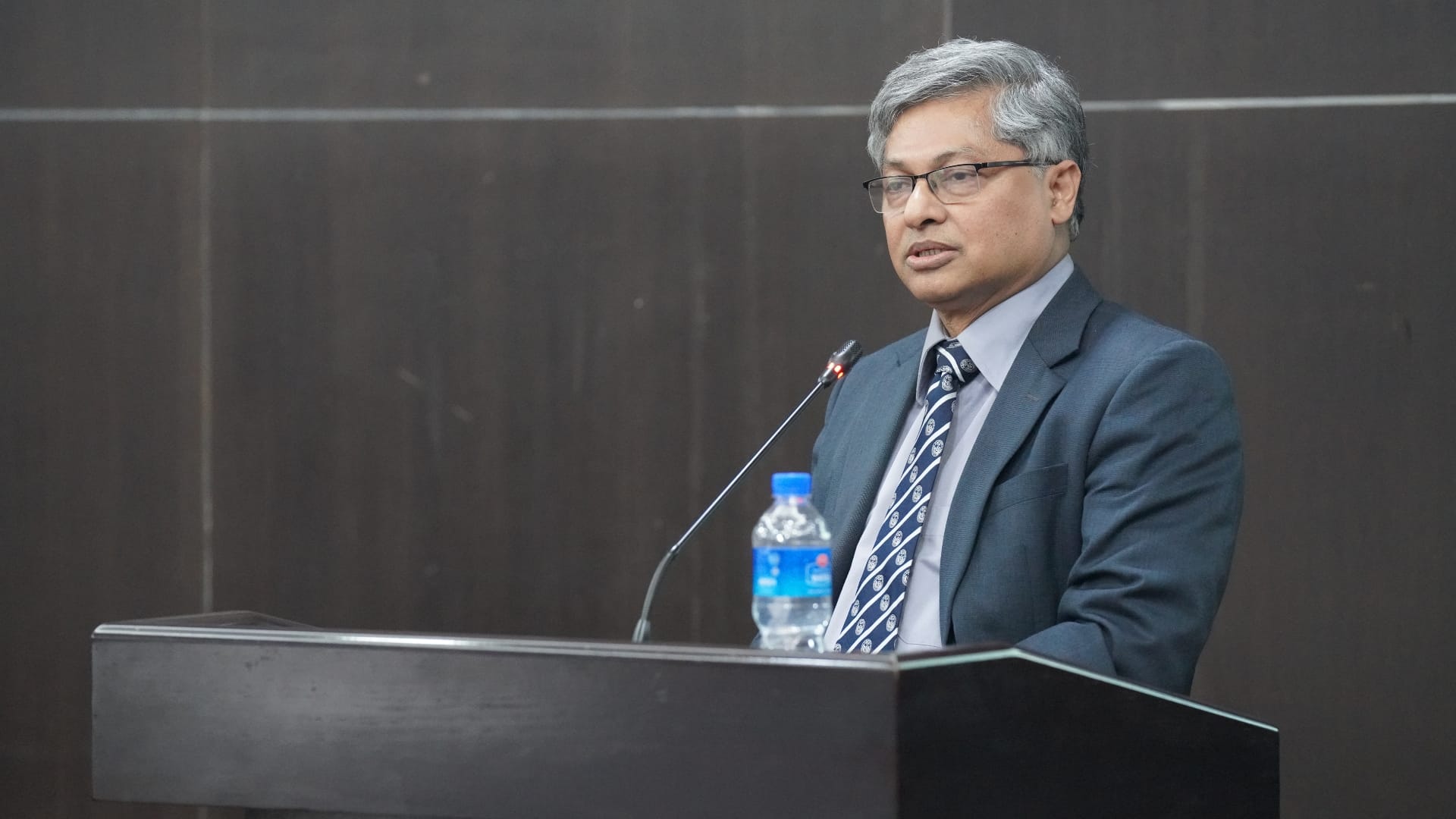
I believe the greater goal of a university is to transform a human being into a composed, value-added visionary and leading thinker. Job-seeking is one part of the component we focus on, but it is not the only measure of success.
Also, not every student moves into academic research, but those who do are driven by curiosity and inquisitiveness. This mindset is what universities have to focus on: students must be encouraged to search and investigate unknown matters, develop research questions, and resolve them through classroom learning and real-world problems.
Through structured teaching, especially in graduate classes, classroom discussions are designed to be challenging rather than purely theory-driven. Universities should encourage engagement with academic research by shaping how learning takes place.
C: What role can companies or industries play in ensuring effective academia–industry collaboration, especially in research?
A: In Bangladesh, academia and industry are often viewed as mutually exclusive, yet both share a common point where mutual support is needed. In developed countries, industries collaborate with academics to take ideas and use them for innovation, but this practice remains limited locally.
Academics are often not consulted in innovation processes, resulting in assignment-based reliance. Improving this requires a collaborative mindset from both sides. Industries can interact intentionally with student bodies to introduce real-world problems and discuss issues at the root level. Academia and industry are not mutually exclusive; they are mutually beneficial. Academic institutions must also ensure accessibility to industry-level conversations so that collaboration becomes possible on both sides.
At NSU, progress has been made through industry-funded research involving local and global industries. The university also has industry advisors at the departmental level, enabling two-way collaboration that supports real growth. Examining specific industry cases allows students to understand practical challenges while industries benefit from academic insight. This also allows academia to gain new challenges while industries receive ground-level, research-informed solutions.
C: How should universities respond to the growing demand for interdisciplinary education?
A: As the world changes, educational institutions must move beyond single academic paths. Restricting learning limits innovation. For instance, students may generate ideas but struggle to execute them due to gaps in complementary knowledge, such as marketing or product design. Interdisciplinary education addresses this gap.
Students must embrace interdisciplinary learning, but institutional structures are equally important. In many universities, administrative systems are bureaucratic and constrained by red tape. For example, upgrading course-related materials to expand learning requires permissions that may be time-consuming.
In Bangladesh, reducing administrative bottlenecks is essential for universities to respond meaningfully to interdisciplinary demand. Universities must also think about what students need beyond theory and books and develop programmes accordingly.
C: What role should universities play in shaping ethical leadership and civic responsibility?
A: Higher education is not only about delivering courses but also about cultivating ways of thinking that promote empathy, morality, and civic responsibility.
Universities must lead by example. At NSU, initiatives focused on social impact and sustainability allow students to reflect on ethical practices in their own lives. For example, our Center for Social Impact and Sustainability (CSIS) encourages reduced plastic use and environmental responsibility, which is a practical example of civic leadership.
Ultimately, an ideal university in Bangladesh would balance accessibility with quality, prepare students for diverse career paths, and support long-term national development through education that is adaptive, inclusive, and forward-looking.
Ethical leadership is also developed through extracurricular activities. Club participation and activities develop an individual who is receptive to feedback and has exposure to diverse opinions, and this is what develops leadership without personal gain.
Furthermore, ethics and civic responsibility should be further reinforced through coursework, including history, philosophy, ethics, and political science.
C: What does your vision of an ideal university in Bangladesh look like over the next 10 to 15 years?
A: When we discuss an ideal university, we first must think realistically about Bangladesh. We have millions of youths pursuing university degrees, yet many are unable to access meaningful learning due to capacity constraints. Public universities also have limited capacity to accommodate the growing number of students.
An ideal university would prioritise skill-based learning while having the capacity to handle and accommodate these youths effectively. Universities must utilise this large youth population to create benefits for the country by expanding access to opportunities. This means an ideal university would be focused on providing learning environments where students not only seek jobs but are also able to create jobs.
An ideal institution would also focus on building a skilled faculty pool to ensure proper academic quality. Encouraging innovation and excellence is essential, too. Universities should help students become thinkers who can apply knowledge in different ways and respond to real-world challenges.
Ultimately, an ideal university in Bangladesh would balance accessibility with quality, prepare students for diverse career paths, and support long-term national development through education that is adaptive, inclusive, and forward-looking.
Tinath is a student of Economics at North South University. Get in touch via tinathzaeba25@gmail.com.