


Studying Veterinary Sciences in Bangladesh

Over the years, Veterinary Sciences has emerged as one of the most impactful subjects for undergraduate students in Bangladesh. However, it is also often underestimated. As the livestock sector expands and more people continue to adopt pets, the need for skilled veterinarians, also known as "vets", has become more essential than ever. Vets not only contribute to safe food production, but they also play a vital role in national development and public health.
Despite the need for veterinarians in the country, the profession remains unfamiliar to many students. Nevertheless, several universities, like Bangladesh Agricultural University (BAU) and Chattogram Veterinary and Animal Sciences University (CVASU), offer the Doctor of Veterinary Medicine (DVM) degree, which constitutes five years of rigorous coursework, clinical training, and field experience, blending science, service, and compassion altogether. This exhibits from within the students a sense of reward once they graduate, if not during the journey of it.
 For all latest news, follow The Daily Star's Google News channel.
 Afnan Khiom Nayrith, 22, a student at BAU, notes that his interest in caring for animals has been ingrained within him since he was a child. He says, "I have loved cats since I was a child. My grandmother had two cats at home. They kept rats and other pests away, and that's where my fascination began. That small spark eventually led me to adopt my cat."
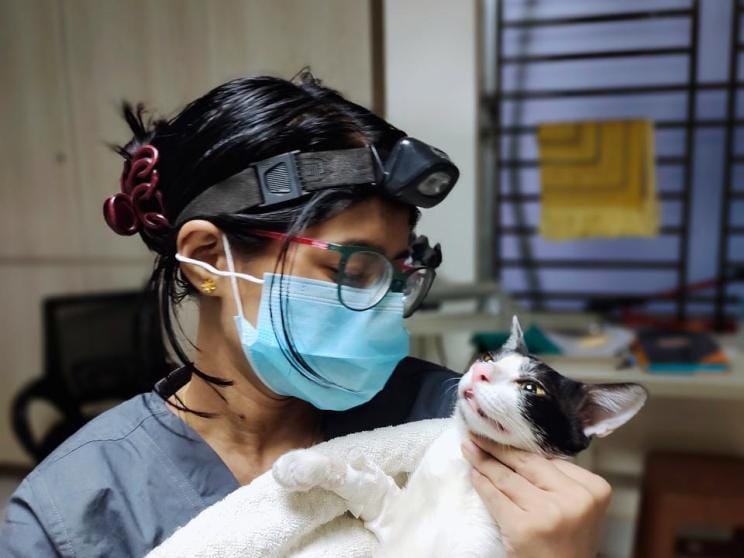
Afnan further adds how he believes that every Bangladeshi growing up has the dream of owning an agro farm, but for him, it was more personal. His love for animals prompted him to pursue this degree, but he recalls how veterinarians are unappreciated in Bangladesh. "Every time my cat got sick, it broke my heart," says Afnan. "As animals can't speak for themselves, the situation becomes more difficult to handle. I faced this situation when I spayed my pet cat, and all of these experiences nurtured my love for animals and my dream of having a farm, and the way I see vets being undervalued inspired me to pursue a DVM degree."
On being asked how the admission process was for him to get admitted to a reputable vet school, Afnan says, "Like every other admission candidate, I took coaching classes to prepare for the admission test and collected the admission question banks of every university and reviewed them multiple times."
Now that he is a student of the Veterinary Sciences, he realises how his degree is quite different from those of other departments. He notes, "Studying in this field feels quite hectic. Other than the morning classes that extend through the evening, there are writing, drawing, and practical classes that we also have to attend, and lab reports that we need to complete. We also have to compare the same type of bone of different animals, as well as work with urine and blood. And of course, there's always the smell of formalin in some labs."
While Afnan emphasises the many difficulties that come with the degree, he also agrees that the veterinary profession itself is a very fulfilling one and very diverse in its own right. Afnan adds, "Students from this field have even shifted to public health and have contributed to research in various fields of life sciences."
Israt Jahan, 21, a student at Sylhet Agricultural University (SAU), also amplifies the versatility of the DVM degree, noting how her wish to become a doctor and her interest in being part of an operating theatre led her to choose an academic career in the veterinary sciences. Israt says, "I got admitted to the Department of Biochemistry and Molecular Biology at Shahjalal University of Science and Technology (SUST) initially, but was really interested in how things work in an operating theatre and decided to prepare myself to sit for the Medical admission exams for a second time. But unfortunately, that didn't work out. I was in a dilemma about whether I should stay at SUST or pursue another degree. It was then that I discovered and learnt about the Veterinary Medicine and Surgery degree and finally opted for that."
She realised that her dream of becoming a doctor is not limited to working with humans, but rather she gets to explore other living beings too – animals. She then attempted to get into the DVM programme at SAU and succeeded. "I find it very fulfilling getting to work not just with animals but also in an environment where I get to learn about the psychology of animals and also communicate with marginal farmers. There are also a lot of opportunities for research even beyond the country, and the scope of getting jobs is not limited," Israt states.
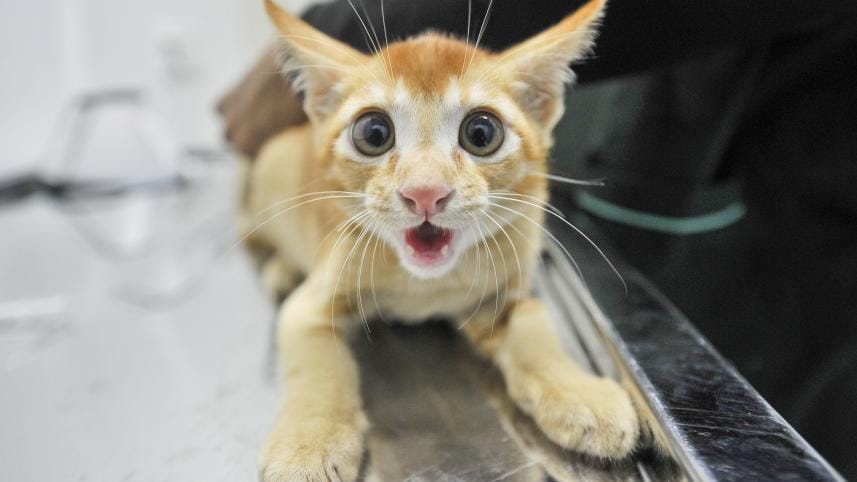
The diverse nature of a DVM degree, as mentioned earlier, encompasses ensuring food safety, preventing zoonotic diseases, and promoting sustainable livestock development, as confirmed by Dr Md Roknuzzaman Khan Rony, a lecturer and faculty member in Animal Science and Veterinary Medicine at Sher-e-Bangla Agricultural University.
Dr Roknuzzaman notes that the field of veterinary sciences has evolved since its recognition as a profession in Bangladesh in 1982, following the enactment of the Veterinary Practitioners' Ordinance, which led to the formation of the Bangladesh Veterinary Council in 1986. Dr Rokunnuzzaman further elaborates, "It was in 2011 that the Faculty of Animal Science and Veterinary Medicine was introduced at Sher-e-Bangla Agricultural University as a step towards meeting the growing demand for protein and to improve livestock resources, as well as to leave a footprint in lessening the adversity between the community of vets and Bachelor of Science (BSc) in Animal Husbandry (AH)."
He also added that this year, a movement has been emerging all over the country to adopt the combined degree instead of just one in DVM or AH. "The curriculum focuses not only on animal health and production but also on the broader 'One Health' approach, integrating human, animal, and environmental health," he expands.
Students studying to be veterinarians are ultimately the ones who will deal with the tending and care of animals in the long run. During their time as students, they learn the many challenges not just animals face but also how it impacts the pet owners or the farmers tending to them.
Dr Foysal Kabir, a veterinary consultant and surgeon at Vet and Pet Care, recounts that his degree definitely helped him build confidence in handling complex medical and surgical cases, but it was during his time as a practising vet in his clinic that his real learning began.
Dr Foysal notes, "Here, every case is unique, and you must think, decide, and act fast. I learnt to balance textbook knowledge with hands-on experience, using diagnostic reasoning, internal medicine principles, and surgical precision to ensure the best outcomes for my patients."
However, as a practising vet, Dr Foysal also highlights the limitations of his profession. He adds, "There's a lack of diagnostic tools and equipment. While some advanced machines are available, most are imported, making them costly and inaccessible to many clinics. Moreover, veterinary medicines remain another challenge. In many cases, we rely on human medicines, which are often unpleasant for the animals and not always suitable for their physiology."
Dr Foysal states that he would like to see pharmaceutical companies pay more attention to developing pet-specific formulations that are safe, palatable, and effective for the animals.
Dealing with critically ill animals and anxious owners can also be mentally demanding. Despite the emotional toll it takes on the people, they are not backing down in caring for animals both on the streets and in their own homes. The numerous animal welfare groups actively working on rescuing animals and tending to them with the aid of veterinarians are evidence of that.
Rubaiya Ahmad, the Founder and Chairman of Obhoyaronno – Bangladesh Animal Welfare Foundation, highlights the contribution of veterinarians in their field of work. Rubaiya says, "Veterinarians are absolutely central to our work. We rely on veterinarians to perform these surgeries, as well as to provide medical treatment to sick and injured animals. Their expertise enables us to directly improve animal welfare and humanely control the stray animal population."
She further notes the contribution of young vets in their mission, saying, "During our recent mass dog vaccination campaign with Worldwide Veterinary Service (WVS) in the Rohingya camps, we worked with nearly 200 veterinary students and fresh graduates. They were dedicated, eager to learn, and genuinely proud of their profession. It was inspiring to see this new generation of vets approach their work with such enthusiasm and compassion."
However, Rubaiya also highlights the need for more enthusiastic vets who will contribute more to animal welfare rather than just farmed animal husbandry, as in her experience, the current veterinary curriculum largely covers that portion of the subject. While she is glad that some universities have started to include aspects of companion animal care in recent years, the curriculum needs to be modernised. She elaborates, "When we began in 2012, veterinary education in Bangladesh was often seen as a second choice. Many students joined vet school because they couldn't get into medical school. At least that has changed. And on the subject of hiring veterinarians, we train them from the ground up, particularly in modern spay-neuter surgical techniques."
The opportunities available to young veterinarians in Bangladesh have undergone significant changes. Once looked down upon, the general public is now beginning to learn that Veterinary Sciences is not only a field that tends to livestock animals but also one that involves environmental health, public health, and serves as an outlet of compassion. Therefore, more research is required in this field of life sciences, and more young people need to be confident enough to transform their love for animals into a profession that would help both society and the animals in the long run.
Afra is a student of English Literature at North South University, who wishes she were a cat mom too. Send her your thoughts at afraankhan20@gmail.com.
Comments