


Insurance surveyors banned from misusing client info

Non-life insurance surveyors and loss assessors will no longer be allowed to use or disclose confidential information obtained through their professional work for personal gain or for the benefit of anyone other than the insurer or the insured, under Bangladesh's first-ever regulation governing the profession.
The new rules -- outlined in the Insurance Surveyor and Loss Assessor Duties, Responsibilities and Code of Conduct Regulations, 2025 -- came into effect on December 25, the day they were gazetted.
 For all latest news, follow The Daily Star's Google News channel.
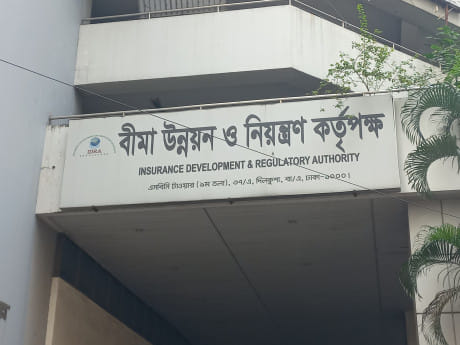
 An official from the Insurance Development and Regulatory Authority (Idra), speaking on condition of anonymity, stated that the Insurance Act 2010 includes a provision addressing the code of conduct for the surveyors and loss assessors.
The main purpose of this regulation is to make the law more understandable and accessible, the official said, adding that many aspects of the law are not explicitly mentioned in the 2010 Act.
"There is often a lack of clear definitions for various technical terms used in insurance regulations. This can create confusion for both insurance companies and policyholders," the official added.
By providing detailed explanations and definitions, the regulation aims to help stakeholders interpret the law correctly and reduce disputes arising from misinterpretation.
Another Idra official said the regulations were introduced largely because the quality of local surveyors falls short of international standards.
"There is a significant gap, and the goal is to bring their work under a unified framework," he said.
Insurance surveyors and loss assessors play a crucial role in non-life insurance, which covers areas such as fire, marine, motor and property insurance.
When a policyholder files a claim after an accident or damage, the surveyor is appointed to inspect the loss, verify what happened and assess how much damage has occurred. Their report largely determines whether a claim is accepted and how much compensation is paid.
WHAT THE REGULATIONS SAY
Insurance surveyors and loss assessors play a crucial role in non-life insurance, which covers areas such as fire, marine, motor and property insurance.
When a policyholder files a claim after an accident or damage, the surveyor is appointed to inspect the loss, verify what happened and assess how much damage has occurred. Their report largely determines whether a claim is accepted and how much compensation is paid.
According to the regulations, surveyors must carry out investigations, measurements and verification with due diligence and within a reasonable time to determine the loss to any insured subject. Their work must meet standards of efficiency, objectivity and professionalism, and follow a prescribed code of conduct.
The rules stress that surveyors must remain impartial and maintain strict confidentiality when dealing with both the insurer's liability and the insured's claim.
"They shall assess the loss in accordance with the terms and conditions of the insurance policy and submit a comprehensive report containing detailed explanations," it added.
Where the same asset is insured under more than one policy, the survey report must state how the loss has been assessed under each policy and include details of any salvaged or recovered property. Pre-survey risk reports must also mention likely loss rates, existing safety arrangements and recommended loss control measures.
The regulations require surveyors to clearly state depreciation rates and the estimated depreciated value of damaged property.
"Where a claim is not covered under the terms and conditions of the insurance policy, the reasons for the rejection of the claim shall be clearly and explicitly stated," it stated.
Where compensation is payable, the report must specify the amount to be paid.
Surveyors are expected to work with honesty, integrity, competence and prudence. If they lack the expertise or capacity to handle a particular assignment, they must formally refuse the work.
To ensure accountability, surveyors must maintain a register of their assignments and preserve all reports and related documents for at least three years after a claim is settled. In cases where disputes are under court consideration, records must be kept until the final verdict.
The rules also limit document demands by insurers, stating that policyholders should not be asked for documents beyond those mentioned in the insurance contract, unless additional documents are reasonably required and properly justified.
Comments