


EU’s GSP+: The lifeline Bangladesh must win before 2029

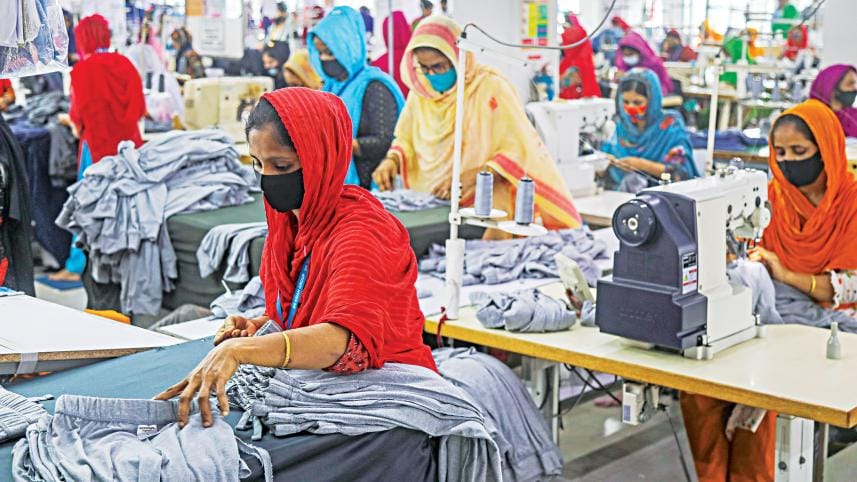
- EBA scheme powered Bangladesh's garment rise
- LDC graduation threatens duty-free access
- GSP+ lifeline blocked by safeguard clause
- Failure risks billions, jobs, competitiveness
For more than 20 years, Bangladesh has lived under a kind of economic sunshine in Europe. Garments stitched in the country's industrial belts entered European markets without any import tax under the EU's Everything But Arms (EBA) scheme. This access helped turn the South Asian country into one of the world's largest apparel exporters.
 For all latest news, follow The Daily Star's Google News channel.
 In four years, that duty-free facility will cease to exist. And what replaces it will determine whether Bangladesh can hold its place in the EU market or watch competitors pull ahead.
Bangladesh is set to graduate from least developed country (LDC) status in November 2026, a milestone signalling progress but also triggering the phasing-out of the duty-free treatment that underpins its export strength.
International studies, including warnings from the World Trade Organization, suggest Bangladesh could lose as much as $8 billion annually, around 14 percent of export earnings, once the benefit disappears.
The EU has granted a three-year transition, allowing Bangladesh to enjoy EBA benefits until November 2029. Beyond that, the path is narrow – to get access to the Generalised Scheme of Preferences Plus (GSP+), or sign a free trade agreement, which is much more complicated.
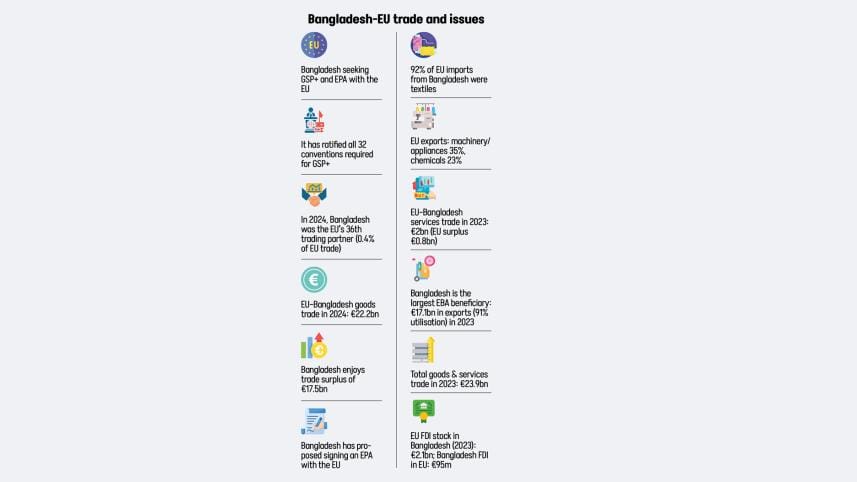
For a country where more than half of all exports go to the EU, and garments alone account for 92 percent of EU-bound shipments, this is not just about trade anymore. Much of the country's economic future now rests on how it navigates this uncharted territory.
EBA-OWED SUCCESS
Bangladesh's journey in European markets stretches back more than 50 years. In the 1970s, it exported under the EU's GSP scheme, which offered developing nations reduced import taxes. Yet, the garment industry faced stiff restrictions under the Multi-Fibre Arrangement, which capped exports to Western markets.
The turning point came in 2001, when the EU launched the EBA scheme, granting LDCs duty-free access for all exports except weapons. Previously, Bangladesh's garments had entered Europe under basic preferences, still constrained by quotas.
The EBA lifted these limits almost overnight. It was effectively an open gate.
Factories expanded, investment poured in, and Europe became Bangladesh's largest and most reliable buyer.
Today, the EU accounts for 58 percent of Bangladesh's total exports and over 64 percent of its garment shipments, according to the Bangladesh Garment Manufacturers and Exporters Association (BGMEA). One in every three garments sold in Europe is made in Bangladesh.
This success also made Bangladesh the single largest beneficiary of LDC trade preferences globally, accounting for 67 percent of all LDC-duty-free exports. It is a position built over decades, but one that will soon become harder to defend.
Things will change drastically in the post-LDC era when Bangladesh will lose its access to the EBA scheme and will face steep tariffs.
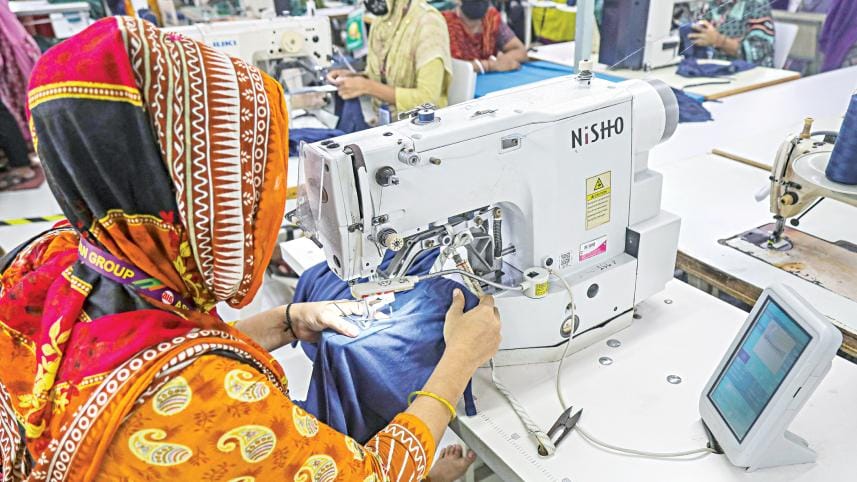
GSP+: THE POST-LDC LIFELINE
Economists and businesses say after November 2029, Bangladesh must either secure GSP+ or negotiate an Economic Partnership Agreement (EPA).
An EPA is a two-way deal. Bangladesh would receive duty-free access but must also reduce tariffs on certain European imports. It is a more complex, politically difficult route.
GSP+, by contrast, is conceptually similar to EBA. Most products can enter Europe at zero duty. But the scheme is far more demanding. The original GSP scheme is expected to come to an end in 2027. From 2028, the GSP+ could be Bangladesh's new lifeline.
Essentially, GSP+ is a contract under which the EU offers tariff-free access, but only to countries that can demonstrate full implementation of 32 international conventions covering human rights, labour standards, environmental protection, and governance – and, crucially, to prove that these rules are enforced.
Bangladesh has already ratified all the conventions and amended labour laws. Yet, ratification alone is insufficient. The EU will closely examine implementation – factory safety, worker rights, environmental compliance, governance, and overall accountability.
According to Mohammad Abdur Razzaque, chairman of Research Policy Integration for Development (RAPID), "We must implement them effectively to avoid any doubts about compliance. If needed, Bangladesh can seek EU support to strengthen its capacity."
On top of these conditions sits a safeguard mechanism. A country can only qualify for the scheme if its exports stay below 6 percent in any product category and below 37 percent of the EU's total imports.
Bangladesh has exceeded both limits. Apparel exports make up 22 percent of an EU product category and nearly 58 percent of its total imports. This places Bangladesh outside the eligibility threshold, meaning the country must negotiate special treatment.
In other words, Bangladesh is too successful to enter GSP+ under normal criteria. It must negotiate an exception.
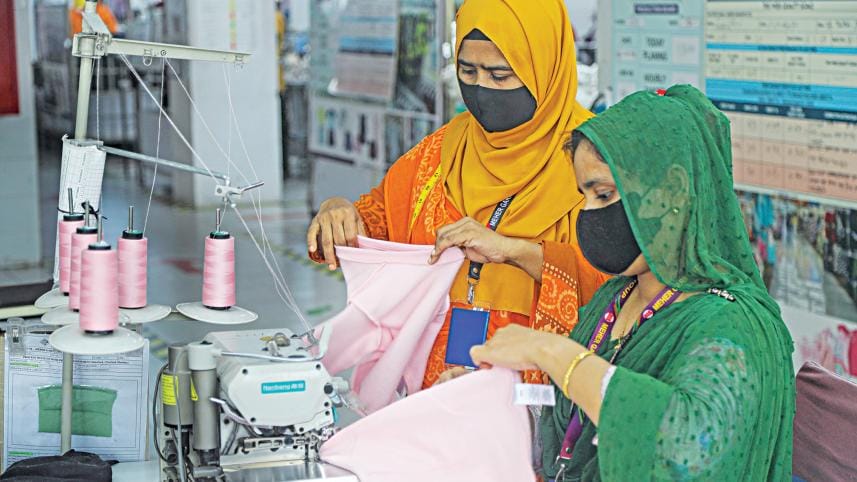
THE COST OF FAILURE
Businesses are anxious.
If Bangladesh fails to secure GSP+, its garments are likely to face EU tariffs of 9-12 percent, the standard most-favoured-nation rates, warned Newage Group Vice-Chairman Asif Ibrahim.
"This could result in $2-$3 billion in annual export losses, job cuts, and slower industrial growth. Competing countries with better market access could attract more orders, putting Bangladesh at a disadvantage.
"It may push the country to accelerate labour, governance, and environmental reforms, pursue free trade agreements, and diversify into higher-value sectors. Failing to obtain GSP+ would create serious challenges for exports, investment, and overall economic stability," he added.
Besides, the additional tariff would immediately make Bangladeshi exports more expensive than those from countries with trade deals, such as Vietnam, which will enjoy zero duty under its free trade agreement with the EU by 2029.
Shams Mahmud, managing director of Shasha Denims Ltd, warned, "The EU is our largest export destination as a trade bloc, and Bangladesh must continue serious negotiations to retain this market. Many factories could even face closure if preferential access is lost."
Abdul Hai Sarker, chairman and CEO of Purbani Group, added, "The overall economy could be in trouble if preferential trade with the EU is not maintained. Any conditions set by the EU should be taken seriously by the government to protect our market."
RAPID's Razzaque said, "If the LDC deferment is not granted, securing GSP+ immediately is imperative."
Negotiating Against the Clock
The government has begun initial discussions with the EU on both GSP+ and a possible EPA.
Commerce Secretary Mahbubur Rahman said, "We have sent a proposal to start negotiations for signing an EPA, and an inter-ministerial meeting has been held to gather opinions. We are moving forward with both GSP+ and EPA negotiations with the EU."
But industry leaders and experts argue that negotiations must accelerate.
"Bangladesh must launch intense negotiations, including seeking a waiver, without leaving it until the last minute. A dedicated working committee should be formed immediately," recommended Razzaque.
Others caution that lobbying for a waiver of the safeguard clause, the rule that currently disqualifies Bangladesh, is essential.
BGMEA president Mahmud Hasan Khan said, "If the 6 percent and 37 percent thresholds are not removed, the Bangladeshi garment sector will not benefit. We have raised this issue multiple times in buyers' forum meetings and also brought it to the attention of the government. EuroCham is also actively working on this issue."
He also stated that the association has been in talks with the government, international trade partners, and diplomats to extend the LDC transition period by at least six years, while also discussing GSP+ negotiations with the EU.
The European Union Chamber of Commerce in Bangladesh (EuroCham) Chairperson Nuria Lopez stressed the urgency of extending the LDC transition period and pushing for GSP+. "Continuing negotiations with the EU for GSP+ is more beneficial than signing an EPA."
Mostafa Abid Khan, former member of the Bangladesh Trade and Tariff Commission, said, "The new GSP+ rules are still in draft form, giving Bangladesh room to negotiate with the EU for relaxation or a waiver of the safeguard provisions. Bangladesh should start negotiations immediately, focusing on two options: obtaining GSP+ or signing an EPA.
"Negotiating an EPA may be easier and quicker, while GSP+ requires more time to meet all conditions. Once Bangladesh secures GSP+, it can enjoy trade benefits under the scheme until it reaches middle-income status, though there is a risk of losing the status as the country may become a middle-income country by 2032."
Comments