


Chilly spell raises disease risk for winter crops

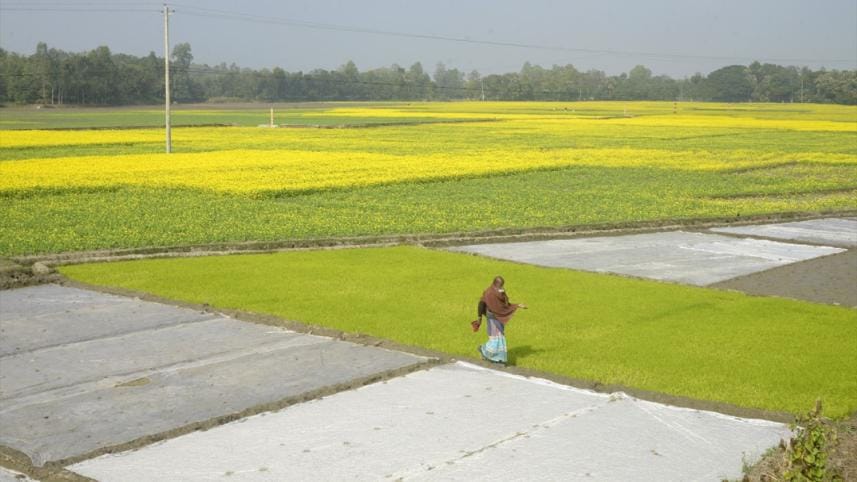
As a cold wave continues to grip the country, agricultural experts are warning that certain crops could face serious risks from the unusual weather, while others may benefit and thrive under these conditions.
According to a press release issued today by the Bangladesh Agro-Meteorological Information Service under the Department of Agricultural Extension, the cold weather is expected to affect multiple crops.
 For all latest news, follow The Daily Star's Google News channel.
 Potatoes are particularly vulnerable to late blight, while rice seedlings in seedbeds may be affected by scorch disease. Onions and garlic face tipburn, and onions can also develop purple blotch. Pulses are at risk of leaf spot, rust, and Stemphylium diseases. Mustard crops may develop white mould and leaf spot before flowering.
Limu Akter, senior scientific officer of the vegetable division at the Horticultural Research Center of the Bangladesh Agricultural Research Institute, said, "The current cold and damp weather is highly unfavourable for some winter vegetables, as it encourages the spread of serious diseases such as late blight and powdery mildew.
"Crops like potatoes, tomatoes, capsicum, and eggplant are particularly vulnerable, while cucurbit crops face an increased risk from powdery mildew. Prolonged adverse weather can stunt plant growth and greatly increase disease risks," she added.
Mahbuba Begum, principal scientific officer of the Tuber Crop Research Center in Gazipur, said, "The prevailing weather conditions are ideal for the initiation and rapid spread of late blight in potatoes.
"High humidity and cool conditions significantly increase the risk of infection, making potatoes the most vulnerable crop at this time. Other crops, such as sweet potatoes and mustard, are not facing major threats under the current conditions."
Begum advised, "To effectively control late blight, farmers should follow recommended management practices, including the regular application of fungicides at seven-day intervals.
"Timely preventive action is essential, as the disease can spread quickly once established, while most other crops remain largely unaffected by the current weather pattern."
Mohammad Khalequzzaman, director general of the Bangladesh Rice Research Institute, said that rice cultivation is extremely sensitive to temperature and sunlight, and growth can completely halt when temperatures fall below 10–13°C.
He added, "During the recent cold wave, a combination of low temperatures and lack of sunlight caused physiological growth stoppage, which can lead to cold injury, disease, and rotting if such conditions persist.
"However, the impact on rice at the seedling or seedbed stage was minimal, as growth is naturally paused during this period, allowing the plants to withstand short-term cold stress and recover once sunlight returns, and temperatures rise."
Khalequzzaman stressed, "Nighttime temperatures are the most critical factor for assessing potential damage. While prolonged cold spells can delay crop maturity and reduce yields, the recent seven-day cold wave was not severe enough to cause measurable losses.
"The situation would have been far more damaging if the rice had already been transplanted into open fields. At present, only Boro rice in seedbeds is being managed."
COLD WAVE CONTINUES
According to the Bangladesh Meteorological Department (BMD), a cold wave is currently affecting 17 districts, with moderate to dense fog possible in some areas.
Earlier on December 26, the Met Office reported that a mild cold wave had hit Jashore, Chuadanga, Gopalganj, Rajshahi, Pabna, Sirajganj, and Nilphamari.
Shahnaz Sultana, a meteorologist at BMD, said, "The unusually cold conditions in the country began on December 25. There was a brief period of sunlight on December 27, but persistent fog and overcast skies on December 28 and 29 prevented daytime warming.
"During this period, maximum daytime temperatures dropped significantly, while nighttime temperatures remained largely unchanged. The lack of sunlight made the days feel much colder, intensifying the impact of the cold spell."
The Bangladesh Agro-Meteorological Information Service also provided guidelines to help farmers prevent potential crop damage.
Experts warn that if the cold wave continues for several more days, crop production could be disrupted, yields may be lowered, and market prices could rise.
Comments