


2025 was a testing year for RMG sector

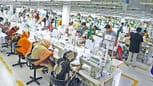
Bangladesh's export engine, long powered by the ready-made garment (RMG) sector, slowed in 2025 amid overlapping domestic and external shocks. After a strong rebound in 2024, when RMG exports reached $38.48 billion, a 7.23 percent year-on-year increase, exports in 2025 edged up to $38.82 billion, marking growth of just 0.89 percent.
Several interlinked factors explain this slowdown. Externally, trade tensions played a critical role. Tariff threats and order suspensions from major markets, especially the United States, created deep uncertainty. Buyers became cautious in placing orders and, in some cases, temporarily shifted sourcing to other suppliers. For an industry dependent on stable, long-term relationships with global brands, such volatility disrupts planning, investment, and production.
 For all latest news, follow The Daily Star's Google News channel.
 Last year, India withdrew the long-standing transhipment facility it had provided to Bangladesh for exports to third countries. As a result, export lead times have increased, deliveries have been delayed, and some foreign buyers have moved orders to alternative suppliers.
Domestically, political instability weakened business confidence and disrupted normal trade flows. Political tensions frequently triggered logistical bottlenecks, further exposing the fragility of the overall business climate. In such conditions, both local and foreign investors delayed decisions, while exporters became more cautious in importing raw materials or expanding capacity.
Labour unrest intensified in 2025, with serious consequences for the RMG sector. Road blockades, factory shutdowns, and repeated production disruptions directly reduced output and damaged Bangladesh's reputation as a reliable sourcing hub. Since global buyers value timeliness alongside low cost, recurring delays or sudden stoppages encourage them to diversify away from a country.
An extraordinary shock came from the complete shutdown of the customs house, an event almost unheard of globally. In a country where most export earnings come from RMG, such a shutdown was unprecedented and deeply damaging. On top of this, despite the huge financial losses suffered by factories, exporters, and insurers due to a major cargo fire at the airport, the incident further undermined buyer confidence.
The withdrawal of export incentives and persistent domestic inflation raised production costs and eroded price competitiveness. These pressures further constrained export growth in 2025, preventing it from matching the previous year's performance. Structural challenges and global competition added to the strain. Tougher competition in Europe squeezed Bangladesh's share in a key market, while weak performance in non-traditional markets highlighted the risks of relying heavily on a few destinations such as the European Union and the United States. Limited product diversification remains evident, particularly when compared with rivals like Vietnam, which is moving faster into higher value-added products and broader market coverage.
Even so, important positive developments emerged. Recent labour law amendments aim to strengthen workers' rights and align the RMG sector with international standards, a vital step for long-term sustainability, although they also raise compliance costs and responsibilities for factory owners. In 2025, Bangladesh's RMG industry set a global benchmark in sustainable manufacturing by adding 38 new LEED-certified green factories. This reinforced its leadership in environmentally responsible apparel production and signalled a shift from basic compliance to an excellence-driven green transformation.
Bangladesh's competitiveness will depend on how quickly it can close infrastructure gaps, ease internal bottlenecks, and move up the value chain. Stronger logistics, political and social stability, higher factory-level efficiency, and greater investment in research, innovation, and marketing are essential. The country must address the root causes of factory closures and strengthen the financial sector capacity to support both distressed firms and viable enterprises with growth potential. At the same time, it needs a critical assessment of least developed country graduation prospects and implications, alongside effective monitoring to ensure new factories contribute to broader industrial development goals.
Despite current headwinds, Bangladesh retains strong advantages in scale, capacity, and buyer relationships, and has emerged as a pioneer in sustainable apparel. With a coherent strategy, coordinated action, and sustained policy commitment, it can restore export momentum and reinforce its position in global trade.
The writer is a former director of the Bangladesh Garment Manufacturers and Exporters Association (BGMEA)
Comments