


Fleabag: It’ll pass, but we’re still not past her
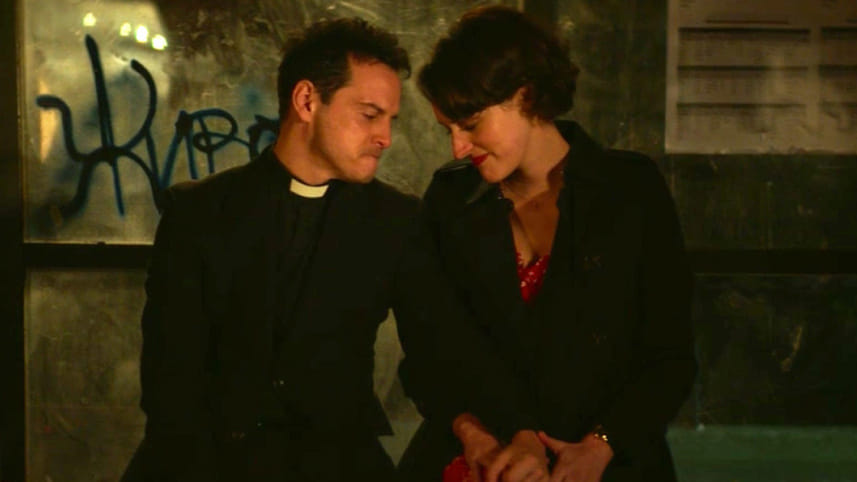
Phoebe Waller-Bridge has an astounding way of capturing the hysteria of womanhood in resonant monologues that linger long after they’re spoken. To put the power of Fleabag into words is almost overwhelming because I fear the risk of diminishing it, perhaps even taming its chaos. It’s not just a show but a diary entry filled with emotions that remain unspoken: feelings that spill like an overflowing pot, ones that might condemn you if ever voiced aloud.
From the very beginning, there is a sense of intimacy between us—the audience—and Fleabag. Through micro-glances, cheeky winks, and witty remarks about the world around her, the absence of a fourth wall remarkably establishes our journey with her. In doing so, she unknowingly avoids connecting with the people around her, as though she feels safer speaking her eccentric mind to us instead. There’s an invisible wall between Fleabag and everyone she interacts with: her rigid, hyper-successful sister, their avoidant, remarried father, and the strange variety of her romantic endeavours. She seldom speaks about her late best friend, Boo, who passed away tragically. It doesn’t take much to realise that Boo is a ghost from the past that haunts Fleabag, with us positioned as her coping mechanism.
 For all latest news, follow The Daily Star's Google News channel.
 What makes Fleabag so striking is that her flaws are never veiled. She’s an enigma, described as “a greedy, perverted, selfish, apathetic, depraved, morally bankrupt woman who can’t even call herself a feminist”, in her own words. And she is, quite unapologetically and impulsively, at times. Her choices often resemble the experience of witnessing a car crash you can’t seem to look away from. By becoming the confidantes to her darkest, funniest, and most shameful thoughts, we develop a fierce, protective loyalty towards her. Her quirks and imperfections are endearing, despite the extent of her immorality. The people around her feel differently, however, as her behaviour often drives them away rather than drawing them close.

One of the show’s greatest achievements is its portrayal of loneliness. Loneliness, in its true form, is an unsettling sickness that latches on tightly without a guaranteed cure. It consumes you like waves of an intense fever, one you can’t shake off easily.
“Loneliness pays,” Fleabag says as she, inspired by her own isolated life, introduces “Chatty Wednesdays” to her struggling cafe. The previously dull, monotone place begins to fill with people seeking connection. Yet the show refuses to romanticise this state entirely. It also exposes the raw ugliness of loneliness—through mascara-streaked breakdowns, Fleabag’s desperate need to be seen, and the aching realisation that sometimes all you truly have is yourself.
The “Hot” Priest is the only character able to dissolve Fleabag’s mask of nonchalance and her habit of keeping people at arm’s length. In turn, she constantly challenges his restraint and devotion to Christianity. Their conversations eventually reach a level of intensity that makes us, the audience, feel like we’re intruders. He’s the first paramour to whom Fleabag confesses her vulnerabilities:
“I want someone to tell me what to wear every morning. I want someone to tell me what to eat, what to like, what to hate, what to rage at, what to listen to, what band to like, what to buy tickets for, what to joke about, and what not to joke about. I want someone to tell me what to believe in, who to vote for, and who to love and how to... tell them. I just think I want someone to tell me how to live my life, Father, because so far, I think I’ve been getting it all wrong.”
The ideal image of independence is to never seek validation, to always remain composed, and to be the perfect feminist. One wrong move, and suddenly you have failed to represent empowerment altogether. Yet within the messy nuances of being human, Fleabag voices the thoughts that are taught to be suppressed, articulating desires and vulnerabilities that feel almost shameful to admit aloud.
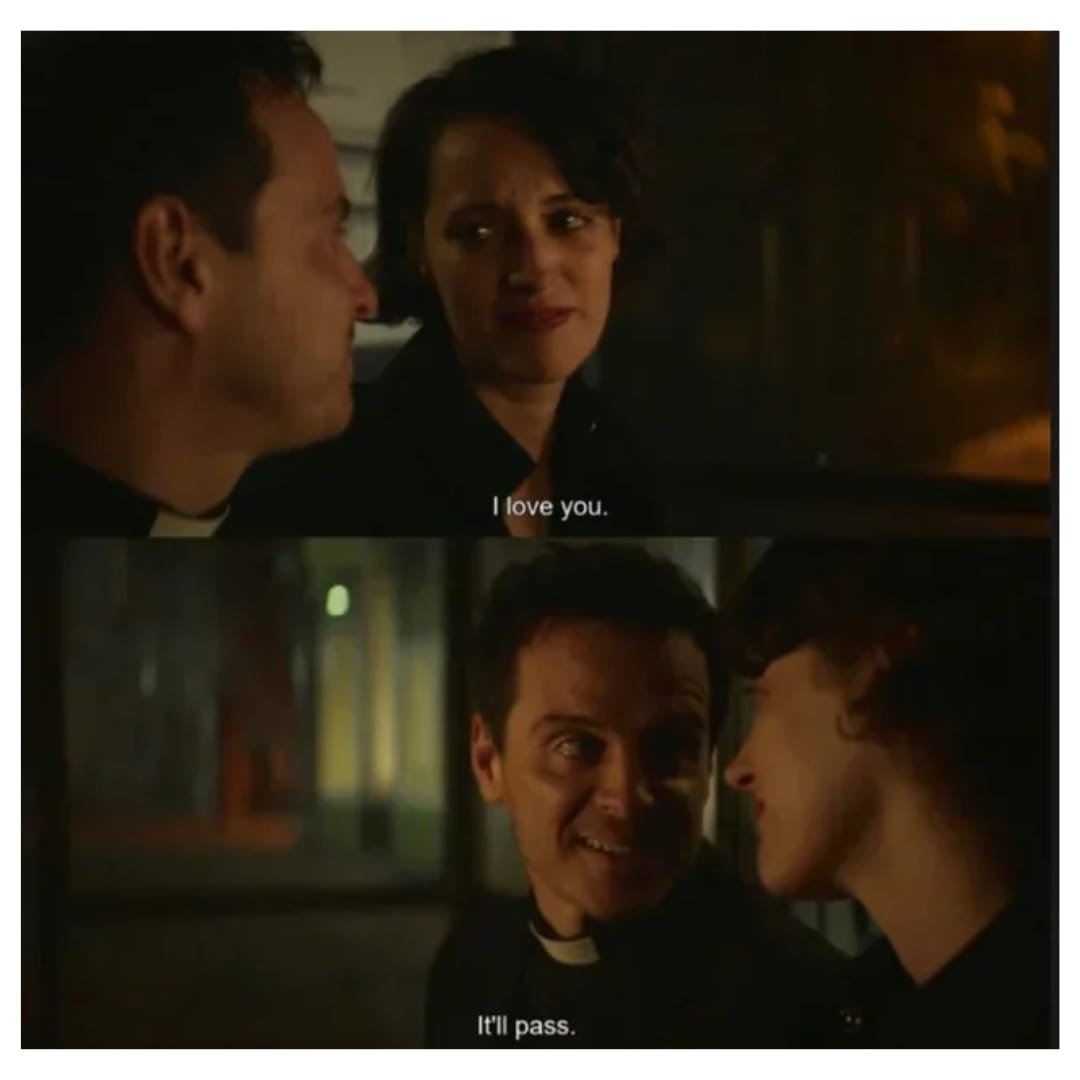
Despite the undeniable allure of The Priest, I believe that the greater love story is actually between Fleabag and her sister, Claire. “The only person I’d run through an airport for is you,” admits Claire during one of their rare moments of honesty. If there is an accurate representation of the infuriating and complex bond between sisters, it lies in their unspoken love for one another. Across both seasons, we see their strained relationship slowly transform into one of deep allegiance and care. They’re merely the two opposite sides of the same coin: wildness and repression. Both are survival mechanisms born from shared trauma. In a world that so often misunderstands them, they remain each other’s anchor.
Among the recurring symbols in Fleabag is the godmother’s stolen statue, an object Fleabag is quietly drawn to without ever fully acknowledging why. It’s later revealed to be a sculptural representation of her late mother, transforming it into more than a mere possession; it becomes a symbol of her mother’s spirit. Fleabag is repeatedly positioned as a reflection of her mother, a connection she resists confronting, as though avoidance might spare her from becoming her.
In the end, Fleabag leaves us behind at the bus stop with a tearful smile. She no longer needs her spectators to deflect the pain of heartbreak, awkward family dinners, or the burden of accepting her reality. The fourth wall disappears not because she stops speaking, but because she no longer has to hide behind it.
Zara Zubayer is a half-pianist, occasional grandma (she knits), and a collector of instruments she never learns. Suggest a new hobby she won’t commit to at zarazubayer1@gmail.com.
Comments