


Satyajit Ray: The man who found the universe in a dewdrop
One afternoon in the early 1950s, a tall man with a deep, baritone voice stood in a rural field of white kaash flowers, waiting for a train that refused to arrive on cue. He had no professional actors, no studio backing, and most days, no money at all. At one point, he looked on in horror as a herd of local cows literally ate his film set, munching through the very flowers that were meant to provide the backdrop for cinema’s most iconic moment. Most directors would have packed up and changed the script, but Satyajit Ray simply waited a whole year for the flowers to bloom again. This is the story of how a commercial illustrator with a borrowed camera and a pawned wedding ring rewrote the history of world cinema. It is a story of patience, of looking closely at the world, and of finding the extraordinary within the ordinary.
Satyajit Ray was born on May 2, 1921, at 100 Garpar Road in Calcutta, an address then steeped in the city’s rich tradition of creative ferment. His home was not merely a residence but also the site of U RAY & SONS, PRINTERS AND BLOCK MAKERS, a business established by his grandfather, the writer and illustrator Upendra Kishore Ray. This was a house where the air smelled of printing ink and the sound of machines was the heartbeat of the family. His father, Sukumar Ray, was arguably Bengal’s most famous writer of children’s verse, a man who brought nonsense rhyme to the level of high art. Tragically, Satyajit’s father passed away when the boy was only two and a half years old. The loss was profound, both emotionally and practically. Following the closure of the family’s magazine, Sandesh, the family had to leave their grand home and move to Bhowanipur to live with his mother’s family.
Despite this early loss and the change in his circumstances, young Satyajit grew up surrounded by art and wonder. His childhood was a quiet exploration of the senses. He spent his days examining imported paper samples, playing with stereoscopes, and watching moving images projected onto his wall by a Victorian magic lantern—an experience that perhaps planted the very first seeds of his passion for cinema. Long before he ever held a movie camera, he was learning how light and shadow could tell a story. He also possessed a deep love for music, listening to classical singers and Western records on his toy gramophones. This mix of traditional Bengali culture and Western classical music would later become the soul of his films. He eventually went on to graduate from Presidency College in 1940 and studied art at Shantiniketan, the university founded by Rabindranath Tagore, where he learned to look at nature with the eyes of a painter.
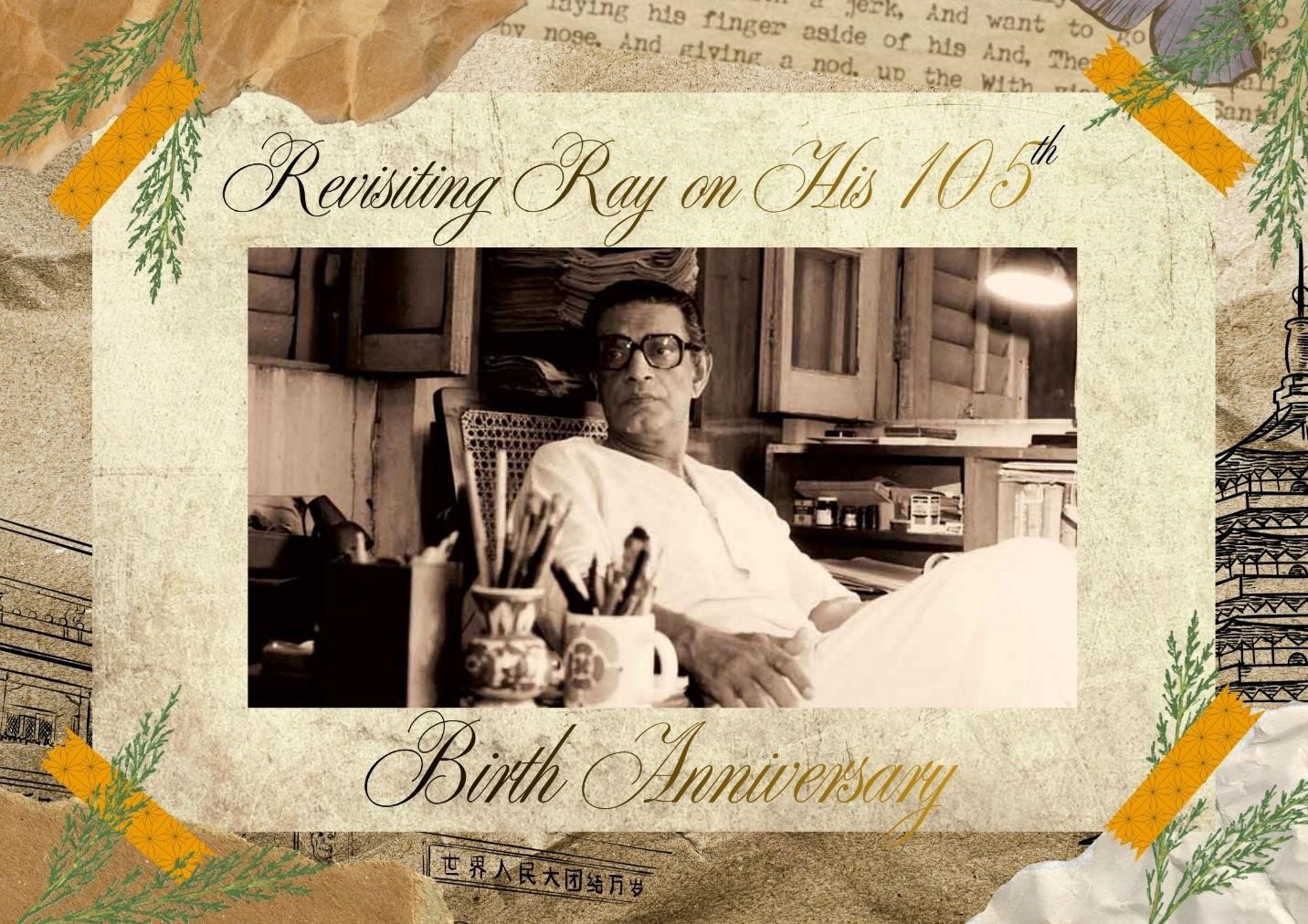
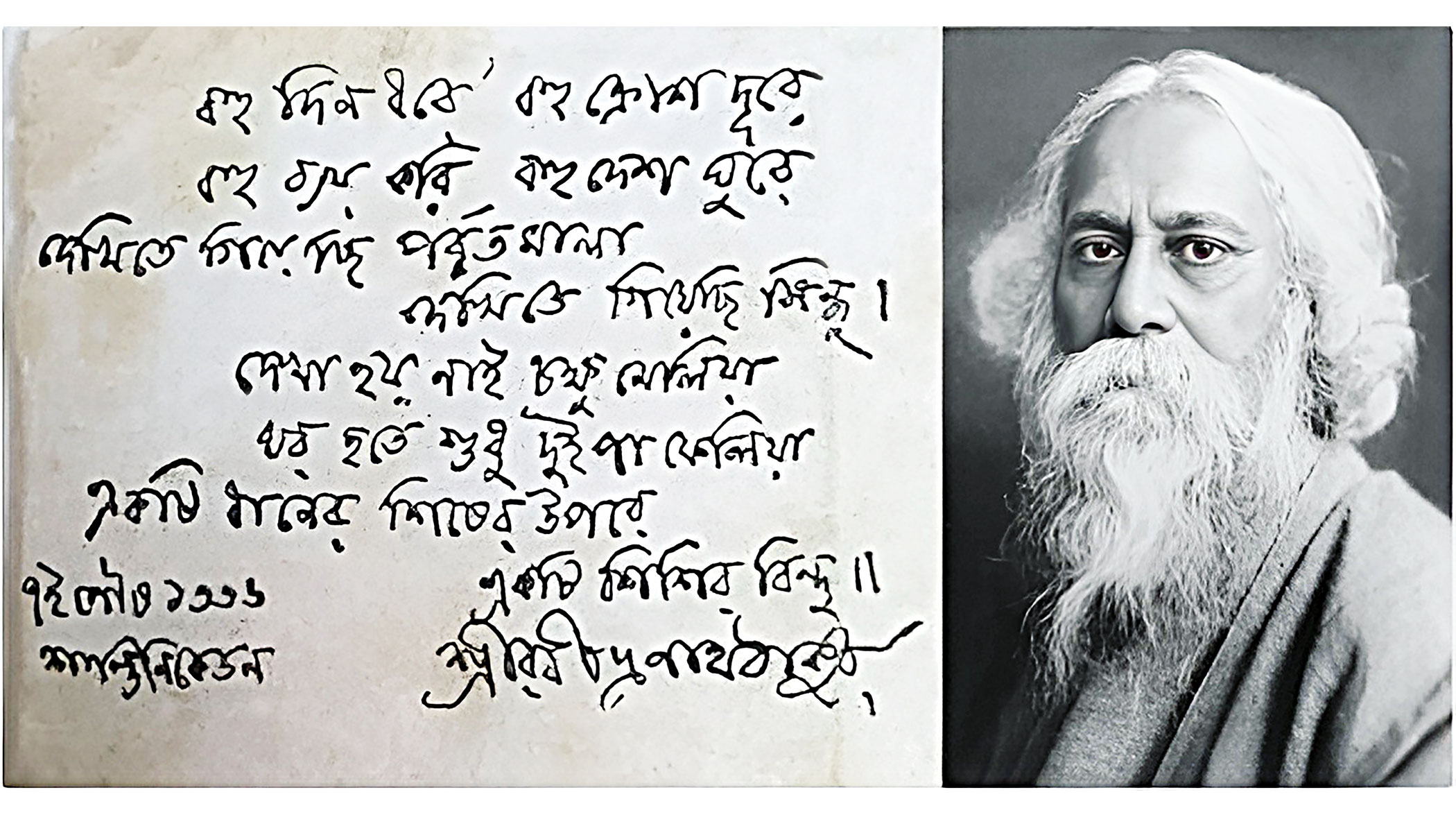
‘Satyajit’ means the ‘Conqueror of Truth’. This name acted as a beautiful promise, because Ray grew up to conquer the world by showing the simple truths of human life through his art. It was in Shantiniketan that he first saw ju-jitsu being practised. He was about ten years old then, having gone with his mother to attend Poush Mela, a festival held annually in Shantiniketan every December. He had bought a new autograph book, with a view to having its first page signed by Tagore. He went to Uttarayan one morning. Tagore took the little purple autograph book but said, ‘Leave it with me. You can collect it tomorrow.’ When they returned the next day, Tagore was sitting at his desk, which was piled high with letters, various pieces of paper, books and notebooks. He began looking for the book as soon as he saw the boy; it took him nearly three minutes to find it. Then he handed it back, looked at Ray’s mother and said, ‘He will understand the meaning of these words only when he’s older.’ What he had written was a short poem, which is known to most people today:
It took me many days, it took me many miles;
I spent a great fortune, I travelled far and wide,
To look at all the mountains,
And all the oceans, too.
Yet, I did not see, two steps away from home,
Lying on a single stalk of rice:
A single drop of dew.
Ray took this to heart, spending his life showing the world that the most profound truths are found in the simplest moments of life. This lesson from Tagore became the foundation of his realism. He realised that you did not need grand sets or explosive drama to move an audience; you only needed to look at a dewdrop with enough clarity.
Ray did not start his career making movies. For a long time, he was a man of the page, not the screen. In 1943 or 1944, while Ray was working as a junior visualiser for the British advertising agency D.J. Keymer, D.K. Gupta (who was also a senior colleague there) founded Signet Press. He commissioned Ray to design the cover and illustrate an abridged version of Bibhutibhushan Bandyopadhyay’s novel Pather Panchali, titled Aam Antir Bhepu. As Ray worked on the illustrations, he had to read the novel deeply. He had to imagine the faces of Apu and Durga, the texture of their clothes, and the dusty paths of their village. It was during this process that Ray discovered the book’s cinematic quality and realised it would make an excellent film. He saw the story in shots and sequences rather than just chapters. This idea planted a seed in his mind that would change the history of Indian cinema forever.
Turning the book into a movie was an epic, three-year struggle that tested everyone involved. Ray and his team of beginners had very little money, so the shooting often had to stop when their funds dried up. It was a fragmented process that required immense faith. To fund the film, he had to borrow against his life insurance, sell his beloved collection of rare gramophone records, and his wife, Bijoya, even pawned her personal jewellery just to keep the cameras rolling. Every piece of equipment was rented and every foot of film was precious. When the money ran out, shooting simply stopped for months at a time, and the crew went back to their day jobs. Eventually, the West Bengal government provided funds to finish the film, ironically recording the money in their books as a “roads improvement” project because the film’s title meant “Song of the Little Road”.
Finding the right actors was also a huge challenge because Ray wanted faces that did not look like actors. To find a little boy to play the main character, Apu, Ray placed an advertisement in the newspaper and interviewed many children. The search was exhausting. One desperate guardian even brought a little girl with short hair and powder on her neck, trying to pretend she was a boy. Ray was almost ready to give up and postpone the project when his wife spotted a boy playing on the roof of the house next door. His name was Subir Banerjee, and he became the famous Apu. Subir had never acted before, but he had the eyes Ray was looking for—eyes that could express curiosity and sadness without saying a word.
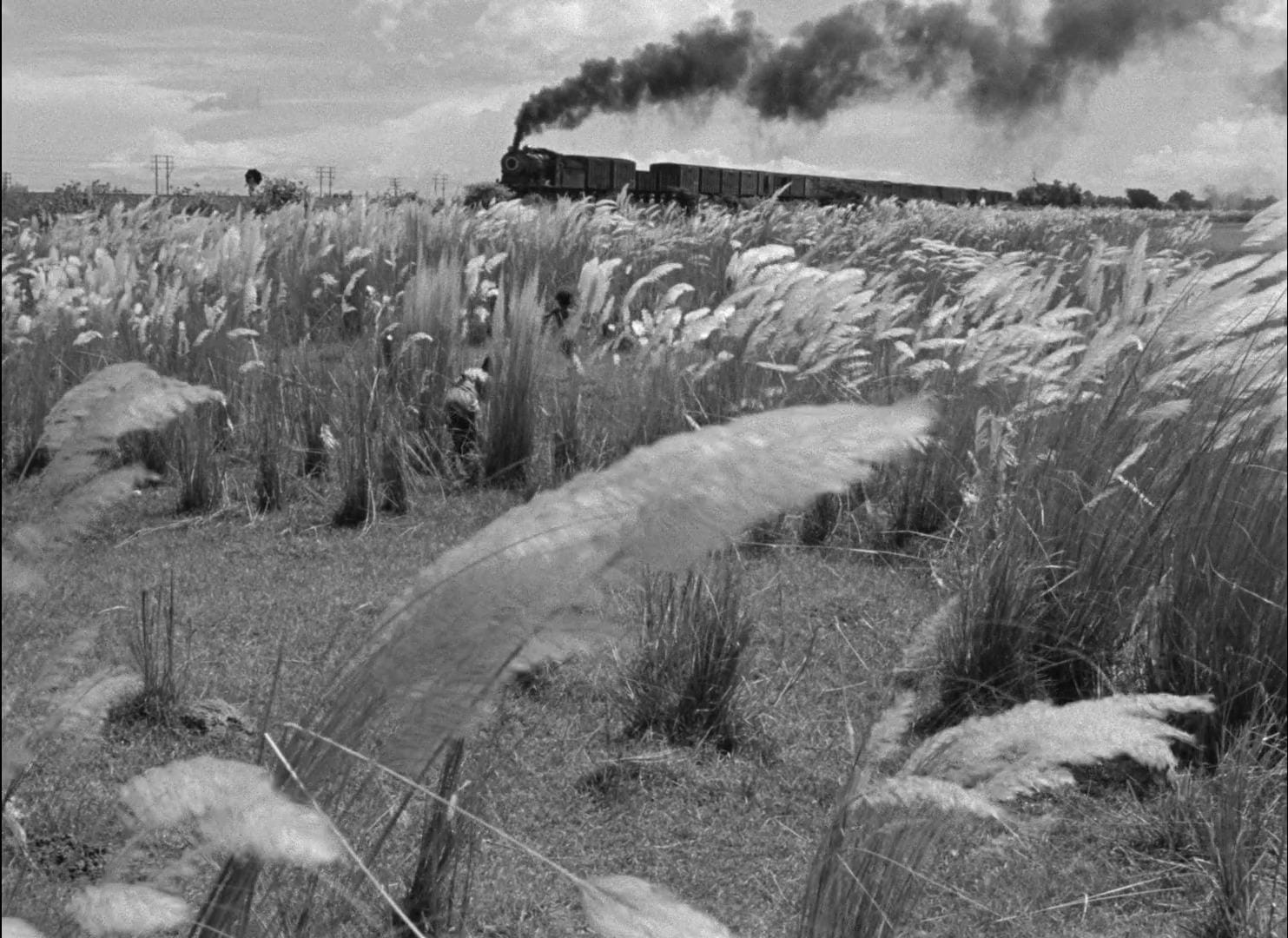
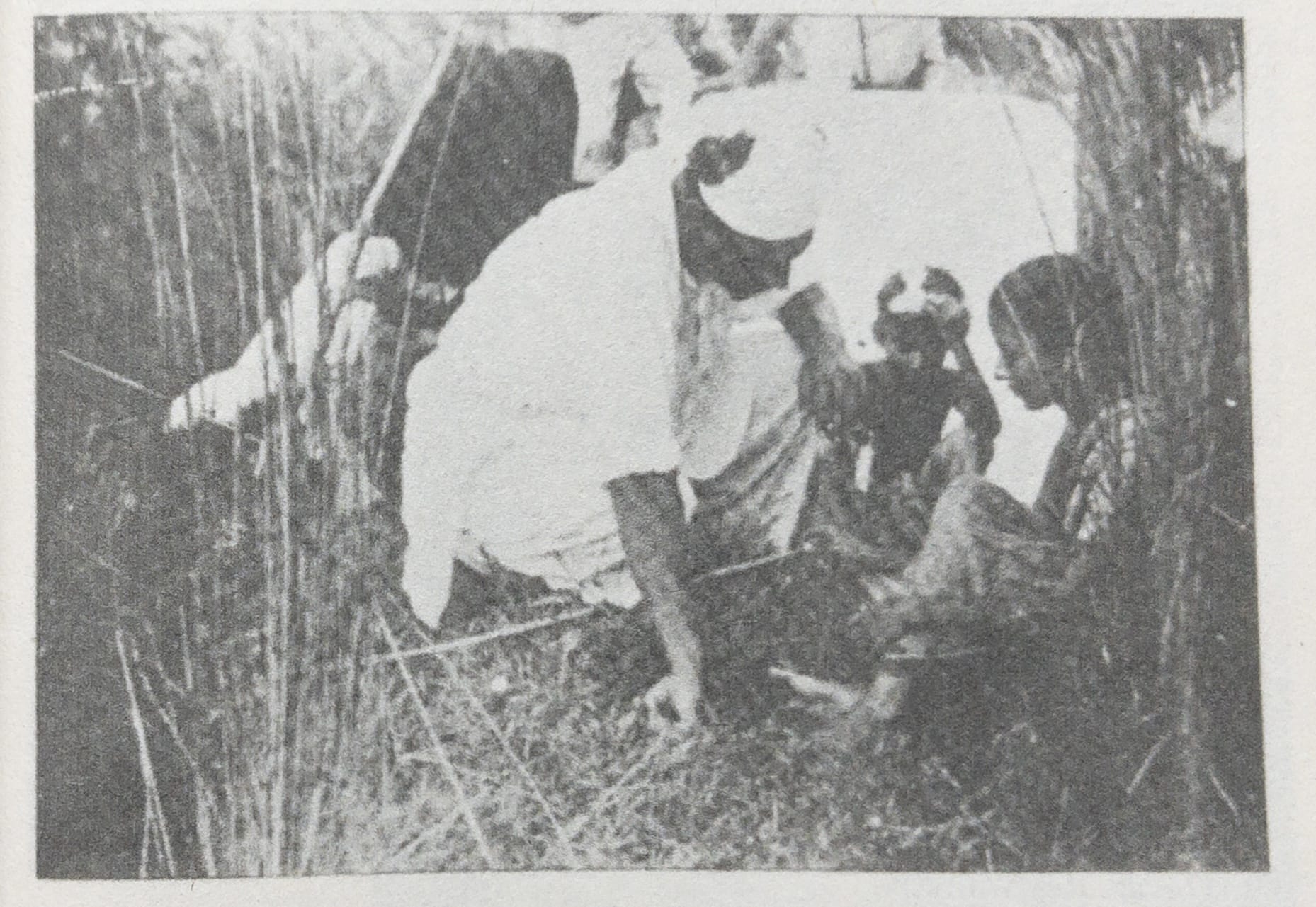
The actual shooting was full of strange problems and magical behind-the-scenes moments that felt like a battle against time and nature. One famous scene shows Apu and his sister Durga seeing a real train for the first time. It is a moment of pure cinematic wonder. They went to a field filled with beautiful white kaash flowers, shot half of the scene, and went back a week later to finish it. They were shocked to find the field completely bare because local cows had eaten every single flower. Ray refused to change his film and waited a whole year for the flowers to bloom again to finish the scene. When they returned a year later, they had to use three different trains to get all the shots. Ray even sent a man into the train engine to tell the driver to put extra coal in the fire so the train would blow dark black smoke for the camera, creating that stark contrast against the white sky.
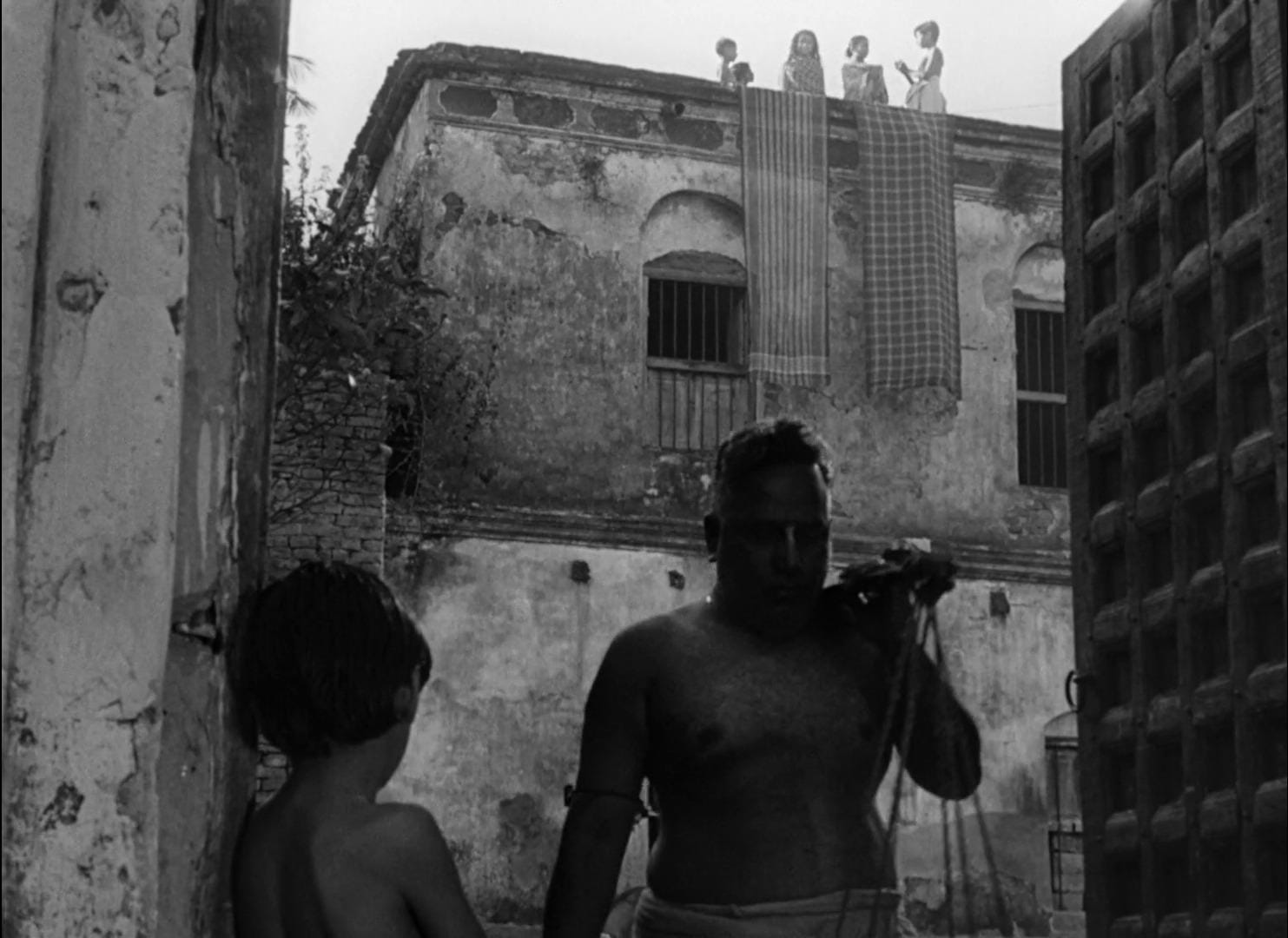
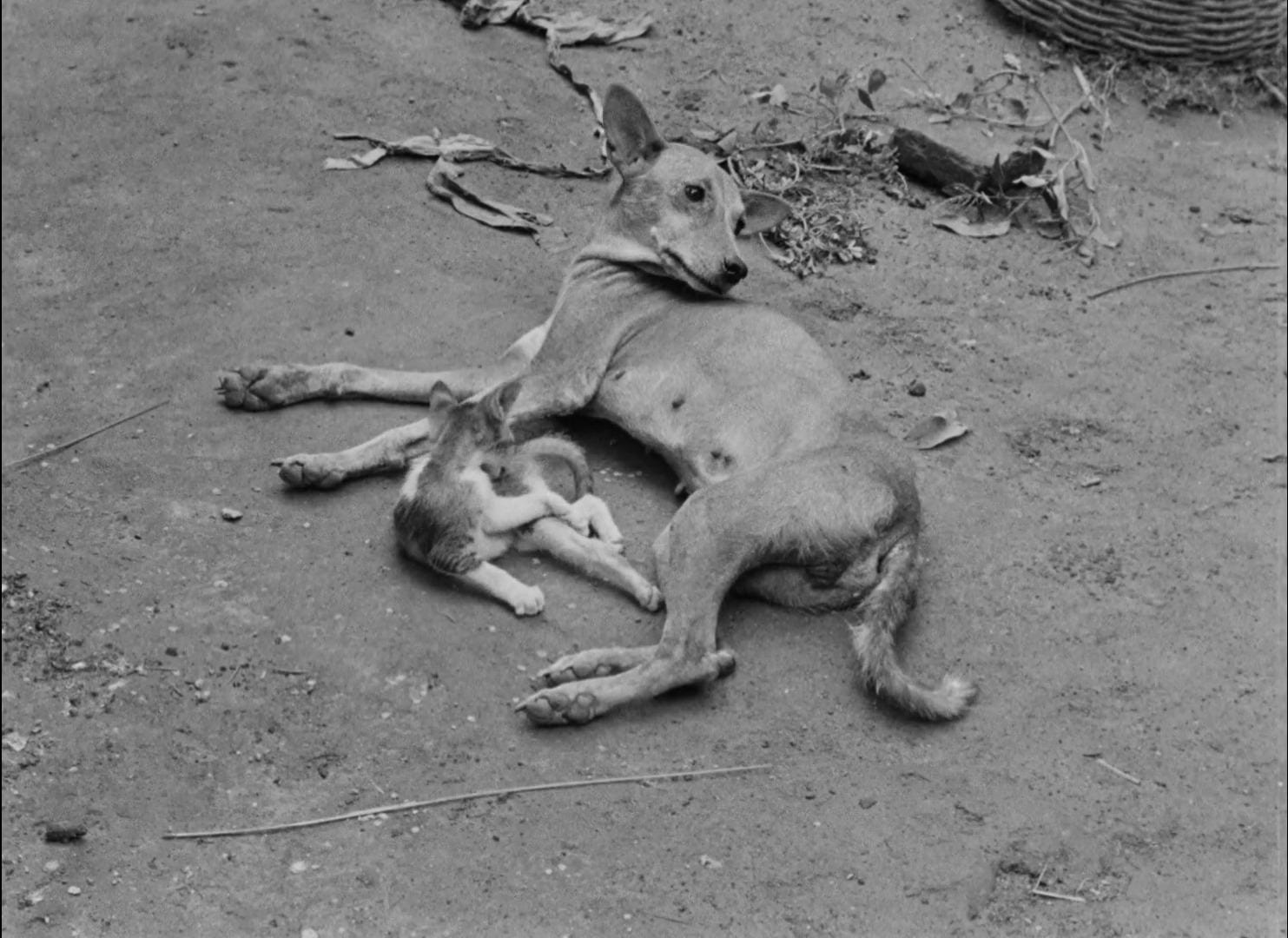
Another big problem was that they had to stop shooting for six months when the money ran out. During that time, the village dog playing Apu’s pet, Bhulo, died. This was a disaster for continuity. Ray had to search the village to find another dog that looked exactly the same, with a brown coat and a white-tipped tail, to finish the scene. Even the actor playing the fat sweet-seller, Chinibash, died during a break. Ray found another plump man and cleverly filmed his back as he walked through a gate so the audience would not notice the difference. These obstacles forced Ray to become a master of trickery and framing, proving that limitations often breed the most creative solutions.
Animals and nature were very hard to direct when you had no budget for trainers. In one scene, the new dog stubbornly ruined eleven expensive shots by refusing to follow the children. Every failed shot felt like a heart attack because they were using their own money for the film rolls. Finally, on the twelfth attempt, they gave Durga a large sweet to hold hidden behind her back, and the greedy dog followed perfectly. Nature also tested them constantly. Ray had no money to rent fake rain machines, so he rushed out with his camera during a real monsoon storm. It was so cold in the heavy rain that little Apu was shivering, and they had to give the children warm milk with a drop of brandy to warm them up after the shot. There was no glamour on this set, only a shared, gritty determination to capture the truth.
The way critics reacted to Pather Panchali changed a lot from the first to the last, following a journey from local acclaim to political controversy and finally to global immortality. At first, it was a massive, magical success. When it was released in 1955, Bengali audiences loved it because it looked exactly like their real lives. They saw their own courtyards, their own rain, and their own struggles on the screen for the first time. Internationally, it won the “Best Human Document” award at the Cannes Film Festival in 1956, and early critics praised it as beautiful poetry that came straight from the very heart. It was a revelation to the West that India could produce a film of such quiet, sophisticated power.
In the middle years, as Ray became famous in the 1960s and 1970s, some people started to argue about the movie. Success often brings a backlash. Some Indian politicians and critics criticised him, accusing Ray of exporting poverty just to win prizes in Western countries. They felt the film was an embarrassment to a new nation trying to modernise. They said he should be making movies about modern India’s dams and new factories instead. Ray bravely defended his movie, saying “…my main preoccupation as a filmmaker … has been to find out ways of investing a story with organic cohesion, and filling it with detailed and truthful observation of human behaviour and relationships in a given milieu and a given set of events, avoiding stereotypes and stock situations, and sustaining interest visually, aurally and emotionally by a judicious use of the human and technical resources…”
Lastly, all the bad comments were forgotten as the film stood the test of time. Today, Pather Panchali is universally respected as a foundation of world cinema and always ranks high on lists of the greatest movies ever made. It is taught in film schools from New York to Tokyo. It remains a deeply human story that transcends language and borders. The famous Japanese film director, Akira Kurosawa, said the final and most beautiful word about Ray’s work: “Not to see Ray’s films was like not seeing the sun or the moon”. Just as we take the sun and moon for granted as essential parts of our world, Ray’s films have become an essential part of our cultural vision. He taught us that if we look closely enough at a single dewdrop, we might just see the entire universe.
Note: The biographical details, anecdotes, and historical reflections provided in this account are drawn directly from Satyajit Ray’s own writings. The sources for these insights are his memoir, Childhood Days (the English translation of Jokhon Chhoto Chhilam), and its companion section on the evolution of his cinematic craft, Making Movies.
Md Rabbi Islam is a filmmaking student and writer; he can be reached at mdrabbi_islam@icloud.com.
Send your articles for Slow Reads to slowreads@thedailystar.net. Check out our submission guidelines for details.