Where Chittagong meets Makkah

Long before the Fajr Adhan (prayer call) echoed across the holy city, Makkah’s streets were already bustling with life. Around 3 a.m. during the Hajj season, I walked through brightly lit commercial lanes. Pilgrims in white ihram quietly made their way towards the Haram.
Restaurants stayed open, garment shops displayed freshly arranged clothes, and workers prepared tea, bread, and rice for the crowds expected after prayer. When the first Adhan finally sounded, and pilgrims headed to prayer, the shops remained lit, ready for the next wave of customers. In these early hours, it was clear that the spiritual rhythm of the holy cities is deeply connected to the migrant communities that keep them running.
In my earlier article, I explored the hardships faced by Bangladeshi migrants in Saudi Arabia—stories of exploitation, deportation, and insecure work that affect many low-income workers across the Gulf. On the streets of Makkah, Medina, and Jeddah, a different narrative also emerges. Migrant communities—especially Bangladeshis and other minorities such as the Rohingya—are not just victims; they play an active role in shaping local markets, running small businesses, and contributing to the daily life of the city.
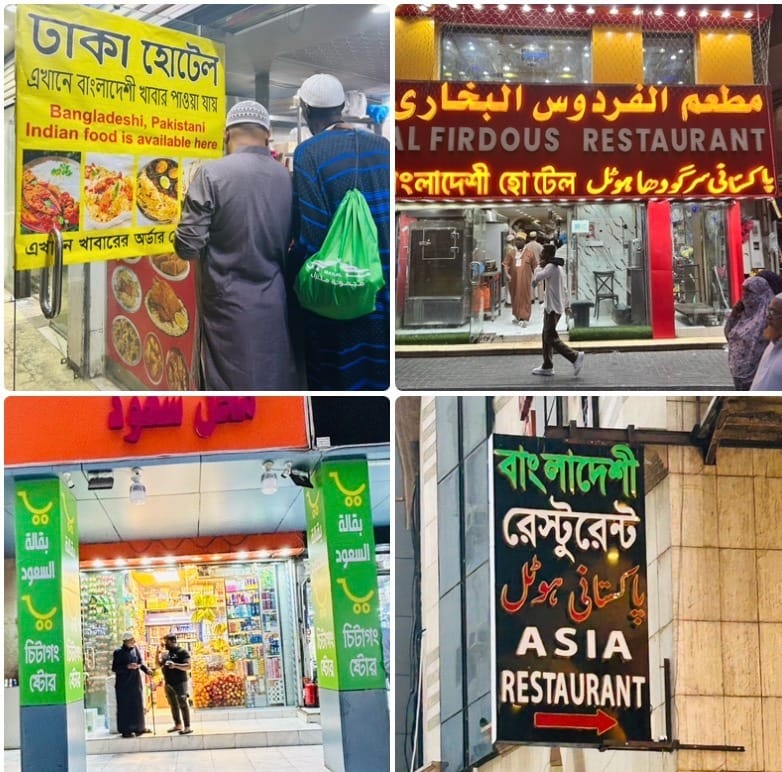
Walking through the crowded streets near the Haram, I noticed hotels named “Bangladeshi Hotel” and even the same restaurant labelled as “Bangladesh Restaurant” in Bengali script and “Pakistani Restaurant” in Urdu. These signs are more than simple advertisements—they reveal a multicultural food scene growing within the pilgrimage economy.
This strong presence is especially visible in the vibrant South Asian neighbourhoods of the holy cities. Walking through the crowded streets near the Haram, I noticed hotels named “Bangladeshi Hotel” and even the same restaurant labelled as “Bangladesh Restaurant” in Bengali script and “Pakistani Restaurant” in Urdu. These signs are more than simple advertisements—they reveal a multicultural food scene growing within the pilgrimage economy. Restaurants across Hijra Road and Ibrahim Khaleel Road have adapted to serve pilgrims from Bangladesh, Pakistan, and India, creating familiar spaces for people far from home.
In these restaurants, food is more than just a meal; it is a connection to cultural memory. Pilgrims, tired from rituals, look for biryani, porota, lentils, deshi curry, and milk tea—dishes that offer the comfort of home and a sense of belonging. Migrant entrepreneurs have transformed these emotional and cultural ties into thriving small businesses.
Beyond cuisine, language is another marker of this vibrant migrant presence. In many eateries and clothing stores, the Chittagonian dialect, locally known as “Chitangaya”, stood out. At times, it seemed almost as common as Urdu. Shopkeepers often spoke in Chittagonian, hotel workers called out instructions in the dialect, and traders chatted fluently as they arranged goods. Even local Saudis and other migrant workers seemed familiar with the dialect, a testament to its prevalence in commercial hubs.
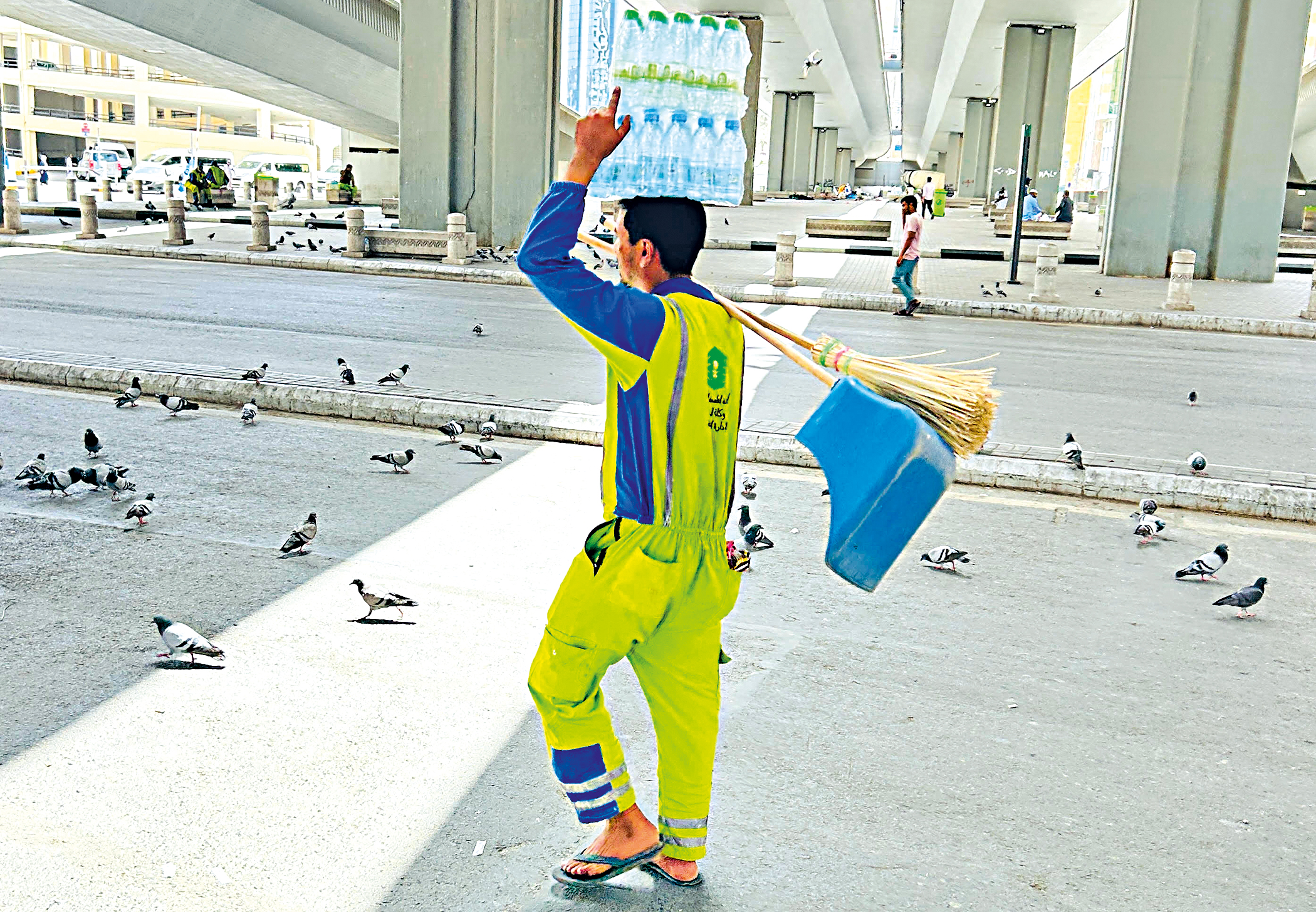
The strong presence of migrants from Chittagong and Cox’s Bazar raises an important question: why have Chittagonian migrants become so common in sectors such as food, hospitality, clothing, and retail across Saudi Arabia?
To find out, I spent several days during Hajj talking with traders, workers, and shop owners about these patterns. Again and again, one theme emerged: migration networks and inherited occupations.
One migrant trader in Makkah summed it up as we talked inside his shop: “Chitangaya people don’t do cleaning jobs. They do business and work in hotels.”
Initially, this appeared to be an expression of regional pride. However, over the following days, a distinct occupational pattern became apparent. Most informal workers I encountered—street cleaners labouring in harsh conditions and extreme heat—were from northern districts of Bangladesh and other areas marked by poverty and underdevelopment. Notably, none were from Chittagong.
This occupational pattern highlights how migration is shaped by social networks, class, and regional histories. Among Bangladeshi migrants, Chittagonians have built strong entrepreneurial networks over generations. Early migrants established themselves in restaurants, tailoring shops, fish trading, and hotels. New arrivals from the same villages or districts could then access accommodation, job opportunities, and partnerships through kinship and community links.
Migration networks, then, become economic assets. They determine who gains access to stable, profitable occupations. Chittagonian migrants, through their concentration in trade and hospitality, have created pathways for future generations. Many now move beyond manual labour into small-scale entrepreneurship.
In contrast, migrants from poorer northern districts often lack such networks and resources. Many enter demanding, precarious sectors such as sanitation and road cleaning. This highlights an emerging reality of global labour mobility: migrants do not constitute a homogeneous group; despite originating from the same country, regional background, class, and social capital influence economic outcomes abroad.
Migration networks, then, become economic assets. They determine who gains access to stable, profitable occupations. Chittagonian migrants, through their concentration in trade and hospitality, have created pathways for future generations.
Similar patterns appear elsewhere in Saudi Arabia. In Jeddah, Bangladeshi migrants dominate much of the fish market. Many traders hail from Bangladesh’s coastal regions, which are historically tied to fishing and maritime trade. Familiarity with these occupations at home translates into commercial networks abroad, as coastal identities reshape economic life across Gulf cities.
Alongside Bangladeshis, Rohingya minorities have also become highly visible in the urban economies of the holy cities, especially around the Misfalah area. Around crowded intersections and pilgrimage routes, Rohingya street hawkers sell prayer caps, tasbih beads, scarves, perfumes, and small religious items. They move constantly through dense crowds and occupy one of the most informal yet essential roles in the pilgrimage economy. Another striking aspect was seeing Rohingya vendors selling Indonesian and Malaysian street food, such as Nasi Lemak, Nasi Goreng, and fried noodles, as Indonesian pilgrims enthusiastically crowded to buy food that reminded them of home. Such a presence indicates the Rohingya’s transnational connections with extended family and community members in Southeast Asian countries and also reflects another layer of displacement, adaptation, and survival within Saudi Arabia’s informal economy and urban landscape.
These observations reveal the complex social dynamics of migration and show how different communities carve out economic roles through networks, historical experiences, and access to resources. Chittagonian Bangladeshis—through networks and entrepreneurship—dominate hospitality, food, and garment trading. Poorer Bangladeshi migrants from northern districts fill labour-intensive sanitation roles. The Rohingya, often speaking multiple languages, play a prominent role in informal street vending and attract diverse customers.
Despite these differences, all migrant communities make vital contributions to Saudi Arabia’s small- and medium-sized enterprise economy and urban life. They feed pilgrims, sustain local markets, and provide the labour that keeps the holy cities functioning during the intense seasons of Hajj and Umrah.
Bengali, Urdu, Arabic, and the Chittagonian dialect echo through the streets and shopping malls. The holy cities are often seen only through the lens of spirituality and ritual. Yet beneath this sacred landscape lies another reality—one shaped by migration, commerce, and transnational networks.
Dr Abdul Aziz is a lecturer in media, culture, and communication studies at the School of Arts and Social Sciences, Monash University Malaysia. His research focuses on media, migration, and intercultural studies. He can be reached at a.aziz@monash.edu.
Send your articles for Slow Reads to slowreads@thedailystar.net. Check out our submission guidelines for details.
Who will answer for Bangladesh’s ecological wounds?
Will we learn from the Khan Jahan Ali crocodile tragedy?

Are Bangladesh’s Biharis truly equal citizens?

Why is it so hot? Inside South Asia’s dangerous heat wave
Who will safeguard Bangladesh’s cultural future?

100 days of the BNP government / Trust has returned, but has the state changed?

We learn English for years, but learn too little. Why?

How AI became an authority in our classrooms
100 days of the BNP government / Bangladesh is still trapped in a cycle of injustice