


How 'middle powers' are leaving the Global South behind

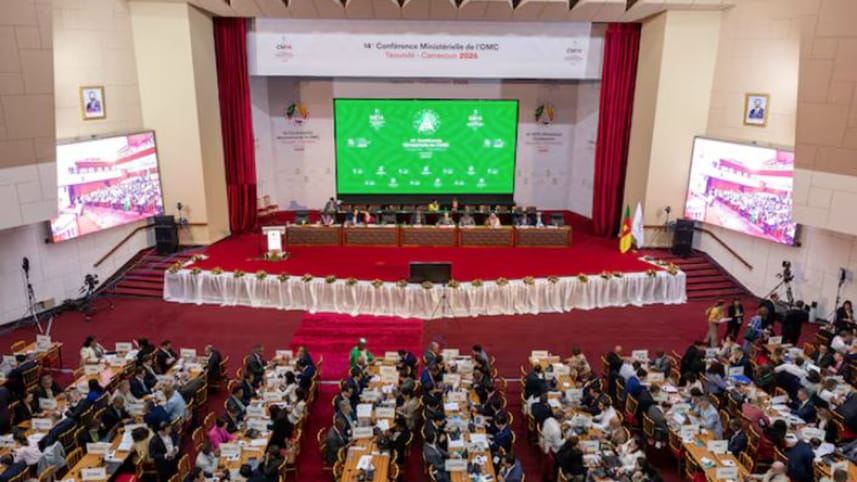
At last week’s World Trade Organisation (WTO) Ministerial conference in Cameroon, the world’s big trading nations, including Europe, the UK, and Canada, effectively gave up on collective decision-making. Instead, they said they’d focus more on seeking voluntary agreements or plurilateral agreements among themselves. These types of deals diverge from normal WTO consensus-based decision-making, where every country is supposed to agree on everything.
The so-called middle powers have decided to strike trade deals with each other in e-commerce, digital trade, and services, ignoring international poverty or what the Global South wants. If these plurilateral agreements eventually become international law, all countries will be obliged to comply irrespective of whether they helped write the rules. The global South must either put up or shut up.

One advantage of multilateralism—the idea that all countries must be involved in decisions—was that smaller, less powerful countries had clout because they could block deals they didn’t like. Whilst it was clunky in practice, at least it gave these countries a small voice.
Plurilateral agreements “aim to sideline multilateralism so that self-selective groups of more powerful states can cherry-pick what they negotiate,” said Jane Kelsey, an emeritus professor of law at the University of Auckland. On top of these plurilateral agreements, the less powerful countries are increasingly being subjected to regional and bilateral agreements. They risk being excluded as the middle powers do more deals.
Smaller economic size, skills, resources, and negotiating capacities often mean they are not proactive enough to initiate talks and do not negotiate effectively. In relative terms, their market access will decline unless they take action. January’s India-EU trade deal, in effect, nullifies Bangladesh’s zero-tariff arrangement with Belgium because Indian exporters now also enjoy lower tariffs on some products in Europe. Australia, the UK, and Canada’s membership of the Comprehensive and Progressive Agreement for Trans-Pacific Partnership (CPTPP) enhances market access for the 12 countries involved in the deal compared to the least developed countries, none of which are part of it.
The death of the rules-based order
At the Davos meeting of the World Economic Forum in January, Canadian Prime Minister Mark Carney crystallised the hypocrisy. Carney, former governor of the Bank of England and Canada, pronounced the rules-based international order dead. He compared the system to “living within a lie” under the former Eastern Bloc countries, where the system only preserved itself because everyone else pretended to support it.
“The system’s power comes not from its truth but from everyone’s willingness to perform as if it were true. When even one person stops performing … the illusion begins to crack.” The former Goldman Sachs banker continued: “We knew the story of the international rules-based order was partially false.” But if you knew it was false, why did you promote it, benefit from it and shape it? If you knew the system you were promoting was a lie designed to benefit the rich while exploiting the poor, did all your rich, powerful friends at Davos know it was a lie, too?
For decades, countries in the Global South were told that the rules-based order would make them prosperous. Join the WTO, open markets, and accept the dollar as the world’s currency. The International Monetary Fund and the World Bank will manage the global economy. Everything will be OK. The system worked for the North and for some less advantaged countries. China’s WTO membership in 2001 hyper-charged its headlong rush into international markets and sparked the biggest mass reduction in poverty the world has ever seen. Hundreds of millions of people who’d otherwise have toiled as subsistence farmers began to form a new middle class. China became the most successful capitalist growth story in history. In Bangladesh, crores of people moved out of extreme poverty in a couple of decades as relative economic stability and more open markets allowed the ready-made garment sector to prosper, although that success story may now be wobbling.
But for many, the gains were far more patchy. About 15 to 18 crores more Africans are extremely poor now than in 1990. Poverty reduction across the globe has gone backwards since 2020. The international rules-based order paid scant attention to the environment. The rules worked very well for the beneficiaries at the top of the mountain, while only a select few from the majority world were allowed to clamber up onto its lower slopes. They always knew the story was false.
Forgetting the poor
This abandonment of the less advantaged comes at a time when they most need support. Tariffs on exports from the Least Developed Countries (LDCs) have soared to over 28 percent in the United States on a trade-weighted basis, up from about 2.8 percent before the Trump tariffs. Astonishingly, LDCs on average now pay more than twice the rate charged to developed countries to access the US market. This is simple victimisation. Countries like Bangladesh and Cambodia face tariffs worth half the value of their exports. This huge new tax is directly killing jobs and putting low-income people out of work in poor countries.
Europe often touts itself as a “development partner.” Where was Europe as a partner when Trump was hammering the LDCs with tariffs? If Brussels had any muscles and meant what it said, it’d surely be pushing its interests. But no, in its feeble deal with the US, the EU managed to entirely forget about the impact on its supposed developing country sisters, landing them in a worse position than itself.
My friend from Lesotho told me that a government delegation was rebuffed in its efforts to negotiate with a visiting US trade team in neighbouring South Africa. A quick phone call from the EU ambassador might have helped.
The end of aid?
This process of desertion by the middle powers has a longer background: 22 countries have chopped tens of billions of dollars off official development assistance since 2023. The latest is the UK, which last month slashed official development assistance to less than 0.3 percent of gross national income—the steepest cut of any G7 economy and more than halving the level from its peak three years ago. Africa faces the worst cutbacks. A 40 percent decline in UK aid to the continent will take bilateral assistance to its lowest level since the 1970s, in effect unwinding decades of supposed commitment to the world’s poorest.
The UK is hardly alone: Sweden, Germany, France, the Netherlands and other EU donors have also found themselves becoming less generous in recent years as they rediscover an appetite for war and austerity.
At a time when their supposed adversary, Trump, “threw the US Agency for International Development into the wood chipper,” this seems a particularly bad moment to suck much-needed cash out of the Global South. It’s strange how the so-called middle powers criticise Trump, then in some areas copy him.
It’s also an own-goal. It’ll erode whatever mild influence these governments wielded abroad. Fed up with the hypocrisy, governments from Nairobi to Dhaka are going their own ways or siding with China, which has abolished taxes on their exports and has spent the past decade or more spending a trillion dollars on useful things like building bridges, roads and ports.
Of course, many of us knew that the rules-based order was a lie, but now the truth is clear, as even its former proponents admit. And if there are middle powers, there must be higher powers and lower powers. It’s a sad admission to rank the world’s countries based on power rather than rules or justice.
 For all latest news, follow The Daily Star's Google News channel.
 Dr Dan Gay is an international trade and development economist based in the UK.
Views expressed in this article are the author's own.
Follow The Daily Star Opinion on Facebook for the latest opinions, commentaries, and analyses by experts and professionals. To contribute your article or letter to The Daily Star Opinion, see our guidelines for submission.
Comments