Measles outbreak: Stop the blame game, start saving lives

If children had not died in rows, our rulers would not have realised that the measles situation is slipping out of control. The media is now filled only with news about measles.
It was probably 1981. I was working with Dr Zafrullah Chowdhury. One night, returning late from Dhaka, he handed me a piece of paper. I had to translate a letter and publish it in a box alongside an article on measles in the next issue of Monthly Gonoshasthya. The letter was written by a father whose daughter had died of measles. After reading the said letter, I could not sleep that night. In the morning, seeing me working in the paddy field (we called it Krishi kaaj), Zafrullah Bhai said, "I guess you did read it last night? could not sleep, isn't it? Go take a bath and rest; I will check the translation in the afternoon." That letter still haunts me. I can never take measles lightly.
The letter was written by Roald Dahl in 1962, before the measles vaccine was available. It was an open letter describing his daughter's illness:
"My eldest daughter, Olivia, was seven years old when she got measles. As the illness ran its usual course, I remember often sitting on her bed reading to her, feeling little concern. Then, one morning, as she was recovering, I was teaching her to make small animals out of coloured pipe cleaners. When it was her turn, I noticed her fingers and mind were not working together. She could not do anything. 'Are you feeling all right?' I asked. 'I feel very sleepy, Daddy,' she said. Within an hour, she was unconscious. Within twelve hours, she was dead."
Olivia developed a terrible condition called measles encephalitis, and there was nothing doctors could do. That was nearly 64 years ago. Even today, if rows upon rows of children had not died, our rulers would not have realised that the measles situation is slipping out of control.
Is measles spreading only in Bangladesh?
In neighbouring West Bengal, India, the measles situation has already become alarming. Even vaccinated individuals are getting infected. Measles has also been rising again in both the United States and Europe.
In the United States, measles infections increased in 2024–2025 compared to previous years. By early 2025, outbreaks had appeared in a dozen states. Most infections occur among unvaccinated children and are due to imported cases from international travel. The CDC reports that in many cases, measles is spreading rapidly within entire communities. Although measles was declared "eliminated" in the U.S. in 2000, vaccine hesitancy has now become a major cause of its resurgence.
"My eldest daughter, Olivia, was seven years old when she got measles. As the illness ran its usual course, I remember often sitting on her bed reading to her, feeling little concern. Then, one morning, as she was recovering, I was teaching her to make small animals out of coloured pipe cleaners. When it was her turn, I noticed her fingers and mind were not working together. She could not do anything. 'Are you feeling all right?' I asked. 'I feel very sleepy, Daddy,' she said. Within an hour, she was unconscious. Within twelve hours, she was dead."
In Europe, according to the WHO and the European Centre for Disease Prevention and Control, measles cases rose several-fold in 2023–2024. Some countries reported thousands of cases. The most affected countries include Romania, Kazakhstan, the United Kingdom, and France. School-based outbreaks have also been observed. After only 16 total cases nationwide between 2020 and 2023, the number of measles cases in Canada jumped to more than 100 in 2024 and more than 5,000 in 2025. In the wake of a measles outbreak in Canada that has infected thousands of people over the past year, an international health agency revoked the country's measles-free status on Nov 10, 2025.
The Pan American Health Organisation, which serves as the World Health Organisation's regional office for the Americas, made this announcement after the agency's measles elimination commission met in Mexico City to review the latest public health data.
As a global health epidemiologist who studies the spread of infectious diseases, this change in status does not surprise me. Measles is highly contagious, and a drop in childhood vaccination rates in Canada and in other countries has left many children unprotected from the disease.
Who is to blame for the outbreak in Bangladesh?
Blaming others is part of human psychology. Perhaps we are 'masters' of it. Psychologists confirmed that blaming others is a defence mechanism—an unconscious process that protects the finger-pointer and blame-shifter from unpleasant feelings, such as guilt or shame. Blaming is usually considered part of the defence mechanism called projection, which involves denying one's own anxiety-provoking or negative characteristics and seeing them instead in others.
From the current media narrative, the interim government's negligence has caused a national crisis. In reality, the health sector has become a casualty (perhaps the first) of the country's ambition to transition from a least developed nation to a higher level of development. The interim authorities halted the vaccination programme without maintaining a backup. Someone must take responsibility for this short-sightedness.
A health sector programme (HPNSP) in Bangladesh is a multi-year, overarching framework that consolidates various health, population, and nutrition initiatives under one umbrella to improve services, nutrition, and family planning. The interim government suspended the 5th phase in early 2025 due to concerns over financial mismanagement, operational redundancies, and a desire to shift toward a regular, more accountable budget system after 27 years of sector-wide projects. Prof Be-nazir Ahmed, a health expert and former director of disease control at DGHS, told The Daily Star in December 2025 that though the sectoral programmes had some shortcomings, Bangladesh performed reasonably well in preventive healthcare through them over the last few decades. However, the sudden halt to the programmes has put many of our hard-earned achievements, such as the country's success, at risk of reversal. Whatever the reason, we must admit that the 'interim' administration failed to provide an alternative plan after suspending the sectoral programmes, resulting in service disruptions.
On the other hand, amid mounting pressure, the health sector has been forced to promote people to interim posts to fill over 6,000 supernumerary posts. Health workers were also organising protest rallies almost every day, pressing for a wide range of demands. All these demands require more funding, especially to protect children from harmful diseases.
How dangerous is this new wave of measles?
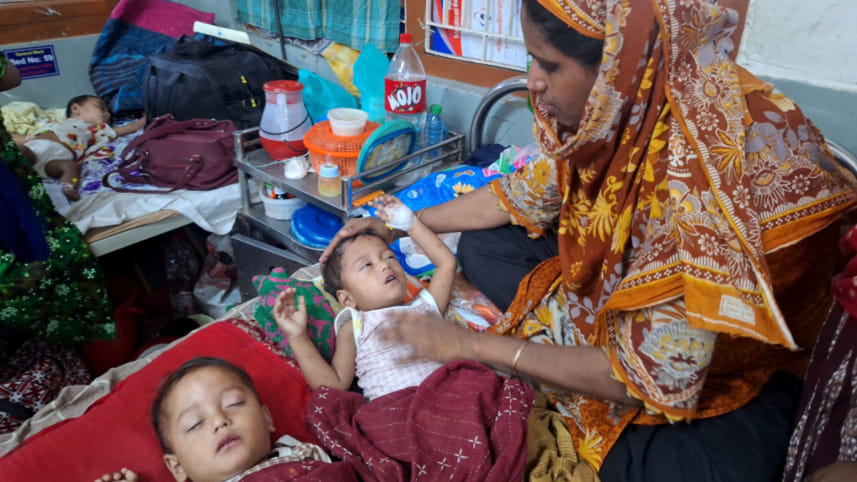
There is a significant difference between past and present measles. Previously, children under six months were rarely affected. Now hospitals are filled with such infants. In Bangladesh and most countries, vaccines are given at specific ages. In Bangladesh, the first dose (MR vaccine) is given at nine months, and the second at 15 months. Given the current situation, the vaccination schedule may need to be reconsidered. This strain appears more aggressive, affecting adults. Therefore, both the WHO and the CDC are issuing warnings.
Previously, measles and chicken pox were seasonal, mostly appearing in winter or early spring. Now there is no fixed season. Measles is spreading from country to country regardless of the climate. Due to climate change, erratic weather, air pollution, and rising levels of toxic gases, viruses now find favourable conditions year-round.
Possible complications
There is no room for negligence. Measles can cause long-term suffering, such as:
- Immune amnesia (weakened immunity)
- Severe neurological complication (SSPE)
- A rare but devastating condition appearing 7–11 years later
- Causes loss of motor skills
- Cognitive decline
- Leads to coma and certain death (no effective treatment)
- Loss of vision and hearing
- Brain inflammation (encephalitis)
- Long-term malnutrition
Measles depletes vitamin A levels and, along with frequent diarrhoea, can lead to chronic malnutrition.
Is there a relationship between nutrition and measles outbreaks?
Measles has a strong link to nutrition. Especially in the context of malnutrition, the severity of the disease and the risk of death increase; it is widely believed that vaccines are effective in both well-nourished and malnourished populations. The vaccine can induce immunity, though the response may be slightly weaker in children who are severely malnourished or immunocompromised. Nutrition affects vaccine effectiveness and disease severity. In well-nourished children, the immune response is generally stronger and more long-lasting. With the vaccine now available and children vaccinated, we must address the issue of nutritional deficiency; in other words, we need to ensure access to food.
So what?
No doubt that the situation is becoming increasingly complex. Instead of politicising it and blaming past players, a national consensus must be built both inside and outside parliament. A clear roadmap is needed. Informing people honestly through a culture of daily briefing. Apart from ensuring proper vaccine stock, there is the horrendous task of reorganising the system and recruiting paid volunteers. They also need reorientation, as this time, children under six months need to be targeted. Orientation is also needed for the doctors and health workers who are managing and following up on the affected children. They also need to know the new protocol for managing measles.
Do we need more public information and research?
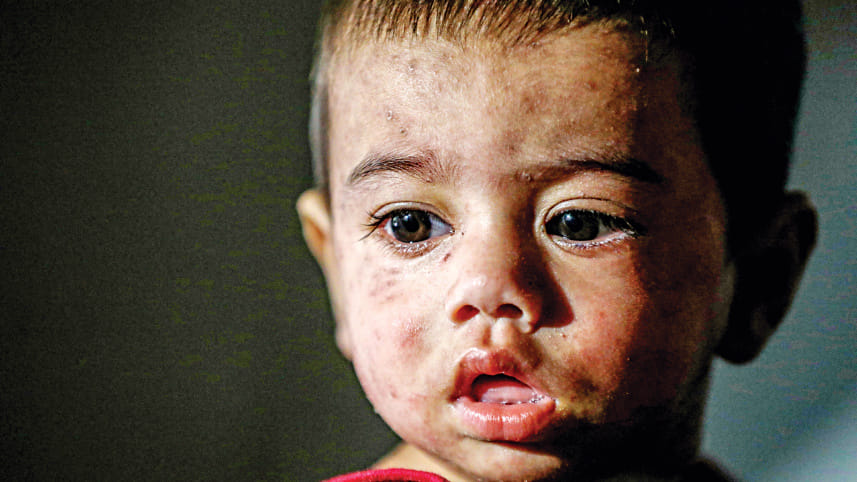
All electronic and other media should disseminate the following dos and don'ts to ensure the best interest of the children and better management of measles:
- Any child with a fever and rash should see a doctor
- Isolate infected children for at least five days
- Continue normal feeding and care
- The disease spreads through coughing, sneezing, and contaminated items
- Use separate personal items (comb, towel, soap, toothbrush)
- The virus can remain airborne for about an hour
After diagnosis:
- Consult a doctor immediately
- Maintain hygiene
- Ensure adequate fluids
Since measles weakens immunity, complications like pneumonia or bronchitis may occur. Vitamin A deficiency is common, so medical advice is.
- Administer high-dose vitamin A for two days as prescribed
- Seek immediate hospital care if danger signs appear (breathing difficulty, seizures, lethargy, etc.)
- If vision problems occur, give a third dose of vitamin A after 14 days
To answer many unanswered questions, we need a system of continuous research and information recording. We must remember that if children do not survive or become disabled, who will sustain the nation?
Gawher Nayeem Wahra is a researcher and writer. He can be reached at nayeem5508@gmail.com.
Send your articles for Slow Reads to slowreads@thedailystar.net. Check out our submission guidelines for details.

How Bangladesh can stop the next data breach
Salinity and the unseen health burden in coastal Bangladesh
Dhaka: How a city was planned to drown
Can Bangladesh’s 250 million tree pledge succeed?

Bonolata Sen's Natore: A topographic reading
When rain turns Dhaka's commute into a second job

Why Bangladesh’s children are in school but not learning
Why Bangladesh is still failing to protect children from infectious diseases

Why Bangladesh’s new data protection law may fail to protect your data