


Benazir’s arrest is only the start of Bangladesh's accountability test

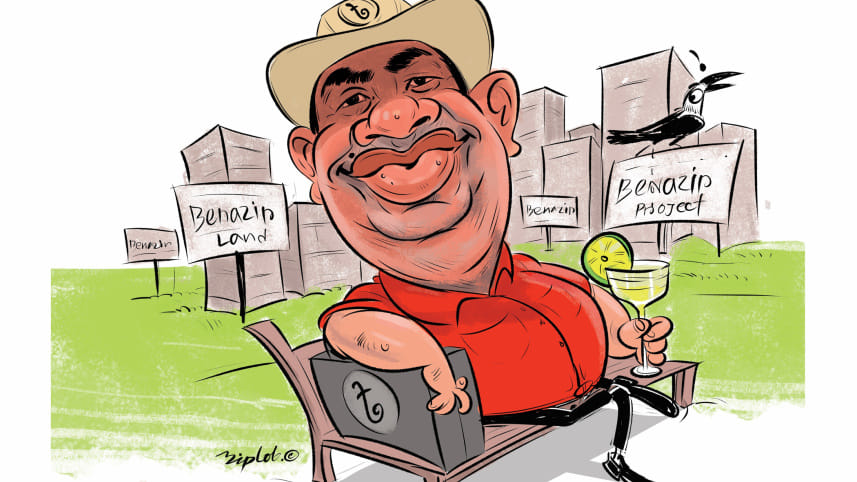
Benazir Ahmed’s arrest in Dubai is significant in that it marks an important first step in a much longer pursuit of accountability. Bangladesh has secured the detention of the former inspector general of police who, for years, represented the frightening fusion of coercive state power, political patronage, and impunity under the ousted Awami League regime. But if the government treats this as a triumph rather than the start of a difficult legal battle, the country may again mistake motion for justice. Home Minister Salahuddin Ahmed recently told parliament that Bangladesh received confirmation of Benazir’s arrest from the UAE authorities on June 12, 2026, and that a formal extradition request must be submitted within 30 days from the date of arrest. Completing the necessary legal, diplomatic, and administrative measures successfully is now the real test.
The public should be clear about what has happened in this case. An Interpol red notice is a request to locate and provisionally arrest a wanted person pending extradition or similar legal action; Interpol itself says it is an international alert, not an arrest warrant, and each member country decides what legal value to give it. This distinction matters because Bangladesh’s political class has an old habit of converting legal processes into slogans. A red notice may get a fugitive stopped at an airport; it does not bring him to Dhaka, convict him, recover his assets, or vindicate his victims. Those outcomes require evidence, admissible records, diplomatic credibility, and a justice system that foreign courts can trust.
 For all latest news, follow The Daily Star's Google News channel.
 That is why Benazir’s arrest should humble, not intoxicate, the state. The final decision on his return rests with the UAE judiciary, so Bangladesh must demonstrate that the cases against him are legitimate criminal proceedings, not instruments of political vendetta, while also showing that he will receive a fair trial. If the case file is sloppy, if the charges are theatrically overextended, if due process is sacrificed to political appetite, the defence will not need to invent a persecution argument—Dhaka will have supplied it.
The justice question is broader than unexplained wealth. Benazir was not merely another public servant accused of living beyond known means. He was also a former director general of RAB, an institution the US Treasury sanctioned in 2021 over serious human rights abuses, naming Benazir among former RAB leaders designated in that action. If Bangladesh brings him back only to litigate property schedules while avoiding the architecture of coercion he had helped command, it will send a cynical message: looted money deserves files and warrants, but enforced disappearance, torture, and extrajudicial killing can be buried under selective anti-corruption theatre.
The asset recovery lesson is equally severe. Handcuffs do not repatriate money. The ACC has already secured domestic preservation orders including court orders covering properties under 83 deeds, stating 114 acres of land, and the freezing of 33 bank accounts in the names of Benazir and his family members. Investigators identified nearly 800 bighas of land, four Gulshan flats, company shares, BO accounts, bank accounts, and savings certificates, with courts ordering the seizure of almost all such assets. These are important restraints but they are not the same as recovering wealth hidden through foreign companies, nominees, passports, property markets, and professional enablers.
The gap between domestic seizure and overseas recovery is where Bangladesh has historically failed. Asset recovery under the UN Convention against Corruption involves identifying, tracing, freezing, preserving, seizing, confiscating, managing, and returning stolen assets. Each verb in that chain is a technical task. None can be replaced by ministerial outrage. If the government wants Benazir’s case to become a template, it must build proper transaction maps, identify beneficial owners, obtain bank records, preserve digital evidence, engage competent domestic and foreign counsel with expertise in the relevant fields of national and international law, and file requests that meet the standards of the requested jurisdiction. Inflated rhetoric will not survive cross-examination in a foreign court.
This is especially important because the present government has placed laundered asset recovery at the centre of its strategy to combat corruption, money laundering, and financial crimes. In early April, Prime Minister Tarique Rahman told parliament, citing the interim government’s white paper committee, that $234 billion was siphoned abroad between 2009 and 2023, averaging $16 billion annually. That figure may be politically explosive, and convincing, but to recover assets, courts need provable links between predicate offences, money flows, and property. The larger the allegation, the greater the burden on Bangladesh to show that it is building defensible cases, not merely narrating plunder.
There is at least an institutional skeleton. As per the Bangladesh Financial Intelligence Unit, an Inter-Agency Task Force on Stolen Asset Recovery and Management was restructured in September 2024, chaired by the Bangladesh Bank governor and including the ACC, CID, Attorney General’s Office, NBR bodies, foreign ministry, home ministry, and others. In March, the incumbent governor asked banks to accelerate work with global litigation firms and provide data, while legal experts warned that recovering laundered money can take three to five years. That timeline is unpopular, but it is more honest than the fantasy that stolen assets will return because a fugitive is arrested in Dubai.
The darkest risk here is selectivity. Many Bangladeshis accused of siphoning off wealth were not lone criminals; they thrived through the collusion of bank boards, regulators, land registries, passport offices, tax authorities, politically protected lenders, and legal fixers. If Benazir becomes the sacrificial spectacle while new networks of influence quietly inherit the old privileges, then the arrest will cleanse nothing. The government cannot credibly promise asset recovery while protecting friendly defaulters, favoured money launderers, or politically convenient financiers. Anti-corruption without institutional self-criticism is only regime change with better public relations.
Benazir’s arrest offers Bangladesh a rare opening. It can demonstrate that even one of the most powerful former security officials can be brought within the law, that stolen assets can be pursued through disciplined international cooperation, and that victims of state abuse will not be erased by narrow financial prosecution. Or, it can squander this moment through haste, incompetence, and selective justice. Bangladesh has a chance to prove it knows how to end impunity.
Barrister Khan Khalid Adnan is an advocate of the Supreme Court of Bangladesh, fellow at the Chartered Institute of Arbitrators, and head of the chamber at Khan Saifur Rahman and Associates in Dhaka.
Views expressed in this article are the author's own.
Follow The Daily Star Opinion on Facebook for the latest opinions, commentaries, and analyses by experts and professionals. To contribute your article or letter to The Daily Star Opinion, see our guidelines for submission.


Comments