


Amid an energy crisis, it's time to dim wasteful commercial lighting


The heat is returning to Bangladesh with more intensity. Daytime temperatures are already becoming difficult to tolerate, and for many, fans are no longer enough. As summer approaches, air conditioners will gradually shift from being a luxury to a necessity. If the coming months resemble the extreme summer of 2023, surviving peak hours without cooling—at least for those who can afford additional cooling—may become nearly impossible. But this year, the heat is arriving alongside another growing concern: a deepening global energy crisis, worsened by the US-Israel war on Iran, resulting in soaring fuel prices following Iran’s effective closure of the Strait of Hormuz, a key chokepoint handling one-fifth of global oil trade.
Amid rising oil prices and geopolitical tensions, Bangladesh is already feeling the strain. The government is now weighing austerity measures such as extending weekends, introducing work-from-home, adjusting office hours, and shifting some classes online to reduce energy consumption. A three-month energy-saving plan is reportedly being drafted, with mid- and long-term strategies also under consideration if global uncertainties continue. Alongside this, efforts are underway to protect foreign currency reserves as rising energy import bills threaten to place additional pressure on the economy.

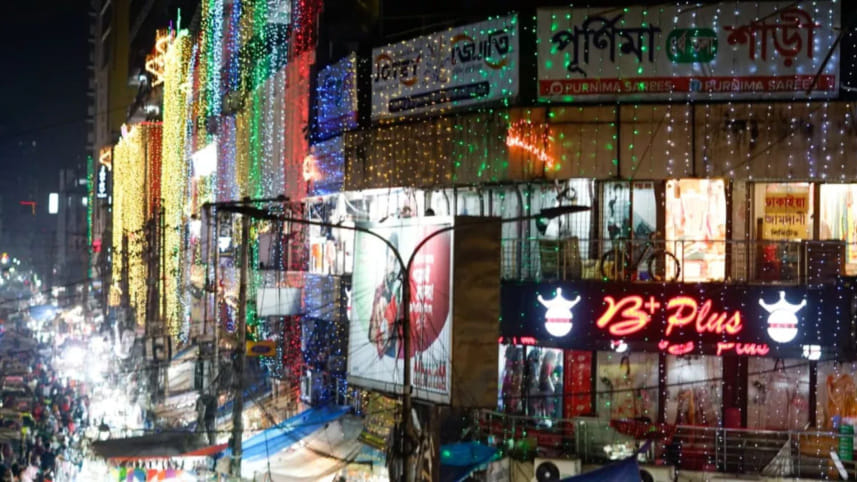
These are necessary and timely measures. Yet amid these plans, one glaring issue remains largely ignored: the surge of excessive electricity uses in commercial spaces for decorative purposes. In recent years, a new design trend has taken hold, which many proudly call the “Pinterest-style” restaurant or cafe. Multiple themed corners, sky-view lighting installations, illuminated walls, neon slogans, and vibrant digital displays create a carefully curated atmosphere meant to attract a photo-loving generation. Creativity in design is welcome. But the energy cost of this visual spectacle is rarely discussed. If Bangladesh is preparing for austerity, why are we still allowing unnecessary energy consumption to flourish in plain sight?
Much of this lighting serves no functional purpose. It does not improve food quality, hygiene, or customer comfort. Its primary role is visual enhancement, an energy-intensive effort to stand out in crowded commercial spaces. The same pattern is seen in showrooms. Clothing and accessory stores often keep powerful lighting systems running throughout the day and late into the night. Bright exterior displays and oversized illuminated signage compete for attention along already crowded city streets. Reducing this excess alone will not solve Bangladesh’s electricity challenges entirely. But ignoring it means overlooking one of the simplest opportunities for demand management.
A more thoughtful balance is needed, and this is where policy can play an important role. Bangladesh could introduce commercial lighting efficiency guidelines for restaurants, shopping malls, and showrooms. These guidelines would not ban decorative lighting but could set reasonable limits on brightness levels, operating hours, and energy consumption during peak summer months. Time-based restrictions on non-essential exterior lighting during peak demand hours could also be considered. At the same time, businesses could be encouraged through tax incentives or recognition programmes to adopt energy-efficient technologies such as smart LED systems, automated timers, and sensor-based controls. An energy-responsible business certification could further recognise commercial spaces that adopt efficient designs and reduce unnecessary lighting during peak periods.
These measures are not anti-business. On the contrary, they encourage a smarter and more sustainable model of commercial design. Customers do not choose a restaurant solely because it is dazzlingly bright. They return because the food is good, the environment is comfortable, and the experience feels welcoming. A calm, cozy atmosphere created through thoughtful interior design and soft lighting often leaves a deeper impression than overwhelming brightness.
Similarly, a brand’s value is not dependent on its storefront glowing brightly at night. It is dependent on product quality, customer trust, and a sustainable long-term vision. This conversation should also extend beyond lighting to the way commercial buildings are designed. Many restaurants, cafes, and showrooms rely heavily on artificial lighting even during the day. Yet, thoughtful architectural planning can significantly reduce this dependence. Large windows, skylights, open ventilation, and layouts that allow sunlight to penetrate deeper into interior spaces can reduce electricity use during daylight hours.
Sometimes, responsibility begins with small choices. In a season of increasing heat but decreasing energy supply amid supply chain disruptions, perhaps the brightest idea is not adding more lights but knowing when to turn some of them off.
Samira Tasnim is research associate at Bangladesh Institute of Governance and Management (BIGM). She can be reached at samira.tasnim@bigm.edu.bd.
Rafad Asgar is research associate at Bangladesh Institute of Governance and Management (BIGM). He can be reached at rafad.asgar@bigm.edu.bd.
Views expressed in this article are the author's own.
Follow The Daily Star Opinion on Facebook for the latest opinions, commentaries, and analyses by experts and professionals. To contribute your article or letter to The Daily Star Opinion, see our guidelines for submission.
 For all latest news, follow The Daily Star's Google News channel.


Comments