

Land of rivers and water crises?
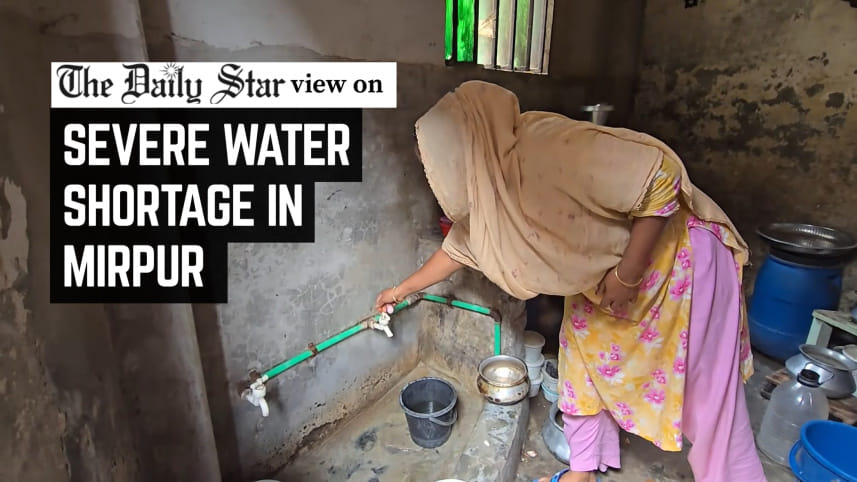
For a country so rich in rivers and rainfall, it is unfathomable that safe water—for drinking and everyday use—remains inaccessible to so many people in Bangladesh. From populated areas in the capital to salinity-stricken coastal areas such as Pirojpur and up to the hills in Bandarban, safe water often remains out of reach due to systematic gaps and failures. This daily recently reported on the situation in Mirpur’s Kazipara and Shewrapara areas, where residents have been facing water shortage over the past few months. Water supply is limited, and when the taps do run, the water is often visibly dirty and foul-smelling. As a result, many families have resorted to buying drinking water, depending on water tankers, and waiting for hours to cook, bathe, and wash.
Several factors are contributing to the recent shortage. For one, many multi-storey buildings have popped up in the area, which use powerful water pumps that reduce pressure in the regular supply lines. Relatedly, rapid depletion due to Dhaka’s urbanisation is reducing groundwater accessibility significantly year on year. While at the beginning of the century, groundwater in Dhaka could be found at depths of 30-40 metres, this has now fallen as far down as 120 metres. According to a WASA representative, water shortage in the area is also worsened by disruptions at the Bhakurta Water Treatment Plant, which was established in 2019 to ease the growing demand for water in Mirpur

At the root of this water shortage is Dhaka’s unplanned and rapid urbanisation. In the case of Shewrapara and Kazipara, plots which used to be vacant or occupied by tin-shed houses even a decade ago now host multi-storey residences. But when these buildings were approved, did the relevant authorities also ensure that utility planning developed to complement this growth? Bangladesh is rich in natural resources, but how much longer will we extract and expand while the ground beneath us struggles to recover itself?
The government must focus on ensuring safe water in the cities and the country’s remotest areas in close collaboration with experts. Deep tube wells must be installed as necessary, and rainwater harvesting methods and equipment must be made widely available. In rural areas, water purified in reverse osmosis (RO) plants should be made available free of cost to residents. Most importantly, authorities must revisit and revise our urban and rural development approach to ensure that it is sustainable rather than destructive. We must find a way out of this vicious cycle before our incessant resource depletion becomes irreversible.
 For all latest news, follow The Daily Star's Google News channel.


Comments