


Can matchmakers succeed where dating apps fail?

To some, the practice of matchmaking may seem archaic. However, over a decade after the advent of dating apps, a collective exhaustion is palpable in many. Such developments are interesting and worth noting even for the layperson who finds themselves exasperated as they see less and less chances to find a partner in a chaotic world that seems to be altering before one can adjust.
It is in this scenario that matchmaking companies serve an important purpose, that of human-led matchmaking which sees the person as a whole instead of a single image with a line often likely to mislead or push toward rash decisions.

It all started when a friend asked Nerissa Nashin to set him up with someone, because she was, in her friend’s words, “someone who gets it.”
This part is crucial, because it highlights a problem in the market for those seeking serious partners, but feel restricted by the traditional “ghotok” system that has elders enmeshed at every stage.
Nashin, who already had a company where she did bridal makeup, posted an Instagram story asking if she should play matchmaker. In one hour, she received 70 responses. Next, 150 people signed up before the company was officially launched. Eventually, without a dime spent on marketing, the word spread!
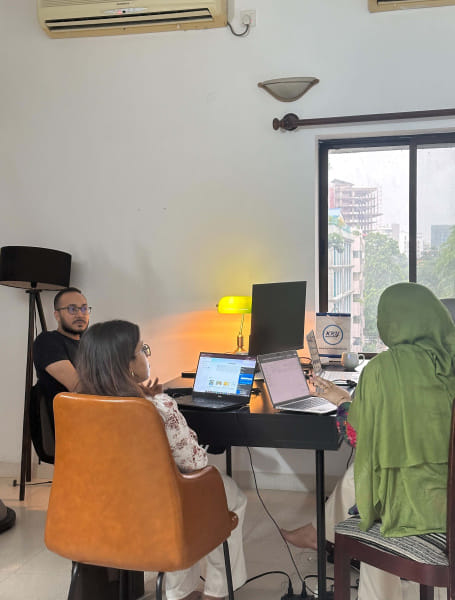
In a country undergoing rapid transitions in values and beliefs, the position of her company is that of a business filling a gap. The problem is more acute when viewed from the vantage point of cross-generational conflicts, except it has been made worse with the encroachment of the internet in the past 20 years.
“When we identify a person that we are going to work with and we see their profile and what they filled out, we not only use our algorithms and everything on our backend to help find you a partner, we personally go in and make sure that everything checks out.
“We have data points ranging from Linkedin, biodatas, voice notes, and photos. We pick up on nuances in the process that someone who has lived through the experience can pick up on”, says Nashin.
All this is done while maintaining the privacy of clients. The work involves not only the handling of large data sets gleaned from multiple sources, but sensitivity when a client rejects a potential match as the team is the one to deliver the message.
At present, the process takes a couple of weeks, but attempts are being constantly made to reduce the timeline. The running of the operation is undergoing constant change, whether through improvement in the technology used or applying newly gained knowledge from the job itself.
If the team realises they may not be able to find a match, the person is informed within about two weeks.
As a professional, Nerissa Nashin understands the difficulty to adjust when one has become altered by existing in two different places. Therefore, while making the match, the analysis involves not just the examination of individual qualities and preferences — they test whether they can align in terms of cultural exposure, lifestyle, plans for the future, and other aspects that may still be overlooked in the traditional marriage market.
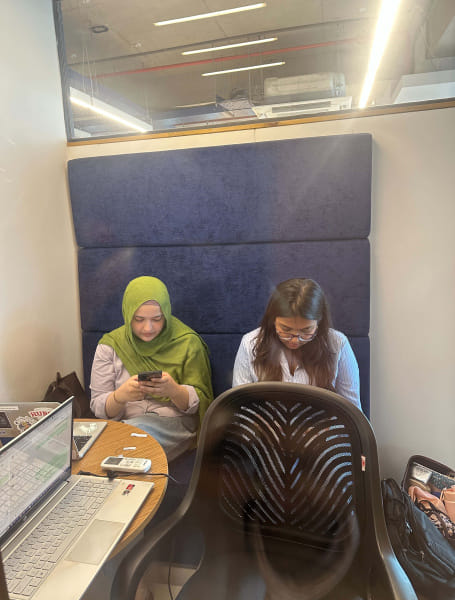
When asked about the geographical difficulties that are faced when attempting to match Bangladeshis across the globe, Nerissa Nashin’s answer is interesting.
She states that it is in fact, simple, as places like Australia, Canada and the US have large hubs of Bangladeshis. However, it is not merely the people from expected areas, but also places like in Norway and China, who have reached out her company, Deshi Cupid, for matchmaking services.
Dating apps have created a mindset in people where swiping has become such a norm that barely any consideration is given about the feelings of the person on the other side of the screen. This is also one of the many problems they are attempting to fix, for it really is high time that more options become available for a decision that alters people’s lives.
Nerissa Nashin, like many others, are offering a service directed to the Bangladeshi audience. This is unique by sole virtue of the fact that Bangladesh is still in its nascent stage when it comes to home grown businesses that provide services required by both the young and the middle-aged, regardless of where they are situated.
Perhaps it will mark the beginning of more such ventures that understands that the new Bangladesh requires much more than what is already in place.
 For all latest news, follow The Daily Star's Google News channel.
 Photo: Courtesy
Comments