


In solidarity with Palestine: Lamine Yamal’s image that went global
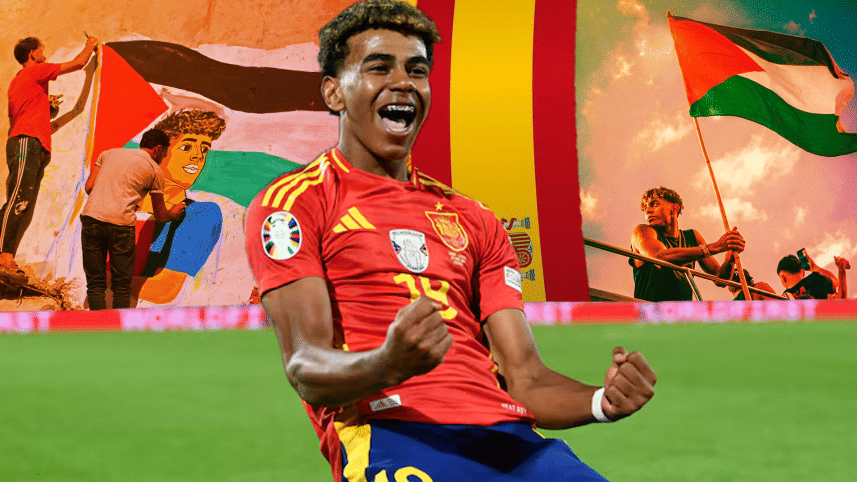
At just 18, Spain’s Lamine Yamal is living the ultimate Gen Z dream. He is already a football prodigy widely expected to rule the game for the next decade, but his influence goes far beyond the pitch. The internet is always buzzing about his lifestyle, parties and dating rumours. Yet, beyond all the hype, Yamal has consistently been vocal about his Muslim faith and his identity.
On 11 May, the streets of Barcelona were electric, celebrating their 29th La Liga title after defeating their rivals, Real Madrid, in El Clásico. Around 750,000 fans flooded the streets to catch the team's traditional open-top bus parade. Yamal actually missed the match due to injury, but he still managed to steal the show. As the bus rolled through the crowds, amid chants and flares, the teenager stood proudly waving a Palestinian flag.
 For all latest news, follow The Daily Star's Google News channel.
 Amid a sea of blue and red flags and supporters, this scene quickly travelled far beyond football, sparking conversations across politics and social media. The amount of appreciation he is receiving clearly shows that people no longer expect their idols to stay politely quiet.
Yamal also posted the pictures on his Instagram. The reaction was instant and deeply polarised. The most powerful response did not happen online. Just two days later, on 13 May, Palestinian artists painted a massive mural of Yamal waving the flag on the rubble of a destroyed building in a refugee camp in Gaza.
When asked about the incident, his club manager, Hansi Flick, did not hide his discomfort, admitting that he does not normally like such gestures. For him, football’s role is purely to entertain. Yet, he added that Yamal is old enough to make his own choices.
The moment later drew political attention as well, with the Israeli defence minister accusing Yamal of “inciting hatred” against his country.
Spanish Prime Minister Pedro Sánchez, however, publicly defended him, arguing that showing solidarity through a flag should not be viewed as an act of hatred. He declared that Yamal had merely expressed what millions of Spaniards feel.
Barcelona has emerged as one of Spain’s most visible centres of pro-Palestine activism since the beginning of the war in Gaza. In that atmosphere, Yamal’s gesture felt connected to a wider public mood already present in parts of Spanish society.
It’s not the first time he has been vocal about his identity. Earlier this year, during Spain’s match against Egypt, anti-Muslim chants from sections of the crowd sparked criticism online. Yamal later responded on Instagram, describing himself as a proud Muslim and calling such behaviour disrespectful, ignorant, and racist.
In modern times, players are no longer seen only through trophies and achievements, but also through their actions off the pitch. For Yamal, it is still very early in a career that already feels oversized for his age. But now, alongside his party shots, outfit posts and on‑pitch highlights, this image of him waving a Palestinian flag sits together as part of his public persona.


Comments