


Armeen Musa breaks boundaries with music, theatre, and South Asian art

At the mere age of 14, a time when most of us are wondering how to set aside time for play after studies, Musa had already formed a band with a group of friends. Looking back, she credits her family’s encouragement for giving her the freedom to explore music seriously. “It helped to have a very supportive family. Since I had my grades sorted throughout my school life, I was allowed to pursue extracurriculars as I wanted,” she says.
By 16, she was attending the underground concerts that once defined a generation of Bangladeshi music lovers, watching performances by bands like Black, and Nemesis. Somewhere between the roaring crowds, dimly lit stages, and the electric admiration surrounding the performers, she realised exactly where she wanted to be — on that stage herself.
 For all latest news, follow The Daily Star's Google News channel.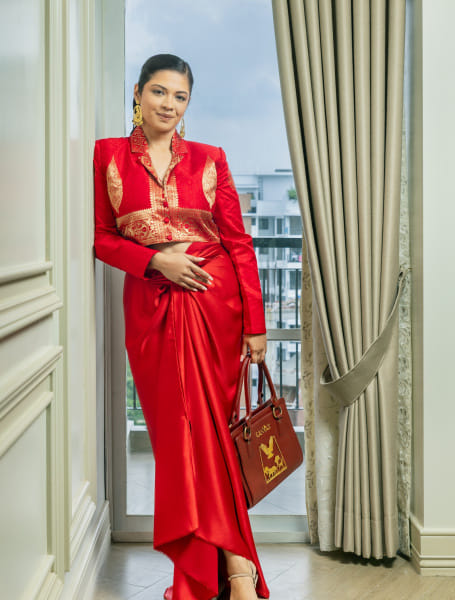
Although one would naturally assume that music came easily for someone like Armeen Musa, the reality, she says, was far from it. “I found school easy and music hard,” explains Musa, “and I found myself chasing the very thing that’s difficult for me.”
True to her words, Musa pursued the challenge all the way to the world's largest independent college of contemporary music, Berklee. The D in her first semester, she muses, was the first indication that she’s in the right place.
For many of her fans, in fact, their first introduction to Musa was her presence in Berklee College of Music’s tribute to and performance with A R Rahman in 2014.
By 2015, Armeen had founded Ghaashphoring Choir, the first of its kind in Bangladesh. Their take on “Chaina bhabish” and “Aha ki Anondo” was hard to miss by anyone with a taste in music. But with Coke Studio’s “Deora” in 2023, their fame skyrocketed across borders.
Interestingly enough, it was also the time when Musa realised that her music had become monotonous. She knew the ordeal, the projects that were likely to follow. It was all fine except that, after seven years of joy of creation, the chase was missing.
Musa decided to step back.
For the first time in her career, Musa found herself drawn toward an entirely different art form — acting. She had applied for training under renowned theatre scholar and director Syed Jamil Ahmed at the Spardha Academy of Performing Arts, and when a spot finally opened up in 2023, it felt like a natural next step in her artistic journey.
That very year, Musa performed the stage adaptation of “Ami Birangona Bolchhi”, a collection of heartbreaking interviews of rape victims of the Liberation War of 1971.
“During rehearsals, we used to be on our feet for 6 to 8 hours,” she recalls, “starting like that from scratch, feeling like zero again? It was exhilarating for me.”
Not only was she among the eleven ladies portraying the characters, but Armeen composed 11 live soundtracks for the play itself.
For aspiring artists romanticising creative careers, Armeen Musa offers a brutally honest reality check. “Everything everyone warned me about before going into this career is absolutely right!” she says candidly. “It’s not a steady income. People don’t value culture like they used to. You will most probably not make your parents proud.”
According to Musa, pursuing art professionally requires letting go of conventional ideas of stability and success. The artistic community may feel small and isolating at times, but to her, it is also one of the most compassionate spaces to exist in.
“This side is generous, happier, kinder, and more empathetic towards each other,” she says. “We artistes will never feel the need to leave a nasty comment on someone else’s social media platform. We recognise freedom of speech, but don’t believe in imposing it.”
Still, despite the uncertainty, Musa believes the magic lies in fleeting moments that make the struggle worthwhile. “Your 364 days will probably not feel special,” she reflects. “But a moment in a song or theatre going beyond expectations — that’s the magic.”
That spirit of exploration continues to shape her current work as well. While she has long performed her own music and Bengali arrangements, Musa is now embracing a broader South Asian musical identity through a 90-minute performance set featuring Bangla, Urdu, Tamil, Braj Bhasha, Hindi, and Punjabi music — an attempt, as she describes it, to move beyond “man-made boundaries” and sing whatever feels like home.
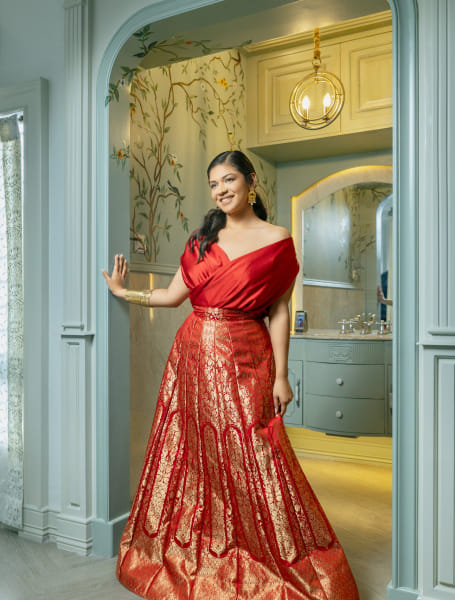
Photo: Shahrear Kabir Heemel
Wardrobe: Benarasi by Tanwy Kabir
Jewellery: Canvas by Tanwy Kabir
Makeup: AnewMakeover by Shababa Rashid
Hair: Avi Rup
Comments