


The cultural reinvention of Pahela Baishakh

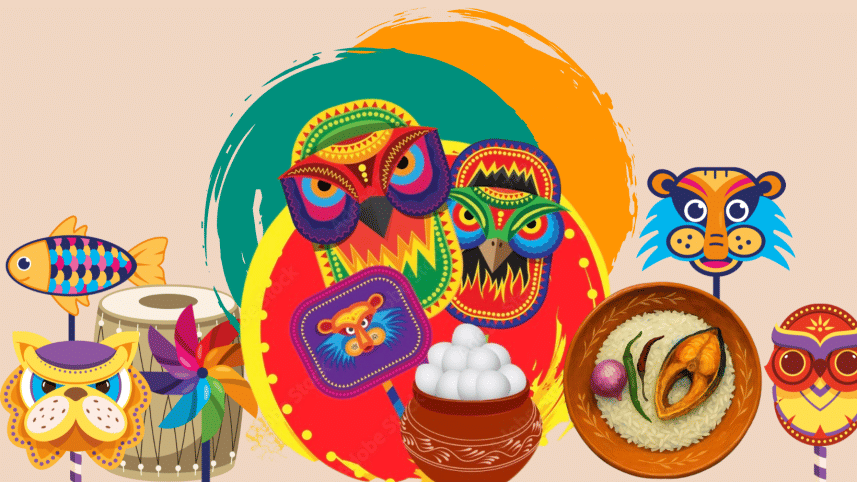
Pahela Baishakh, the first day of the Bengali calendar, did not begin as a festival of colour, music, or carefully coordinated outfits. Its origins are far more practical; rooted in agriculture, taxation, and the need to make sense of time in a way that is aligned with the land. What is now one of the most widely celebrated cultural events across Bangladesh actually started as an administrative solution, and its transformation over the centuries offers a surprisingly layered look at how traditions evolve.
The Bengali calendar, or “Bangabda”, is most commonly traced back to the reign of Mughal Emperor Akbar in the 16th century. At the time, the Mughal Empire followed the Islamic Hijri calendar, which is based on lunar cycles. While effective for religious purposes, it created complications for revenue collection. A lunar year is shorter than a solar year by about eleven days, which meant that tax deadlines would shift each year, eventually becoming disconnected from the agricultural cycle. For a largely agrarian economy, this mismatch disrupted the entire system of collection.
To address this, Akbar introduced a reformed calendar that combined elements of the Islamic and Hindu systems, aligning the year with the solar agricultural cycle. This allowed taxes to be collected at a time when farmers had completed their harvests and were in a position to pay. The first day of this calendar, marking the beginning of Baishakh, became the designated time for settling accounts. In other words, the earliest version of Pahela Baishakh was less about celebration and more about financial accounting.
This is where the tradition of Haal Khata finds its roots. On this day, traders and shopkeepers would close their old ledgers and open new ones, inviting customers to clear any outstanding dues. The ritual often included small gatherings, sweets, and a sense of renewal, but its essence remained tied to commerce. Even today, Haal Khata continues in many parts of Bangladesh and West Bengal, though often in a more symbolic form.
As Bengal moved through different historical phases, the nature of Pahela Baishakh began to shift. During the colonial period under British rule, the administrative importance of the Bengali calendar declined in formal governance. However, it remained deeply embedded in rural and local life, particularly in agriculture and small-scale trade. Freed from its strict fiscal role, the day gradually opened up space for cultural expression.
The 19th and early 20th centuries were a period of significant cultural awakening in Bengal, often referred to as the Bengal Renaissance. Literature, music, and art became central to the shaping of a modern Bengali identity. Figures like Rabindranath Tagore played a crucial role in reimagining seasonal and cultural events. Through his music and writings, Tagore helped embed a sense of aesthetic and emotional depth into celebrations tied to nature and time, including the Bengali New Year.
It was during this period that Pahela Baishakh began to transition from a largely economic marker to a social and cultural occasion. Gatherings, songs, and community events started to become part of the day. The shift was gradual, but it marked an important turning point, as the festival was no longer just about closing accounts; it was about shared experience.
The next major transformation came in the mid-20th century, particularly in what was then East Pakistan. Cultural identity became increasingly politicised, especially in response to attempts to impose Urdu as the dominant state language. Bengali language and cultural practices became symbols of resistance, and Pahela Baishakh emerged as a platform for expressing that identity.
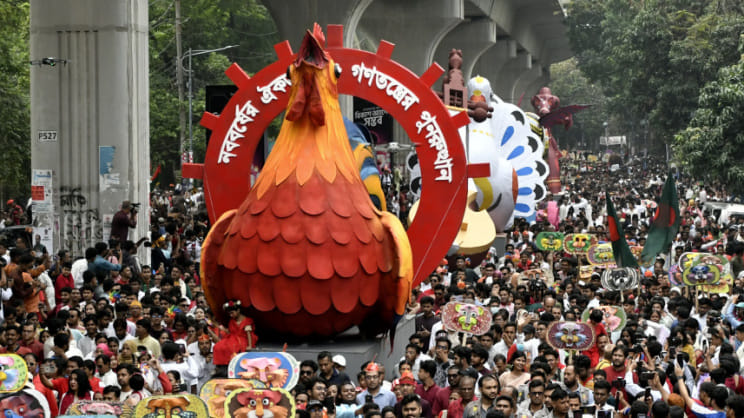
One of the most significant additions to the celebration was Mongol Shobhajatra. Initiated in 1989 by students of the Faculty of Fine Arts at the University of Dhaka, the procession was designed to celebrate unity and resilience through art. Featuring large masks, symbolic figures, and bold colours, it represents a collective rejection of negativity and an embrace of hope. Over time, it has become one of the defining features of Pahela Baishakh in Bangladesh and has been recognised by UNESCO as an intangible cultural heritage.
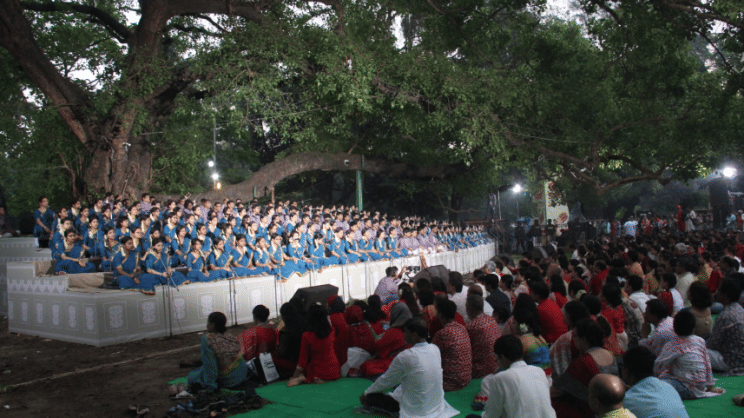
Another key element of modern celebrations is the morning programme at Ramna Batamul, organised by Chhayanaut. Beginning at sunrise, the event features songs, many of them composed by Tagore, performed in an open, natural setting. The choice of venue and music reflects a deliberate effort to connect the celebration to both cultural roots and the environment, reinforcing the idea of renewal.
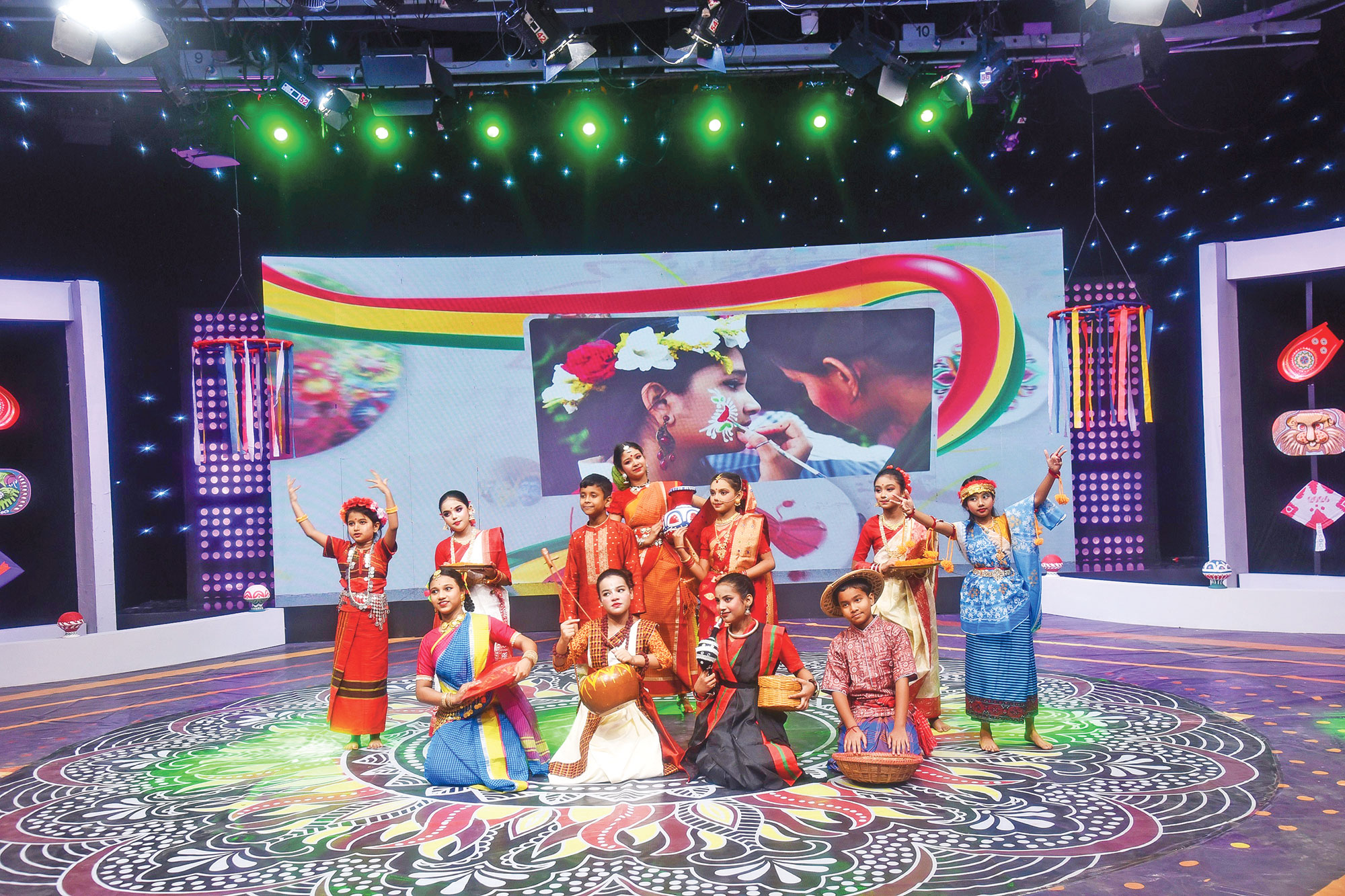
The visual identity of Pahela Baishakh has also evolved over time. The now-iconic combination of red and white attire is a relatively recent standardisation, shaped by urban cultural practices and media representation. While it is often perceived as traditional, its widespread adoption is more modern than many assume. Still, it effectively captures the symbolic contrast between vitality and simplicity, making it a natural fit for a festival centred on new beginnings.

Food traditions offer another interesting lens through which to view how the festival has changed. The pairing of Panta Bhaat and Ilish is now widely associated with Pahela Baishakh, but its prominence is partly a result of contemporary cultural framing. Panta Bhaat, originally a simple dish of fermented rice eaten by farmers for its practicality and cooling effect, reflects the agrarian roots of the calendar. Its elevation into a symbolic festival food illustrates how traditions are often reinterpreted and repackaged over time.
In recent decades, Pahela Baishakh has expanded beyond physical spaces into digital ones. Social media platforms have amplified the scale and visibility of celebrations, allowing people across the world to participate, share, and reinterpret the day. For the Bengali diaspora, this has created new ways of staying connected to cultural roots. At the same time, it has introduced a degree of commercialisation and performance, where the aesthetics of the festival sometimes take precedence over its historical context.
Despite these shifts, certain core elements have remained consistent. The idea of renewal, of starting afresh, continues to anchor the celebration. Whether it is through opening a new ledger, wearing new clothes, or simply gathering with others, the underlying theme persists across different forms and eras.
However, what makes Pahela Baishakh particularly interesting is not just its longevity, but its adaptability. It has moved from fields to marketplaces, from administrative offices to cultural stages, and now to digital platforms. Each phase has added a new layer without entirely erasing the previous one. The result is a festival that carries traces of its past while continuing to evolve.
In many ways, the history of Pahela Baishakh mirrors the broader history of Bengal itself, shaped by shifts in power, culture, and identity, yet maintaining a strong sense of continuity. It began as a tool for managing an agrarian economy and has grown into a marker of cultural identity that resonates across generations.
Today, when people step out on the first day of Baishakh, whether to attend a procession, visit a fair, or simply enjoy a meal, they are participating in a tradition that has been continuously redefined. The celebration may look different from what it was centuries ago, but its ability to adapt is precisely what has kept it relevant.
And somewhere in the middle of all the music, food, and carefully planned outfits, there is still a quiet echo of its origins and a reminder that, before it became a festival, this day was simply about beginning again, at the right time, in sync with the world around it.
 For all latest news, follow The Daily Star's Google News channel.
Comments