

The stories we choose not to see

Bangladeshi-American storyteller, novelist, and screenwriter Sharbari Ahmed has little interest in familiar, formulaic narratives. Instead, she is drawn to stories that exist at the margins—stories that reveal themselves quietly, carrying all the complexity and contradictions of real life.
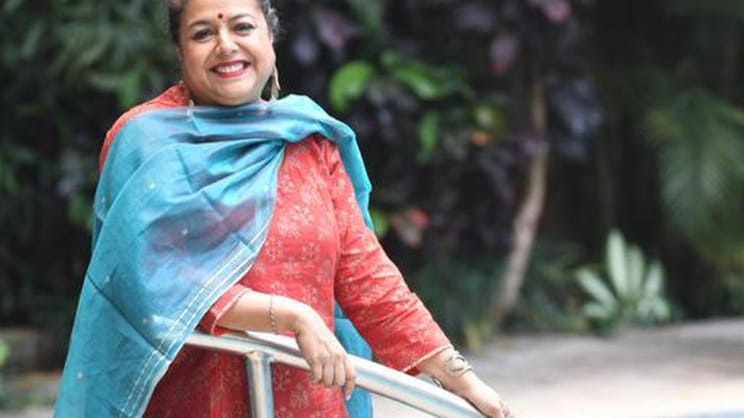
Her latest short film, “Level 3”, turns away from the reality-show gaze that has long defined public portrayals of compulsive hoarding and asks a quieter, more difficult question about trauma, personal history and the invisible lives hidden beneath mental illness. Rather than reducing its subject to spectacle, Ahmed's film seeks to restore dignity to people too often flattened into labels.


That impulse—to tell stories of people who have slipped out of view—has long shaped Ahmed's work. Drawn especially to women-centric narratives, she assembled a predominantly women-led creative team to tell a story about lives rarely afforded the empathy or complexity they deserve.
The instinct runs through her career. From American network television to novels, plays and short fiction, Ahmed has consistently gravitated towards stories that challenge conventional ways of seeing. That sensibility lies at the heart of “Level 3”.
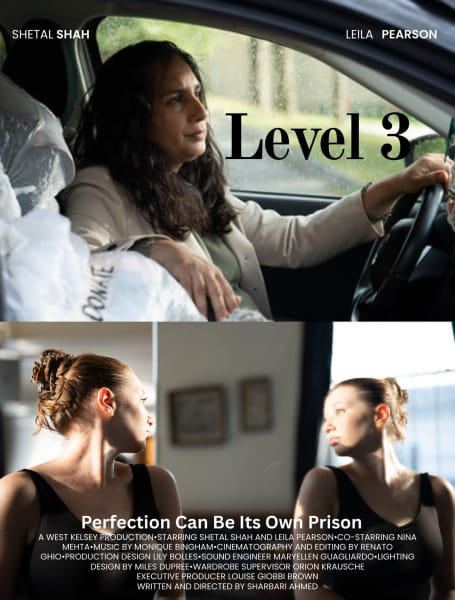
She speaks about filmmaking less as an act of authorship than as one of orchestration. She recalls watching her production designer spend nearly two hours deciding where a single piece of rubbish should fall inside a room. She speaks of learning brevity while directing a six-year-old actor, and humility while watching collaborators discover emotional dimensions within characters she had first imagined alone.
The 14-minute film centres on Anaya Ali, a respected English literature professor living with compulsive hoarding. When her estranged daughter, Layla, now 18, asks to reconnect, Anaya is forced to confront years of buried trauma, shame and emotional isolation.

For years, hoarding has occupied an uneasy place in popular culture. Reality television has often turned it into a spectacle—overflowing rooms, dramatic clean-ups and voyeuristic before-and-after transformations. The clutter becomes the story. The person disappears behind it.
Ahmed wanted to reverse that gaze. "It was very important to me not to be melodramatic or sentimental," she says. "That would have undercut the disorder she is grappling with, which is very real for millions of people."

That refusal to reduce people to a single identity runs through much of Ahmed's work.
Long before directing “Level 3”, she had established herself as a novelist, playwright and screenwriter. In 2015, she became the first woman of Bangladeshi origin to write for an American network television series when she joined the writers' room of ABC's “Quantico”. The experience, she says, marked the beginning of her television career.
"I was one of nine writers. I wrote two episodes and contributed to the rest. I learned a great deal, and I'll always be grateful for that."

Since then, Ahmed has increasingly gravitated towards stories rooted in Bangladesh and the Bangladeshi diaspora—not simply to broaden representation, but to deepen it.
"As a Bangladeshi, these are naturally the characters I centre," she says. "Someone once told me the only Bangladeshis they'd ever met were busboys or cab drivers. What bothered me wasn't the jobs—it was how reductive the comment was. Like any community, we exist in so many different walks of life."

Sharbari wants that complexity to become ordinary. "I want to de-exotify Bangladeshi diaspora characters. I don't want having a Bangladeshi protagonist to feel like some novel thing. I want us to exist in stories without constantly drawing attention to our ethnicity. The moment you keep pointing at someone's race or identity, you begin limiting the story."
The same philosophy shapes her upcoming projects. She is producing “The Inheritors”, adapted from Bangladeshi novelist Nadeem Zaman's acclaimed novel—a contemporary reimagining of “The Great Gatsby” set in Dhaka. Meanwhile, her television pilot “Bombay Duck”, adapted from her novel “Yasmine and the Americans”, has been selected for the 2026 London International Film and Screenplay Festival.

Though different in scale and setting, the projects share a common thread: they ask what people inherit—families, histories, identities and expectations—and what they choose to carry forward.
Directing “Level 3” has also reshaped Ahmed's relationship with storytelling. "I've stopped waiting for permission to do things. I want to tell our stories, especially those of women—not simply because of what we face every day, but to show the world the resilience, nurturing, organisation, multitasking and countless other qualities women bring to the table. Those contributions have been overlooked for so long, and I'm not even sure that's going to change anytime soon," she says matter-of-factly.

Ahmed had directed short films before, including “Duniya”, which was shot entirely in Bangladesh, but “Level 3” demanded something different. She spent nearly 18 months preparing before production began.
"I'll always be an underdog in America because I'm Muslim, I'm brown, and I'm female," she says. "To gain a foothold in this industry, you need resilience even more than talent. This isn't for the faint of heart."
Yet those experiences have only deepened her conviction about what cinema can do.
 For all latest news, follow The Daily Star's Google News channel.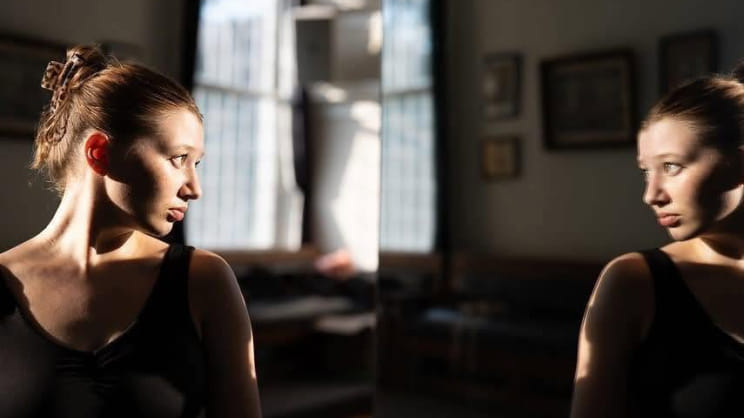
For the writer, film is a universal language, a way of making sense of the world and of processing human experience. Growing up in the United States, she often felt isolated. Storytelling became both a form of expression and a way of understanding the world around her.
Writing came first. Fiction and screenwriting taught her how to build a story. Cinema, she says, expanded its possibilities. "Writing set the foundation for me. My strength has always been dialogue, but cinema is so much more than that."
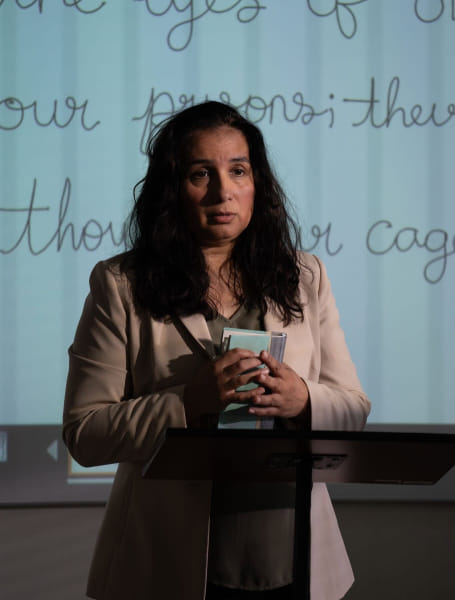
"I had to learn that cinema creates the ambience that makes you feel," she says. "I tried very much to capture space and stillness because they can become expressions of their own."
Cinema, for Sharbari, is less about providing answers than creating space for difficult questions. With “Level 3”, she turns away from spectacle and towards empathy, asking viewers to look beyond appearances and sit with lives that are too often reduced to stereotypes. In doing so, she continues the work that has defined her writing for years: telling stories that refuse to look away.


Comments