


‘She in Stone’ explores the many dimensions of womanhood

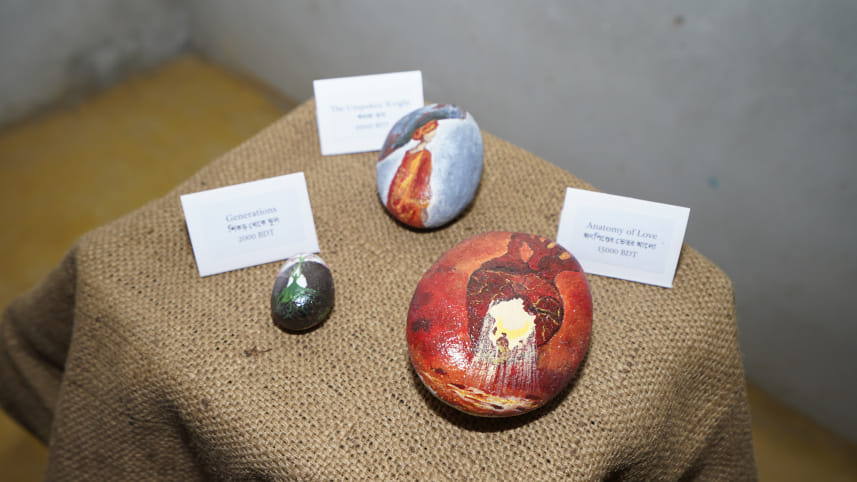
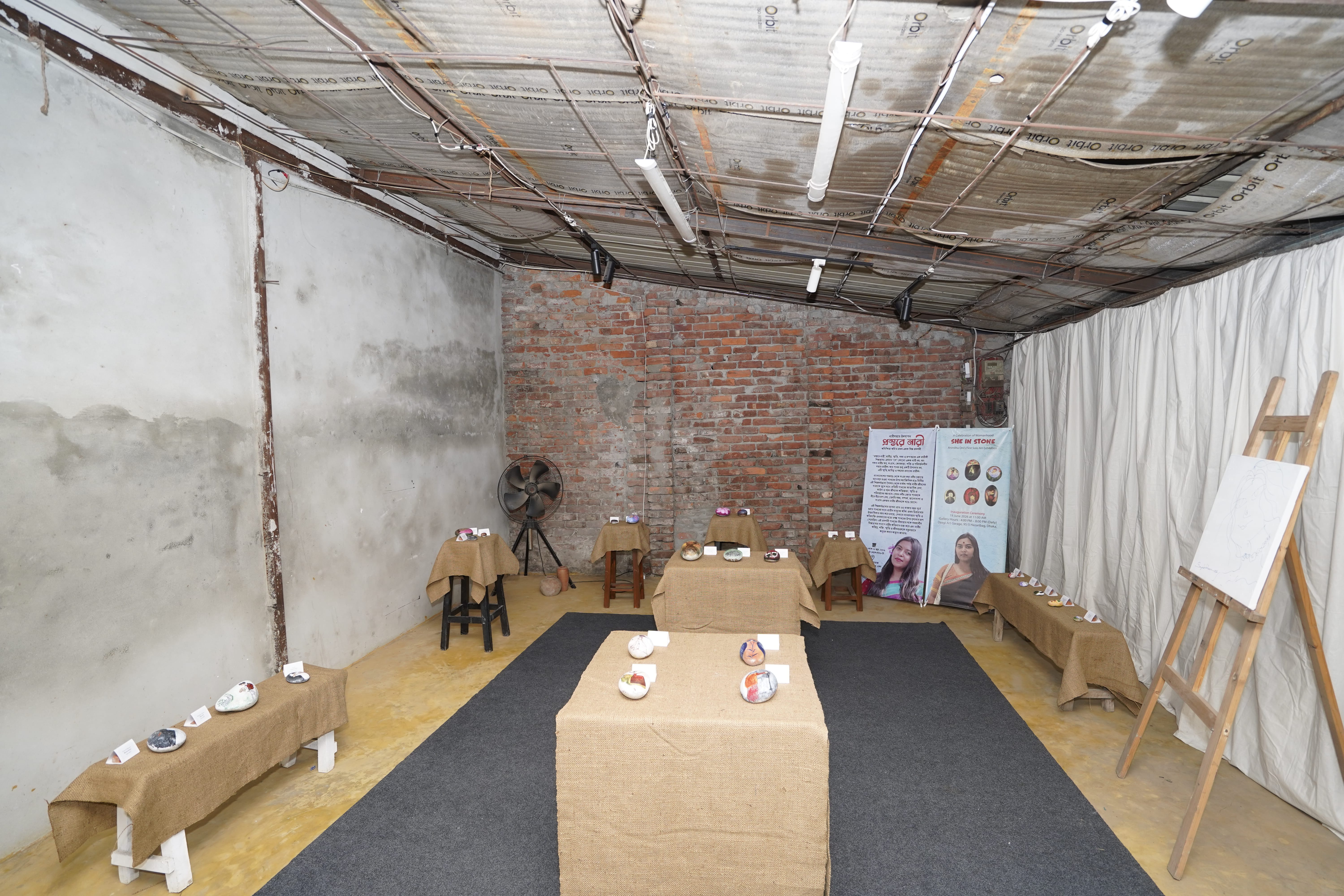
Womanhood, memory, and the passage of time converge in “She in Stone”, the first solo exhibition by artist Anindita Oni, inaugurated at Studio Bhaskarmee in Hazaribagh on June 19, 2026. Showcasing a distinctive collection of artworks painted on stone, the exhibition explores themes of resilience, identity, and the enduring traces women leave behind.
Artist and organiser Sonya Binta Hasan, founder and CEO of White Paper Leader (IWS) and a member of the IWS Global Art Network, formally inaugurated the exhibition.
 For all latest news, follow The Daily Star's Google News channel.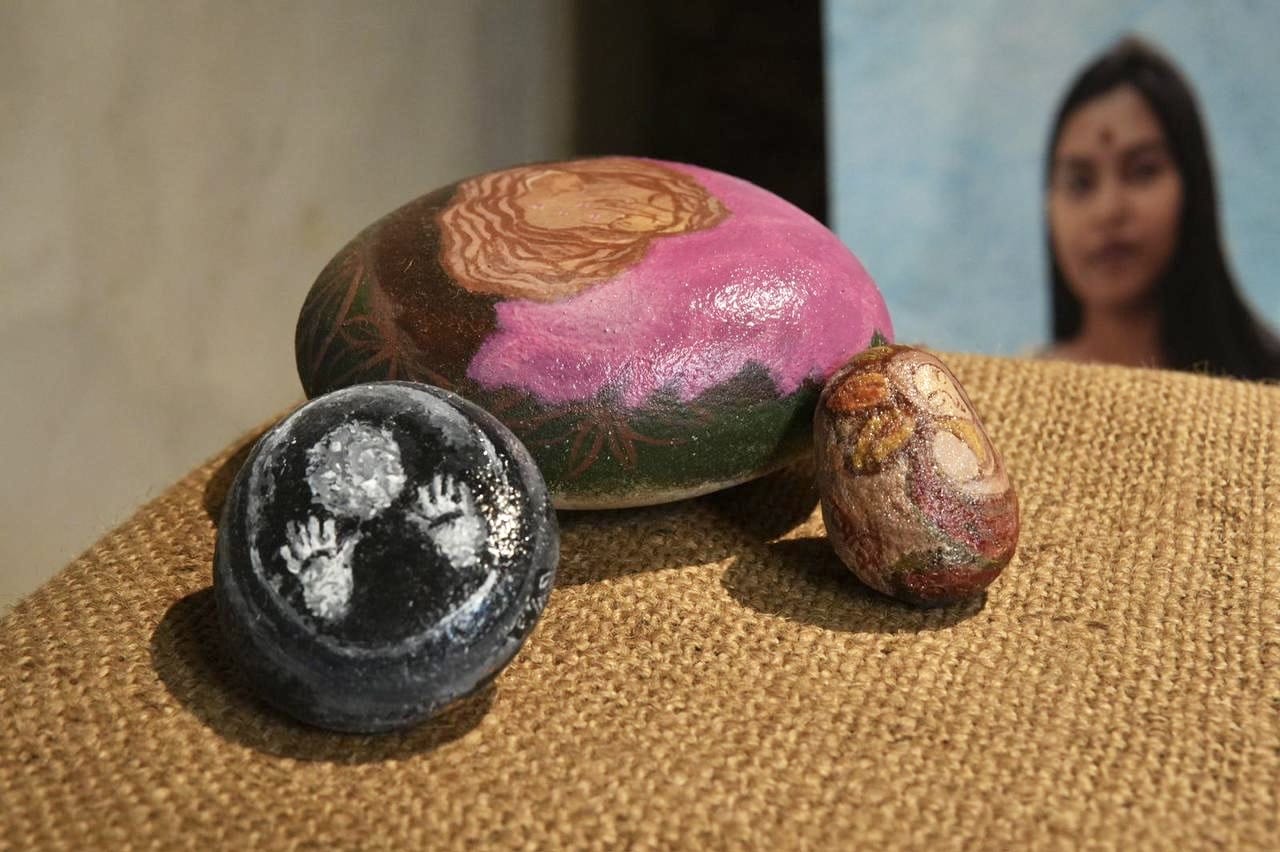
Anindita Oni earned her BFA in Painting from the Faculty of Fine Arts, Dhaka Art College. She is also an enlisted theatre artiste of Bangladesh Betar and a recitation performer. Through visual art, acting, and recitation, she continues to develop her own creative language.
In the title “She in Stone”, ‘she’ does not refer to a specific woman but to womankind as a whole — its struggles, resilience, dreams, love, and evolving identities. Stone, meanwhile, is more than a medium; it symbolises existence, permanence, and memory.
“From the impenetrable darkness of prehistoric caves to the ever-flowing currents of time, stone has silently witnessed human civilisation. Upon its surface, it has carefully preserved unspoken sighs, untold stories, and the silent histories of countless generations,” the exhibition note reads.
Around 45,000 years ago, prehistoric people used stone surfaces inside caves to express spiritual beliefs, ritual practices, and magical thinking through paintings. These works were not merely artistic expressions; they were records of existence and survival.
Prehistoric humans used naturally sourced pigments such as ochre, manganese, charcoal, and burnt earth to create shades of red, black, yellow, and brown. “The uneven surfaces, cracks, and contours of stone walls became their canvas.” Although artistic mediums have evolved over time, the appeal of stone as a painting surface has endured.
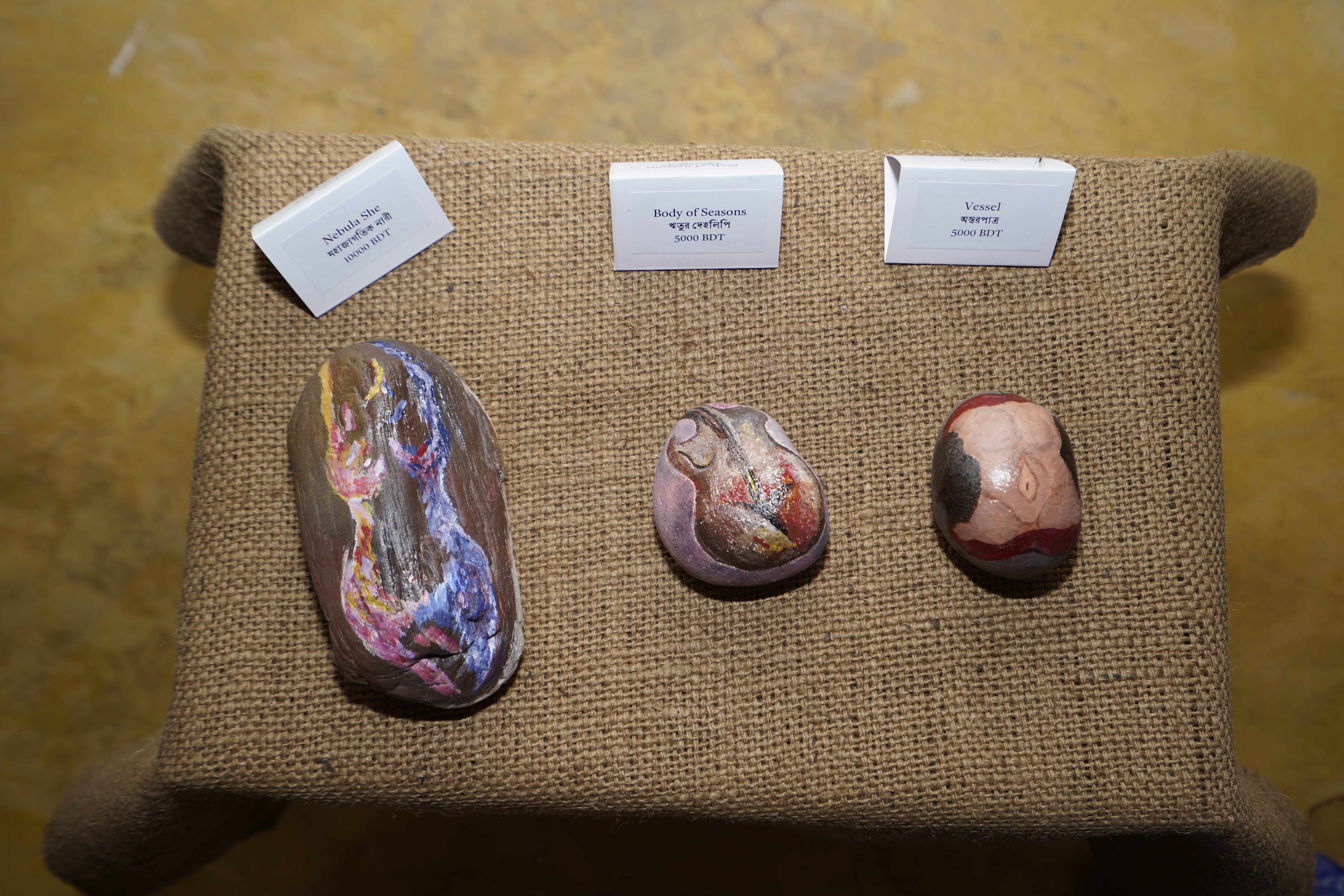
Stones bear the marks of climate and natural forces, including rivers, erosion, and volcanic activity. According to Oni, a woman’s life, much like a stone, is constantly shaped by both positive and negative experiences. Each painted stone therefore carries traces of womanhood in its many dimensions, psychological depths, and enduring mysteries. Together, they represent beauty, resilience, quiet strength, tenderness, and the vast reservoir of unspoken emotions women carry within them.
Oni chose acrylic paints for the series because their vibrant pigments resemble blood flowing through veins as they settle into the stone’s cracks. Interacting with the uneven surfaces, the colours create a bold visual language that reflects the artist’s conceptual approach.
The inspiration for the project came during a visit to Tetulia in Panchagarh, where Oni stayed in a bungalow beside the Mahananda River. Captivated by the stones scattered along the riverbed, she felt what she describes as a cosmic pull towards them and brought several home as souvenirs. Later, she decided to leave her own mark on them, transforming them into lasting memories.
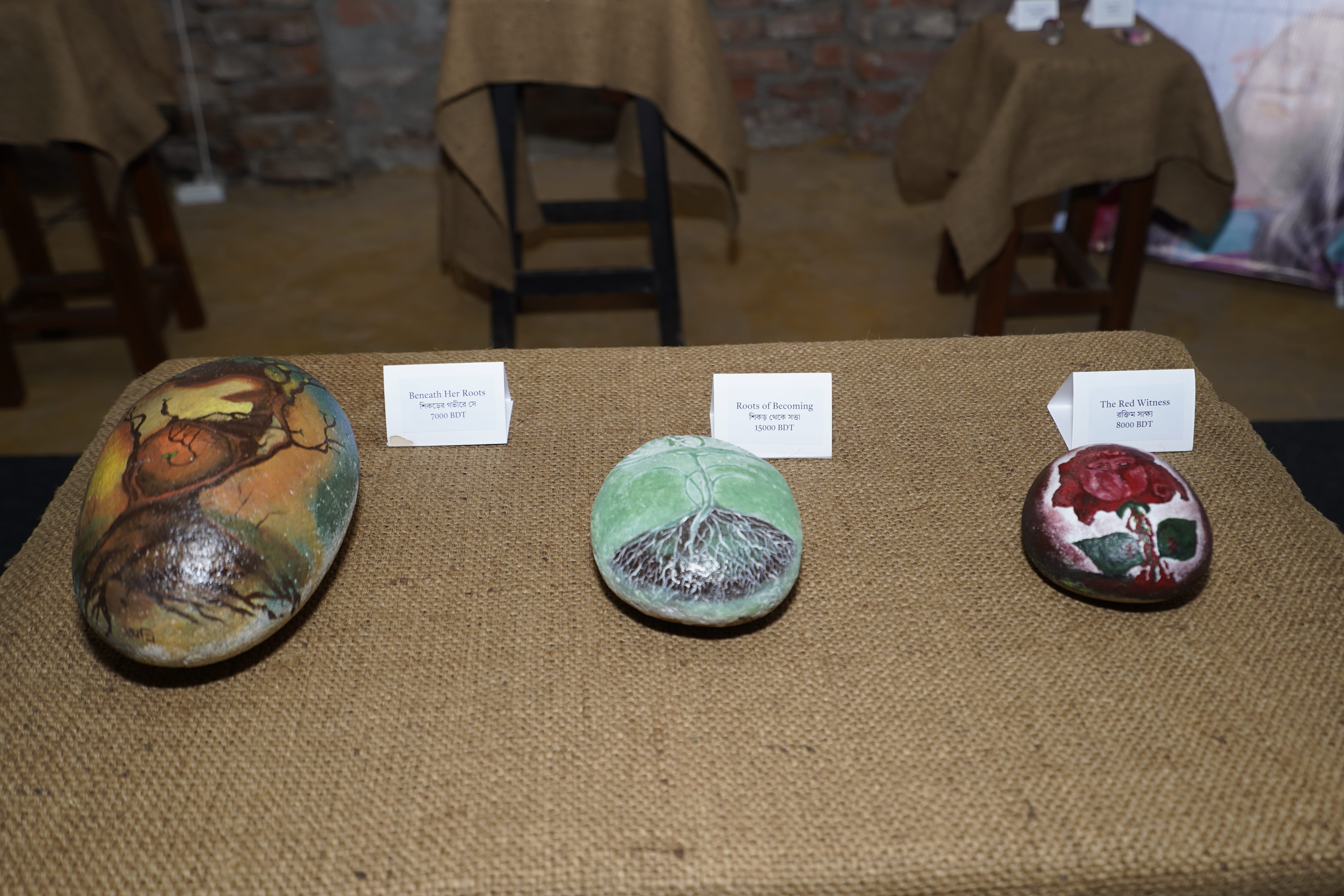
The process involved considerable experimentation, as paint initially proved difficult to apply to the stone surfaces. Through persistence and trial and error, however, she developed a technique that ultimately resulted in a series of distinctive artworks.
Among them, “A Time of Dreams” depicts a young girl seated comfortably among foliage. “Lotus Birth” portrays a pregnant woman, while “Together” presents a woman alongside her cherished family.
Taken as a whole, the stones offer a multidimensional exploration of universal femininity, embracing both the nurturing and warrior spirits of women. There is silence in these works, but there is also strength.
The exhibition will remain open to visitors until June 23, 2026.




Comments