


LDC graduation: UN body backs Bangladesh’s perks till 2029
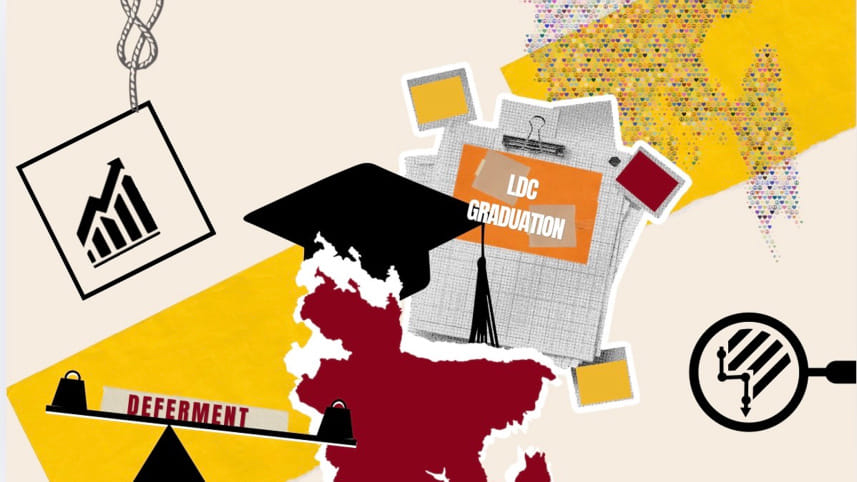
The United Nations Committee for Development Policy (UN CDP) has recommended that Bangladesh’s Least Developed Country (LDC) graduation be postponed until November 24, 2029, putting the country in good standing to receive preferential trade benefits for three more years.
“The extension of the preparatory period should not be viewed as an opportunity to delay reforms -- rather, it should serve as a catalyst for accelerating them,” the CDP said in its critical assessment report.
 For all latest news, follow The Daily Star's Google News channel.
 Bangladesh has exceeded the graduation thresholds by a significant margin under all three LDC graduation criteria and faces a very low risk of falling below these thresholds in the near to medium term.
But the recent crisis in the Middle East, uncertainties in global energy and supply chains, changes in the international trading environment, and global challenges could affect the country’s graduation preparedness and transition process, the CDP said.
An extension of the preparatory period would provide Bangladesh with more time to better assess the implications of the current global situation, identify priority actions and prepare adequately for the post-graduation landscape, including the loss of certain market preferences and international support measures.
Bangladesh formally requested the CDP to extend the preparatory period on February 18, with Prime Minister Tarique Rahman writing to the UN Secretary-General seeking his personal support on the matter.
The extension could be approved at the United Nations General Assembly (UNGA) in September.
The UN CDP’s positive note on the extension of the graduation of Bangladesh will be sent to the UNGA through the United Nations Economic and Social Council (UN ECOSOC) for its final approval by the member countries.
The UN CDP’s positive recommendations made Bangladesh’s plea of extension morally strong in the pathway for the UNGA’s final approval, said Mohammad Abdur Razzaque, chairman of the Research and Policy Integration for Development (RAPID).
Now, Bangladesh will have to maintain better engagement with the major trading partners such as India, China and the EU so that the extension is approved by the member countries in the upcoming UNGA.
The reason being Bangladesh is the highest user of the LDC benefits given by the developed and developing nations.
Bangladesh alone utilises 67 percent of the benefits given to all 44 LDCs by the other countries and 73 percent of its exports export is LDC induced, he said.
Different studies suggest that Bangladesh may lose $17.5 billion in export earnings in a year because of LDC graduation.
If Bangladesh gets the final approval at the UNGA, the country will enjoy the preferential trade benefits for three more years.
The CDP’s recommendation is a positive sign for Bangladesh, said Mostafa Abid Khan, a former member of the Bangladesh Trade and Tariff Commission.
However, CDP Chair José Antonio Ocampo emphasised that Bangladesh would need to make significant progress in implementing key domestic reforms to address its existing structural vulnerabilities during this extended period.
In its report, the CDP underscored the importance of continued support from the international community for Bangladesh during both the preparatory period and the post-graduation phase.
Such support includes concessional financing, appropriate extension of LDC-specific International Support Measures, technical assistance and enhanced capacity for trade negotiations.
The report highlighted the importance of domestic reforms, particularly in ensuring financial sector stability, increasing tax revenue, strengthening domestic resource mobilisation, enhancing productive capacities, promoting economic diversification and preparing the private sector for graduation.
The government firmly believes that, with the support of the international community and the successful implementation of ongoing reforms, Bangladesh will be able to achieve a smooth, sustainable and successful graduation from the LDC category, said a statement from the Economic Relations Division.
Comments