


Who pays the price for chronic budget underspending?


Since fiscal year 2009-2010, Bangladesh’s budget has grown almost every year, with planned spending rising sevenfold to Tk 7.97 lakh crore in FY25. Yet not a single budget announced over the past 16 years has been fully implemented.
The average budget implementation rate during the period was about 84 percent, according to the latest Finance Ministry data.
 For all latest news, follow The Daily Star's Google News channel.
 It shows that implementation in FY25 recorded the weakest performance, with only 78.9 percent of the budget executed.
Operating expenditure, however, remained relatively protected in FY25. In that year, the government implemented 93.5 percent of planned spending on salaries and allowances of public employees, interest payments, subsidies, incentives, pensions and gratuities.
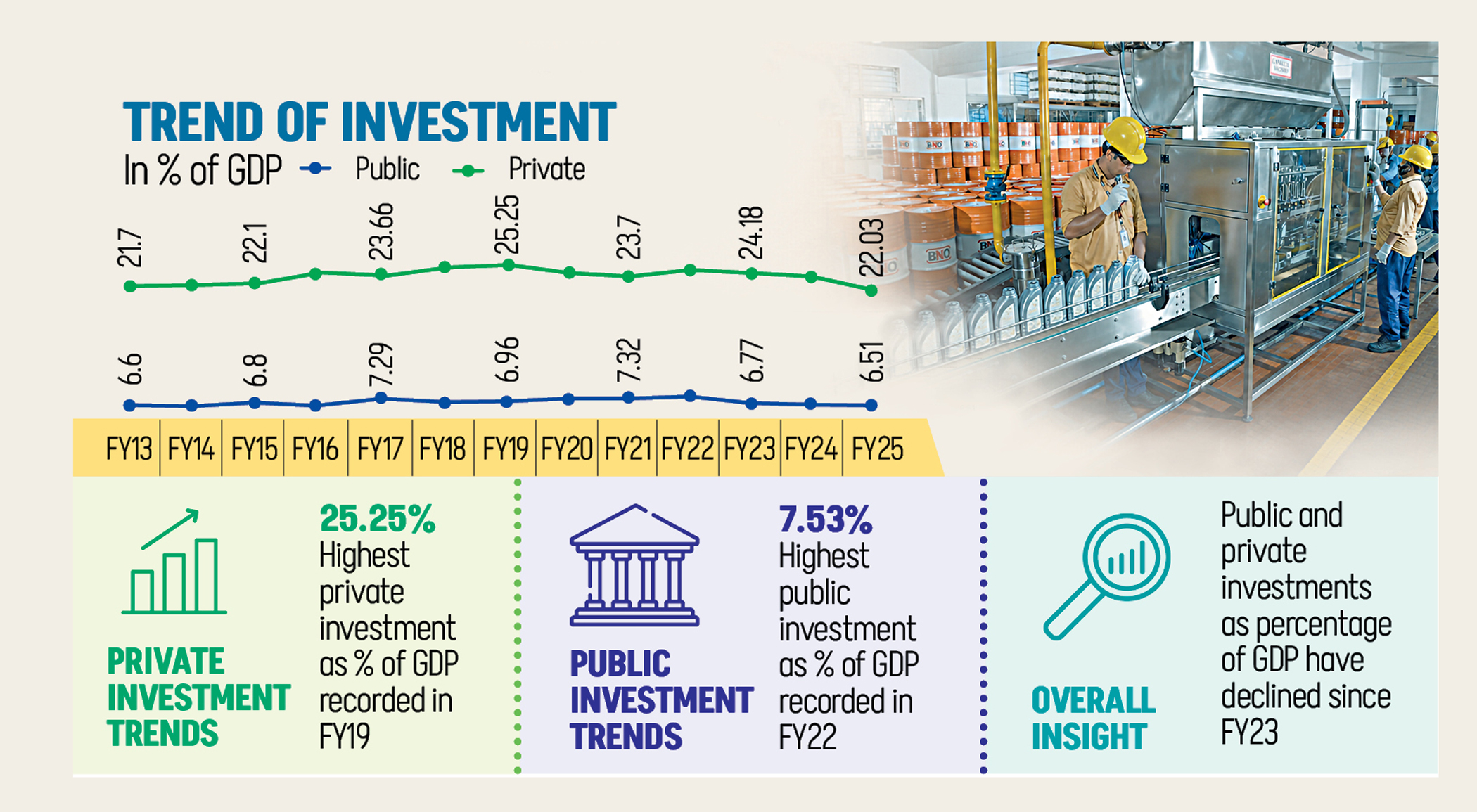
Meanwhile, development spending absorbed most of the cuts. Only 54 percent of the development allocation was implemented in FY25, the lowest rate recorded since at least FY09.
A similar pattern appears to be emerging in the current fiscal year.
The FY26 budget has already been reduced to Tk 7.88 lakh crore from an earlier downsized estimate of Tk 7.90 lakh crore, but full implementation still looks unlikely.
The Annual Development Programme (ADP) was only 41.41 percent implemented during the July-April period, leaving little time for a substantial acceleration in the remaining months.
For citizens, the consequences are tangible. They appear as delayed public services, slower delivery of infrastructure and social programmes, and postponed economic benefits.
Abdur Razzaque, chairman of the Research and Policy Integration for Development (RAPID), said development spending is usually the first casualty because salaries, interest payments and other recurrent expenditures cannot easily be reduced.
“As a result, essential investments in health, education and social protection are squeezed year after year, leaving Bangladesh with allocations in these areas that remain among the lowest in the world when measured against GDP,” said the economist.
Razzaque argued that sustained underinvestment in these sectors weakens future growth by limiting human capital formation, productivity gains and overall competitiveness.
At a dialogue organised by the Citizen’s Platform for SDGs, Towfiqul Islam Khan, additional director (research) at the Centre for Policy Dialogue (CPD), said development expenditure is shrinking because of inadequate institutional capacity and limited fiscal space.
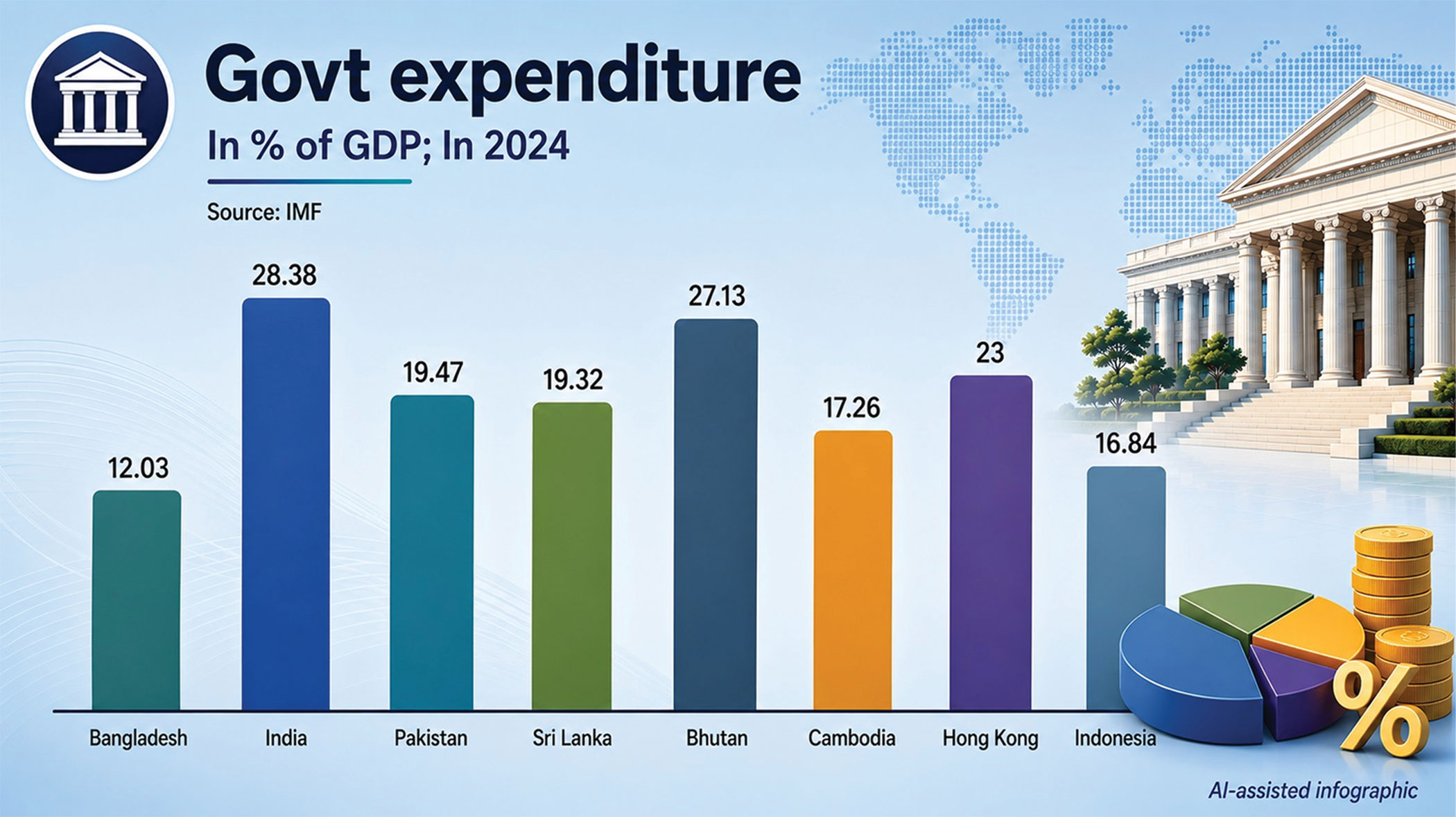
According to him, the ADP accounted for 33 percent of total expenditure in FY16. By FY25, that share had fallen to 22.8 percent, the lowest level since at least FY09.
“We see revenue targeting at absurd levels every year. When there is a shortfall in collection, development spending is cut because you cannot reduce operating expenditure,” Khan said. “It is a planning problem and reflects a lack of institutional capacity to attain the goals.”
He said delays in project implementation raise costs, compromise quality, postpone public services and often increase debt burdens, preventing the economy from receiving the intended benefits on schedule.
Razzaque said chronic under-implementation has become one of Bangladesh’s most persistent fiscal weaknesses. “Under-implementation has become an annual ritual, making ad hocism almost the rule of the game,” he said.
When only 80 percent to 85 percent of announced budgets are implemented year after year, expenditure projections are no longer anchored in realistic assessments of revenue mobilisation, project readiness, administrative capacity and procurement constraints, he argued.
Prof AK Enamul Haque, director general of the Bangladesh Institute of Development Studies (BIDS), agreed that planning weaknesses are part of the problem, but said practical bottlenecks also slow implementation.
Land acquisition remains difficult in a densely populated, land-scarce country, while public procurement procedures are often lengthy because governments must ensure transparency and accountability.
Haque also pointed to weak coordination among agencies. In sectors such as health and education, infrastructure may be built before the systems needed to deliver services are in place, leaving facilities underused.
Rather than focusing solely on how much money is spent, policymakers should shift from expenditure-based monitoring to service-based monitoring, he argued. “Ability to spend does not mean efficient service delivery. Expenditure-based indicators alone cannot ensure efficient service delivery to citizens.”
Comments