

Multilateral institutions fail to cushion conflict shocks: Titumir
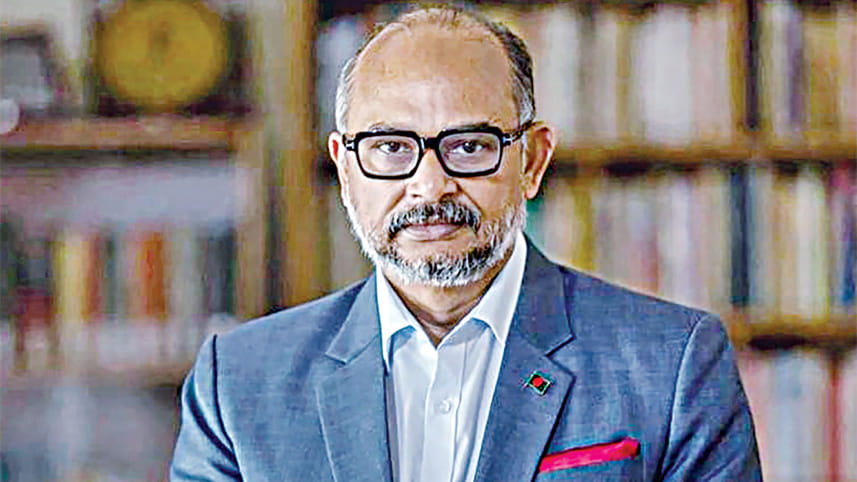
Multilateral financial institutions have failed to address the economic fallout of geopolitical conflicts, leaving developing countries to bear billions of dollars in additional costs without adequate international support, said Rashed Al Mahmud Titumir, the prime minister’s adviser on finance and planning.
The global development finance system must adapt to a “new normal” of repeated geopolitical and economic shocks, he said at the launch of the Organisation for Economic Co-operation and Development (OECD)’s Multilateral Development Finance 2026 report yesterday, organised by the Centre for Policy Dialogue (CPD).

“Countries like Bangladesh, which are accountable to their citizens, cannot simply pass on higher global energy prices overnight,” Titumir added.
Referring to the recent Middle East conflict, he said Bangladesh had to absorb an additional $3.46 billion in energy costs until June as the government did not fully pass on higher global fuel prices to consumers.
“Imagine what an additional $3.46 billion means for a developing country,” he said.
“If we raise domestic energy prices immediately, inflation will rise further. If we keep prices stable, the government will have to bear higher subsidies.”
GLOBAL INSTITUTIONS NEED TO REBUILD TRUST
Titumir said international organisations had remained largely silent despite the pressure on import-dependent economies.
“I have not seen organisations such as the OECD, the IMF or others actively addressing this challenge,” he said. “This does not frustrate us, but it shows that multilateralism must reclaim its moral authority.”
He said discussions on development finance often focus on declining aid flows, but international financial institutions have failed to address the direct costs of geopolitical conflicts, including higher energy prices, freight charges and supply-chain disruptions.
Many low- and middle-income countries depend heavily on imported fuel and food and have limited capacity to absorb such shocks without affecting economic stability, he added.
“The recent Spring Meetings ended without any proposal for an automatic debt suspension mechanism during global crises,” Titumir said.
“I also saw no meaningful initiative from the OECD or other international organisations to create secure energy and food corridors, despite many developing countries being net food importers and heavily dependent on global supply chains.”
He said freight costs had also surged during recent conflicts, further increasing import bills for countries like Bangladesh, while the international response remained limited.
Titumir warned that multilateral institutions could lose credibility if they failed to respond to the challenges faced by developing countries.
“If they remain silent during times of crisis, how can they continue to earn the trust of people around the world?” he asked.
He called for reforms, including temporary debt relief measures and coordinated efforts to protect energy and food supply chains during conflicts.
The adviser also questioned whether current climate finance systems properly consider the vulnerability of recipient countries.
“We often discuss climate change, but is there a clear link between a country’s vulnerability and the amount of climate finance it receives? I do not think so,” he said.
He argued that countries most affected by climate risks should receive greater financial support. He also expressed concern over the slow progress in making the Loss and Damage Fund operational, saying developing countries were under pressure to pursue low-carbon growth while facing increasingly costly borrowing.
 For all latest news, follow The Daily Star's Google News channel.
 Titumir said multilateral development institutions should be held to the same accountability standards expected from national governments.
“Just as national governments must remain accountable to their citizens, multilateral development institutions must also be accountable to the countries and people they serve,” he said.
Referring to the OECD report, he said it should be viewed not only as a warning about declining aid flows but also as a call to rethink the global development finance system.
“The institutions that shape this system must also rethink how they operate,” he said.
“We need a multilateral development financing system that is more resilient, inclusive and better prepared to address the challenges of the twenty-first century, especially in a world where uncertainty has become the new normal.”
According to the OECD report, the multilateral development system has reached a critical turning point. Contributions from Development Assistance Committee members fell by more than 15 percent in 2024 and are projected to decline by 23 to 30 percent by 2027, signalling a prolonged downturn.
The report warned that the system’s dependence on a few major donors has increased its vulnerability. Eleven DAC members, accounting for about two-thirds of total contributions, announced aid cuts in 2025.
CPD Executive Director Fahmida Khatun moderated the event, which was attended by economists from South Asian countries.


Comments