


Farm pledges look achievable, delivery will be the real test

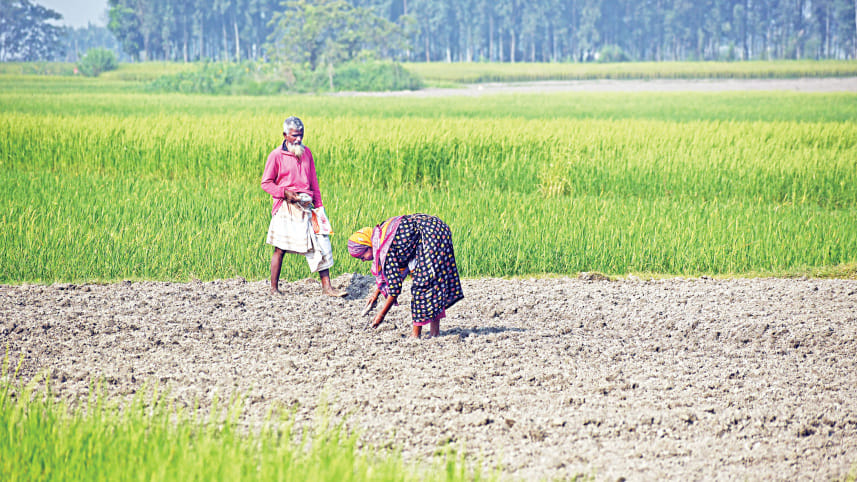
As Bangladesh heads towards the February 12 parliamentary election, agriculture has found prominent space in the manifestos of political parties.
Major parties, including the BNP, Jamaat-e-Islami, Islami Andolan Bangladesh, National Citizen Party (NCP) and the Communist Party of Bangladesh (CPB), have placed farming high on their policy agenda.
 For all latest news, follow The Daily Star's Google News channel.
 Most of the pledges appear realistic on paper. But agri economists and sector specialists say delivery will depend less on promises and more on long-term political will and a clear stand against unchecked corporatisation of farming.
According to them, genuine reform requires empowering farmers, especially small and marginal ones, rather than relying on broad commitments without clear execution plans.
While parties have spoken of incentives, lower input costs and access to agri machinery, experts note that most manifestos are somewhat vague on how these benefits will actually reach farmers on the ground.
The election comes at a difficult moment for agriculture. Climate change has increased the frequency of flooding, droughts, salinity and cyclones. Heat stress is rising, while cultivable land is shrinking, adding pressure to food production and rural livelihoods.
WHAT PARTIES ARE PROMISING
In its manifesto, BNP has outlined 15 agriculture-related commitments. Major points include introducing a “Farmer’s Card”, ensuring comprehensive farmer protection, waiving agricultural loans up to Tk 10,000 and reviving the Barind project.
The party has also proposed setting up special cold storage facilities for mango preservation, ensuring fair prices for crops, protection of farmland and construction of procurement centres. Other pledges include offering agri insurance, setting up agri export zones in the northern region and addressing climate risks through precision farming.
Meanwhile, Jamaat-e-Islami has proposed 16 agendas, focusing on food and nutrition security through sustainable farming.
The party’s manifesto highlights lowering input costs, offering fair prices, subsidies and credit support, bolstering export growth, supporting climate resilience, utilising modern technology, offering land protection, irrigation expansion, entrepreneurship development, research and developing stronger markets to raise productivity, employment and farmer incomes.
Islami Andolan Bangladesh has presented a 22-point plan that emphasises climate-smart agriculture, mechanisation, incentives, fair prices, easy credit and digital market access.
It also promises to reduce post-harvest losses through better storage and transport facilities, land reform, cooperative development, building direct links between farmers and buyers and stronger government procurement to protect small and marginal farmers.
The National Citizen Party (NCP) has proposed three key measures. Strengthening domestic seed research, preservation, and distribution is one of them. The other two measures are ensuring food sovereignty alongside food security and intensifying drives against food adulteration with strict penalties.
The Communist Party of Bangladesh (CPB) has outlined a broad programme covering minimum crop prices, expanding government procurement, land reform, increasing the effectiveness of cooperative-based markets, climate-resilient farming, rural infrastructure, ensuring year-round sustainable employment for agriculture-based workers, agro-industry development and participatory water and resource management.
BOLD PLEDGES, THIN EXECUTION PLANS
Abdul Bayes, former economics professor at Jahangirnagar University, said meaningful progress in agriculture is impossible without firm political commitment.
Growing corporatisation poses a serious threat to small farmers, he said, but none of the political parties clearly explain a strategy to protect farmers from corporate dominance.
Bayes also pointed out that while climate change is mentioned frequently in the manifestos, the references lack depth.
Without a shift in approach, he said, agriculture will continue to face long-term structural problems.
Agricultural economist Jahangir Alam Khan said meeting the 2030 Sustainable Development Goals (SDGs) on food and nutrition would require annual agricultural growth of at least 4 percent.
None of the manifestos explains how that target would be achieved, he notes.
According to the Bangladesh Bureau of Statistics (BBS), the agriculture growth rate stood at 1.79 percent in fiscal year (FY) 2024-25, the lowest level recorded in the past 11 years.
Khan expressed concern over rising dependence on agricultural imports and criticised the absence of a clear import substitution strategy.
Farming land is shrinking by around 0.2 percent each year, and more than half of farmland is losing fertility, yet manifestos offer no concrete plan for either intensive cultivation or soil restoration to tackle these issues, he said.
“Most parties rely on generic promises -- such as lowering input costs or introducing precision agriculture -- without offering timelines, strategies or realistic assessments,” said M Asaduzzaman, former research director at the Bangladesh Institute of Development Studies (BIDS).
The manifestos completely overlook the fact that around 50 percent of the farmers in the country own less than one acre of land, he added.
“Advanced farming techniques are mentioned, but there is little explanation of how landless or marginal farmers would benefit from these.”
Asaduzzaman also said that Bangladesh has the lowest land productivity in South Asia, yet no manifesto presents a clear plan to address it.
Water management remains largely unaddressed by the political parties. Despite abundant rainfall, Bangladesh depends heavily on groundwater for irrigation, unlike many other countries, he stated.
A top official of a prominent agribusiness company in the country is of the opinion that the issues highlighted by political parties are largely realistic and achievable if implemented properly.
Bringing up the “Farmer’s Card” as an example, the official said the measure could quickly improve access to loans and subsidies for water and electricity, with an immediate impact on farmers’ lives.
Munjer Alam, an agri-entrepreneur from Chapainawabganj, said critical areas such as food processing have been overlooked in the manifestos. More attention in those areas could quickly raise incomes and create rural jobs.
“Educated youth are increasingly entering agriculture, but current policies offer little guidance or opportunity for their meaningful engagement,” he added.
Comments