


Scientists

35 DU researchers among world’s top 2% scientists
Dhaka University has announced that 35 of its faculty members and researchers have been named among the "World's Top 2% Scientists 2025" by Stanford University and Netherlands-based publishing house Elsevier.
22 September 2025, 20:58 PM
205 Bangladeshis listed in latest Stanford/Elsevier's Top 2% Scientist Rankings
The Stanford/Elsevier's Top 2% Scientist Rankings lists the world's leading researchers.
18 September 2024, 12:39 PM

Gender diversity in science: How children's drawings are changing the perception of scientists
A recent study published in the journal, Child Development, found that children are drawing more female scientists than ever before, with girls more likely to draw female scientists than boys. The study found that children as young as six years old showed more gender diversity in their drawings of scientists than in previous years. Specifically, the study found that 28 per cent of the children drew female scientists, compared to 0.6 per cent in a similar study conducted in the 1960s.
6 March 2023, 11:19 AM
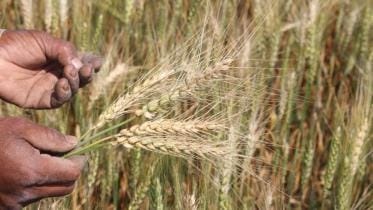
Bangladeshi scientists offer to help India combat wheat blast
Bangladesh scientists offer help to India for tackling the deadly wheat blast outbreak.
31 March 2017, 08:22 AM

Scientists grow human organs for transplant inside pigs
Scientists in the United States are trying to grow human organs inside pigs.
6 June 2016, 05:49 AM
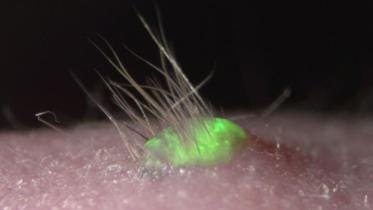
Lab-grown skin sprouts hair and glands
Scientists in Japan have successfully transplanted mice with lab-grown skin that has more of the organ's working parts in place than ever before.
2 April 2016, 04:38 AM
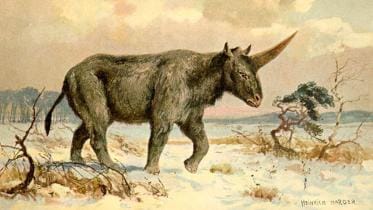
Scientists may have discovered the fossilised skull of a ‘Siberian unicorn’
For decades, scientists have estimated that the Siberian unicorn -- a long-extinct species of mammal that looked more like a rhino than a horse -- died out some 350,000 years ago, but a beautifully preserved skull found in Kazakhstan has completely overturned that assumption.
29 March 2016, 05:12 AM

Good news for mango lovers
Wouldn't it be great if you could have a mango in deep winter? Why not any time of the year? What if it was just as yellow and luscious and fragrant as one from peak season?
4 March 2016, 18:00 PM
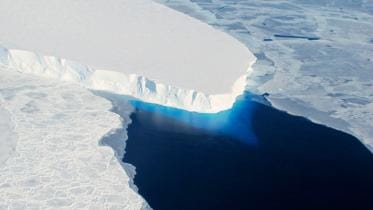
Melting glaciers blamed for subtle slowing of Earth's rotation
The melting of glaciers caused by the world's rising temperatures appears to be causing a slight slowing of the Earth's rotation in another illustration of the far-reaching impact of global climate change, scientists say.
28 December 2015, 07:53 AM
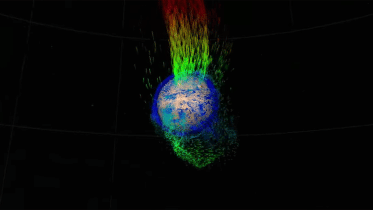
Scientists discover why Mars is losing atmosphere every second
Scientists say Mars is currently losing about one-quarter pound of atoms in its atmosphere to space every second.
6 November 2015, 06:53 AM
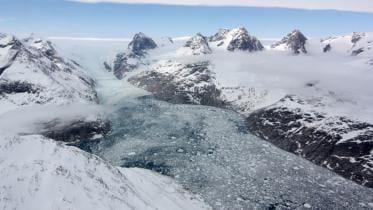
Scientists reveal a bit of good news about Greenland’s great melt
Climate change is speeding up the melting of the great sheet of ice covering Greenland, a frozen mass the size of Alaska that holds an estimated 10 percent of the world’s ice and scientists are sure of it, reports news and lifestyle magazine TakePart.
1 November 2015, 05:47 AM

Paris climate summit: UN negotiations 'need redesign'
The UN climate negotiations are heading for failure and need a major redesign if they are to succeed, scientists say.
12 October 2015, 07:43 AM
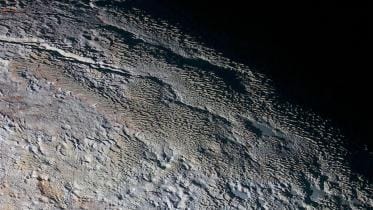
The first photos of water on Pluto are puzzling scientists in 2 ways
Scientists have suspected for months the presence of water on Pluto. But it was not until recently that they had solid proof, and the discovery is raising intriguing questions about the color and location of the water ice.
11 October 2015, 02:14 AM
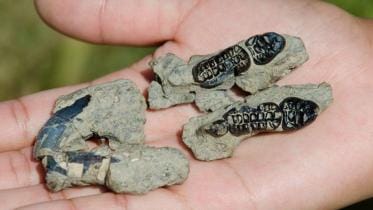
Newly-discovered mammal species survived dinosaur extinction
Scientists have discovered a species of ancient mammal that survived the event that led to the extinction of the dinosaurs.
5 October 2015, 06:36 AM

[WATCH NOW] Michigan farmers discover woolly mammoth skeleton
Two farmers in rural Michigan have uncovered a woolly mammoth skeleton in a soybean field.
3 October 2015, 06:24 AM
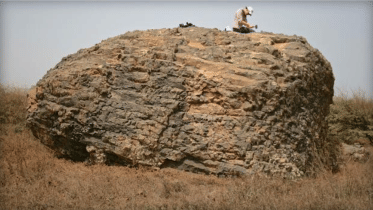
Is ancient 800-ft megatsunami wave a sign of things to come?
Scientists have found evidence off the west coast of Africa that tens of thousands of years ago a collapsing volcano sparked a megatsunami producing waves up to 800 feet high.
3 October 2015, 03:38 AM

'Good bacteria' key to stopping asthma
Being exposed to "good bacteria" early in life could prevent asthma developing, say Canadian scientists.
1 October 2015, 06:16 AM

Age of menopause 'controllers' found
Sections of DNA that control when women go through the menopause have been identified by scientists.
30 September 2015, 11:06 AM
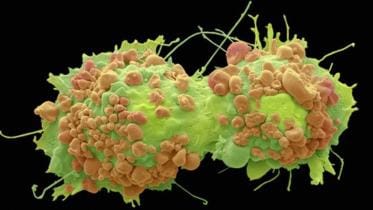
Turning cancer back into healthy tissue
Scientists believe to have found a way to turn cancerous cells back into healthy tissue.
25 August 2015, 12:51 PM

World's thinnest light bulb is here
Using graphene - an atomically thin and perfectly crystalline form of carbon - as a filament, scientists have demonstrated for the first time an on-chip visible light source.
16 June 2015, 14:56 PM