


rohingya camp

Verses from the Rohingya Camp
Mohammed Taher, a young Rohingya poet and teacher from the refugee camp in Ukhia, Cox’s Bazar, uses education and writing as tools for change.
23 May 2025, 18:00 PM
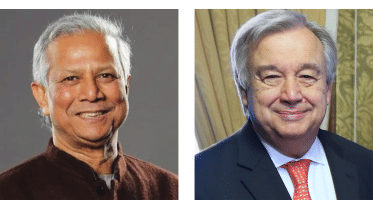
Yunus, UN chief to visit Rohingya camp
Chief Adviser Prof Muhammad Yunus along with UN Secretary-General António Guterres is scheduled to visit the Rohingya camp in Cox’s Bazar on March 14.
10 March 2025, 18:00 PM
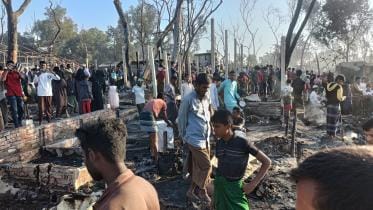
2 dead, 500 houses gutted in Rohingya camp fire
Two people were burnt to death and many injured in a devastating fire that broke out at a Rohingya camp in Cox’s Bazar’s Ukhiya yesterday.
24 December 2024, 20:06 PM
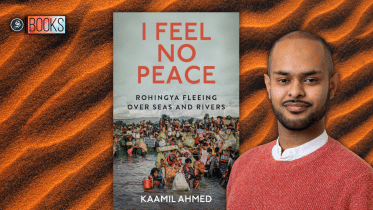
Kaamil Ahmed publishes ‘first book-length exploration’ of Rohingya lives abroad
I Feel No Peace is the latest in this string of books exploring the Rohingya experience. It offers, in particular, a narrative account of their history and their experience with NGOs and the UN.
25 January 2023, 15:00 PM
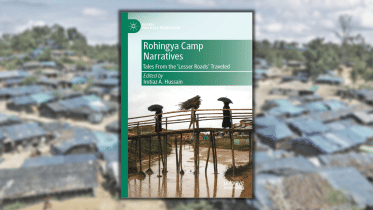
Home-grown solutions for a global crisis: 'Rohingya Camp Narratives' launches at IUB
“Here one will find on state policy analysis and societal dynamics–exploring grey areas and bringing multidimensional analysis to the refugee crisis”, said Professor Dr Meghna Guhathakurta.
29 July 2022, 13:07 PM
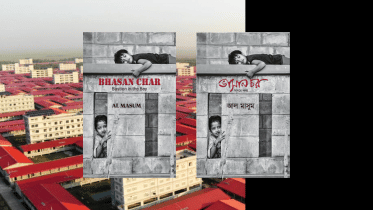
Is Bhashan Char really the answer to the Rohingya crisis?
Bhashan Char has lately become a topic of critical debate in the refugee relocation discourse. It is a reality that comes with a harsh reminder of demographic changes within the Rohingya refugee camps in Cox’s Bazar and the limits of a highly populated state in supporting an incredibly high number of foreign nationals living in its territory.
13 October 2021, 18:00 PM
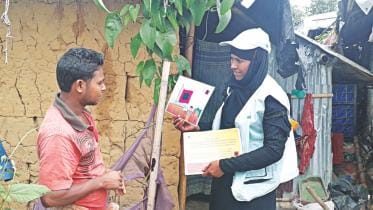
For the good of the community
Waking up early in the morning, Jaheda Begum finishes her household chores quickly. Taking her breakfast, she comes out of her home in a Rohingya camp and rushes to a place where Rohingya women like her meet every day at 9:00am.
21 June 2019, 18:00 PM
Fire at Rohingya camp
At least 22 makeshift houses and a mosque were gutted in a fire at Balukhai Rohingya camp in Ukhia upazila of Cox’s Bazar yesterday.
24 April 2019, 18:00 PM
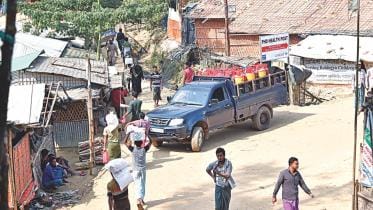
Tree felling falls
Exhausted Rohingyas walking with loads of firewood on their heads used to be a common sight around the refugee camps in Cox's Bazar, raising concerns about the long-term impact on the forest.
7 December 2018, 18:00 PM
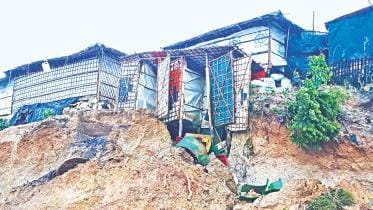
Danger looms in Rohingya camps
Spokesperson of UNHCR Caroline Gluck said heavy and continuous shower in the Rohingya settlements puts hundreds of thousands of Rohingyas at a major risk.
12 June 2018, 18:00 PM
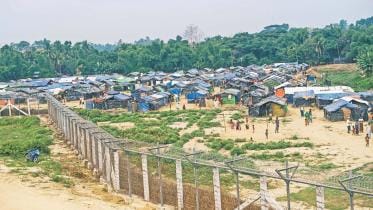
Keep pressure on Myanmar to expedite repatriation
Bangladesh government has urged the visiting UN Security Council delegation to keep pressure on the Myanmar government to speed up the repatriation process and to recognise the Rohingya situation as a crisis.
28 April 2018, 18:00 PM
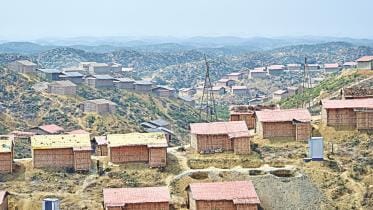
TREES, HILLS RAZED by ROHINGYAS
It was around eleven in the morning.
20 March 2018, 18:00 PM
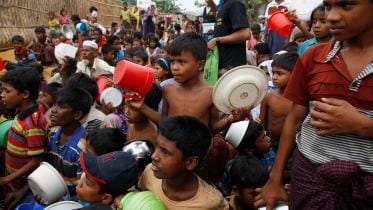
40,000 'orphans'
Thousands of children saw horror unfolding in their homes in Myanmar and they fled to safety in Bangladesh after walking through jungles and hills for days.
13 January 2018, 18:00 PM
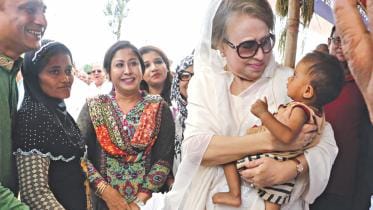
Condemnation not enough
BNP Chairperson Khaleda Zia has called upon international organisations and communities as well as the Bangladesh government to step up efforts to ensure Rohingyas' safe return to Myanmar.
30 October 2017, 18:00 PM

Dhaka pushing for special UN session
Dhaka has intensified diplomatic efforts for the UN Human Rights Council to hold a special session and adopt a
25 October 2017, 18:00 PM
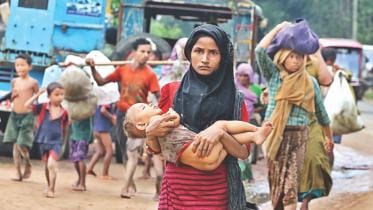
Tall task in hand
The threat of infectious diseases looms large in Cox's Bazar Rohingya refugee camps as well as the local communities and beyond with hardly any sign of the Myanmar nationals going back anytime soon.
Experts fear that the bordering district, where more than six lakh refugees are sheltered in overcrowded camps lacking pure water and sanitation facilities, is faced with a long-term public health challenge.
23 October 2017, 18:10 PM
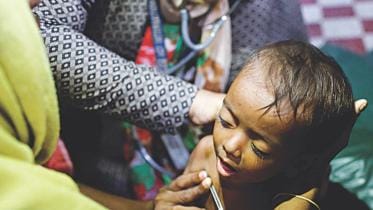
No real progress yet
Rohingyas have been telling the world numerous stories of horror, loss, murder, rape and villages burned to the ground over the last two months. The world's media have been flooded with their harrowing tales.
22 October 2017, 18:00 PM
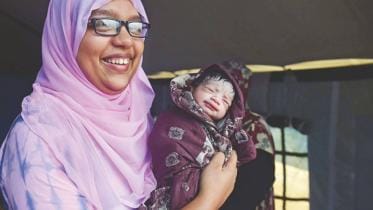
A baby born into chaos
Mohammed Jubayed came into the world shortly after midday in a baking hot military tent in the chaos of a vast refugee camp in Bangladesh, now home to nearly a million Rohingya.
12 October 2017, 18:00 PM
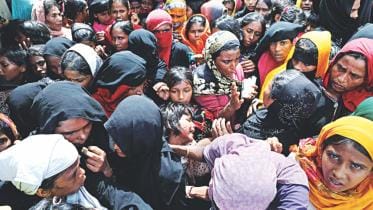
Fear of HIV spread grows
Health officials in Cox's Bazar fear spread of HIV/AIDS in the refugee camps as a rising number of Rohingyas have been diagnosed with the disease.
10 October 2017, 18:00 PM
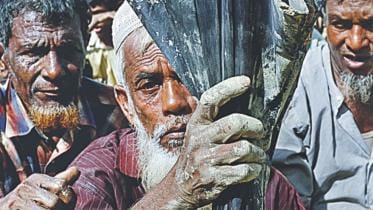
Weighed down by age, anguish
As the sun's first light fell across the hills of Balukhali in Ukhia, a frailly built Mohammad Syed could be seen trying his best to walk quicker with the help of a wooden stick.
30 September 2017, 18:00 PM