


Right To Information

A paralysed Information Commission is undermining citizens’ right to know
Recently, Dr. Zahed Ur Rahman, adviser to the prime minister on information and broadcasting, has welcomed constructive criticism from citizens regarding the government’s performance.
15 May 2026, 11:00 AM
Appoint information commissioners immediately
Govt must amend RTI 2026 ordinance further before passing it
10 March 2026, 00:13 AM

Citizens lament RTI paralysis in Bangladesh
There seem to be differences in response depending on the authorities’ location.
15 June 2025, 02:00 AM

How to use RTI when there are no information commissioners
The interim government should encourage all public officials to respond diligently to the citizens’ RTI requests.
15 May 2025, 05:00 AM

Time to put the RTI Act on the right track
The success of the RTI Act anywhere in the world largely depends on the determination and commitment of the citizens to put it to practical use.
15 October 2024, 05:00 AM

Access to information: A right essential for transparency and accountability
The RTI Act is a crucial tool for promoting transparency and accountability in Bangladesh.
28 September 2024, 10:00 AM

101 of the RTI Act for Bangladesh's youth activists
Bangladesh's RTI law is the best law to utilise in making a new Bangladesh where people's power reigns supreme in the true sense of the term.
16 September 2024, 02:00 AM
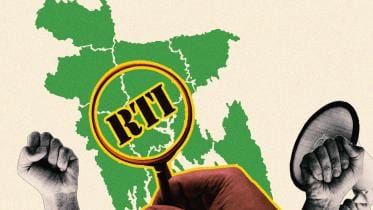
Citizens must use RTI Act to its full potential
The use of the RTI Act is not merely to focus on government work, but to operationalise good governance too.
30 May 2024, 02:00 AM
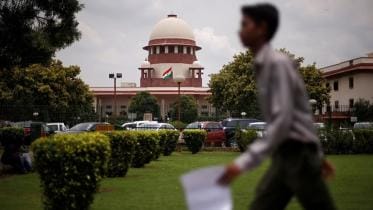
Right to information takes centre stage in Indian elections
The Indian Supreme Court's recent decision on electoral bonds underline the importance of citizens' role in exercising their right to information as watchdogs of good governance.
15 May 2024, 14:00 PM

Reassuring stories of progress
The RTI law has been kept alive over the years largely through the efforts of a few dedicated NGOs and die-hard RTI activists.
15 February 2024, 03:00 AM

Our Information Commission has mettle after all
In the last few months, we have received some very encouraging feedback from users of the RTI law about the Information Commission's work.
15 December 2023, 03:00 AM

How right to information helped Sri Lanka manage its crisis
Through the RTI Commission of Sri Lanka, citizens could weight in on matters impacting the nation.
15 October 2023, 14:00 PM

Right to Information in Bangladesh: Are we on the right track?
To obtain the full potentials of the law, we must go beyond such perfunctory rituals and focus more on strategies to go ahead.
15 September 2022, 03:00 AM

The State of RTI in South Asia: The Pakistan Case
Over the last two decades, most of South Asia has adopted right to information (RTI) laws, also known as freedom of information (FOI) or access to information (A2I) laws.
14 July 2022, 15:00 PM

A case for making jobseekers’ info open data
There is a huge need for data in every aspect of human life, from personal life to business, social, scientific, economic, and public policy and decision-making processes.
6 July 2022, 15:00 PM

Government starts to nurture the fledgling RTI regime
In recent weeks, two important government ministers—Law Minister Mr Anisul Huq, and Information Minister Mr Hasan Mahmud—have given vocal support to a fuller implementation of our national Right to Information (RTI) Act.
14 March 2019, 18:00 PM

Right to Information and the story of a Bokul tree
This beautiful rhyme by poet Jotindra Mohan Bagchi famously captures the Bengali sentiment for bokul phul, a very small sweet-smelling white flower.
14 February 2017, 18:00 PM

Right to Information - Is it catching on in Bangladesh?
NGO experience shows that many RTI applications from marginalised communities do not get recorded as those who obtain benefits by simply using the law do not care about receiving a formal response. Officials concerned also do not wish to record applications and may even avoid reporting them to concerned offices, as they often resort to irregular practices to dispose them off.
12 April 2016, 18:00 PM
Digital Bangladesh - Right to information and climate finance
Unfortunately, so far, our performance on both transparency as well as accountability has not been very good. Fortunately, there is still time to improve this before the major climate change funds begin to flow.
29 March 2016, 18:00 PM

Welcoming the new CIC
Unfortunately, citizens are yet to rise to the occasion and play a meaningful role to take the law forward. Demands for information are yet to pour into government offices in large numbers to test the system.
14 February 2016, 18:00 PM