


political unrest
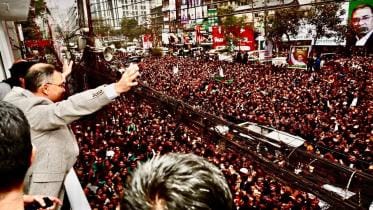
Democracy cannot survive on silence and fear
After a long stretch away from the country, Tarique Rahman's return to Bangladesh marks the beginning of a tougher chapter, one that's about real responsibility, not symbolic.
6 January 2026, 08:00 AM
BNP blames the govt inaction for spate of attacks
BNP has blamed the interim government for a spate of attacks, vandalism and arson across the country, alleging that a section within the administration is seeking to destabilise Bangladesh ahead of the upcoming election.
20 December 2025, 18:00 PM
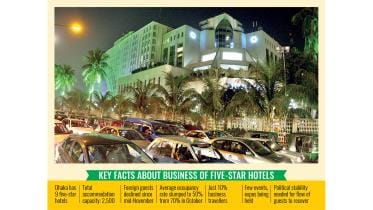
Dhaka’s 5-star hotels facing a dearth of guests
Most of Dhaka’s five-star hotels are not faring well for a dearth of guests, as political uncertainties and security concerns following the August 5 student movement are putting off most events and travel plans.
8 December 2024, 18:00 PM
An anatomy of the current economic situation in Bangladesh
Bangladesh's economy faces instability, inflation, and political unrest hindering growth.
3 December 2024, 02:00 AM

Can we exorcise Sisyphus from our political culture?
Bangladesh's political culture is riddled with unscrupulous blame games.
14 November 2024, 10:00 AM

Are we trying to get ‘everything, everywhere, all at once’?
The euphoria of August 5, and the momentous days leading up to it, especially since July 15, are now being overshadowed by a cloud of uncertainty.
25 October 2024, 04:00 AM
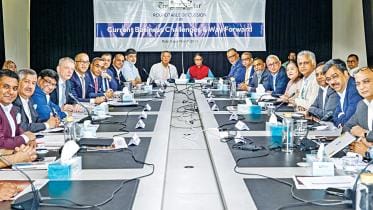
Country must be back in business without delay
Amid worker unrest and insecurity in the industrial sector, entrepreneurs and bankers have urged the new administration to focus on rebuilding confidence in the economy.
10 September 2024, 01:00 AM

Govt healthcare facilities: Protests, departures cripple services
Protests after the fall of the Awami League government have forced heads and top officials of many government healthcare facilities and institutes to resign or remain absent, leaving the entire sector in disarray, and ultimately causing patient suffering.
6 September 2024, 18:00 PM
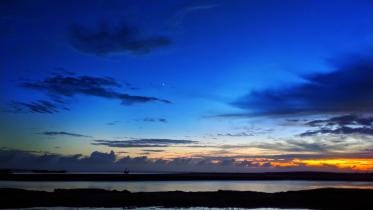
Tourism in turmoil: How political unrest and floods crippled Bangladesh
Currently, the Bangladeshi tourism sector is witnessing unprecedented problems. While this was supposed to be one of the peak seasons, due to the recent political situation and the current flood that is sweeping many parts of the country, the hospitality industry seems to have come to a standstill.
22 August 2024, 09:00 AM
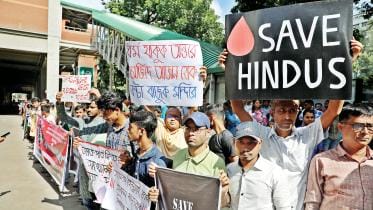
Aftermath of AL govt’s fall: Minorities faced 205 attacks in 52 districts
Two organisations of minority communities reported yesterday that there have been at least 205 incidents of attacks on members of minority communities in 52 districts since the fall of the Sheikh Hasina-led government on August 5.
9 August 2024, 18:00 PM
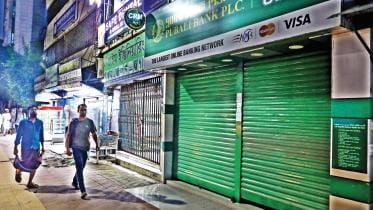
ATMs out of cash as money supply disrupted
Nasir Hossain, a resident of the capital’s Dhanmondi area, had to urgently buy daily necessities as he had not gone to the market for the past few days in the wake of the deadly protests that forced Sheikh Hasina to resign from her post as prime minister.
7 August 2024, 18:00 PM
ISPR provides numbers of army camps to contact in case of sabotage, threats
Bangladesh Army today requested people to contact the nearest army camp if anyone faces any sabotage activities, violence and death threats
7 August 2024, 09:51 AM
HSC exams posptoned due to unavoidable reasons
Exams were earlier scheduled to be held from August 11
7 August 2024, 08:15 AM
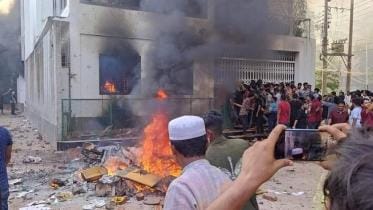
Monday’s Clashes: 92 bodies taken to hospitals
At least 92 bodies, including those of students and cops, were recovered in different parts of the country yesterday following Monday’s violent clashes between protesters and police and attacks on various establishments, including police stations.
6 August 2024, 18:00 PM
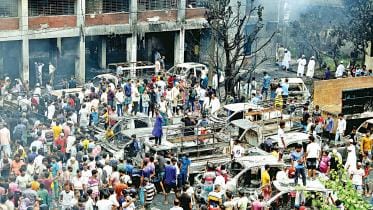
Insecurity grips city as many police stations deserted
With many police stations unmanned and arms and ammunition looted, there is a sense of serious insecurity among people in the capital and elsewhere in the country.
6 August 2024, 18:00 PM
Hindu houses, businesses attacked in 27 districts
Hindu houses and business establishments were attacked by mobs while their valuables were also looted in at least 27 districts yesterday.
5 August 2024, 18:00 PM
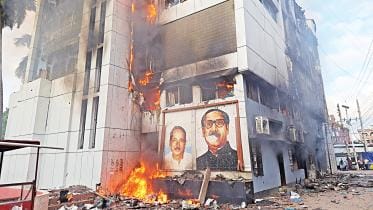
Violence sweeps the country
Widespread violence rocked the nation yesterday after the Sheikh Hasina-led Awami League government was ousted following a mass uprising.
5 August 2024, 18:00 PM
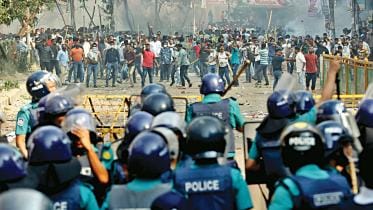
Unrest bearing on fragile economy
The political unrest and the garment workers’ agitation in the apparel sector have started to take a toll on the economy that is already grappling with elevated inflation, a depleting dollar stockpile, slowing exports and decelerating private sector activities.
6 November 2023, 18:00 PM
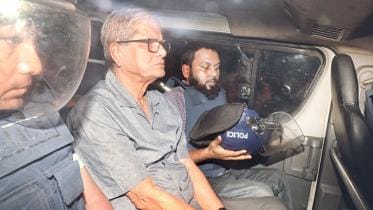
Govt takes hard line against BNP
The government appears to have taken a tough stance against the BNP after Saturday’s clashes that turned the heart of the capital into a battlefield.
29 October 2023, 18:00 PM
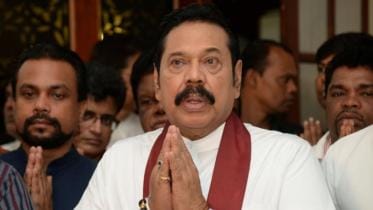
Mahinda Rajapaksa, family takes shelter in naval base, surrounded by protesters
Sri Lanka's former Prime Minister Mahinda Rajapaksa and his family have taken shelter at a naval base at the administrative headquarters of the Trincomalee district, as deadly protests continue amid the country's worst-ever economic crisis, NDTV reports.
10 May 2022, 10:15 AM