


Where it all came full circle

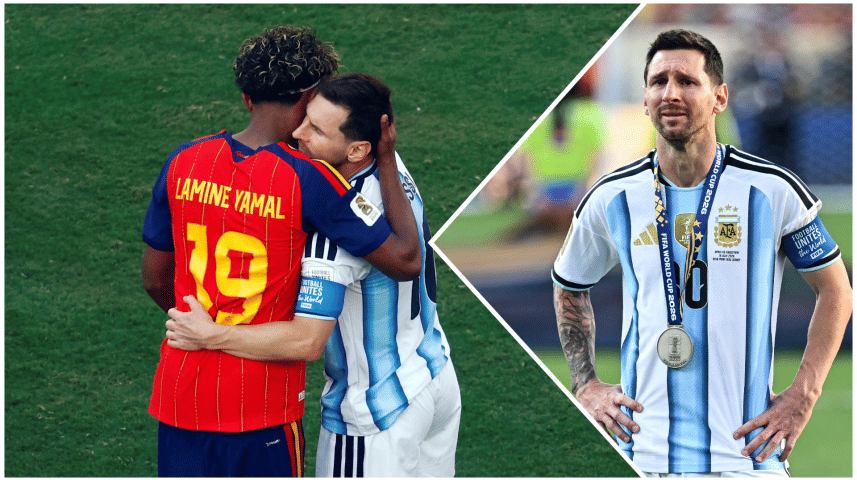
At New York-New Jersey Stadium on Monday, several storylines came full circle in the World Cup final.
Spain's commanding 1-0 victory over Argentina secured a second World Cup title, but beyond the result lay a series of striking moments that transcended the scoreline.

There was the image of a tearful Lionel Messi at the very venue where he had once experienced one of the darkest moments of his career. There was another, perhaps even more symbolic, of the Argentine legend embracing Spain's teenage star Lamine Yamal. Together, those moments painted a story of legacy, resilience, and the passing of the torch.
The sight of a 39-year-old Messi standing with tears in his eyes inevitably transported Argentine fans back a decade. It was at this very stadium that a much younger Messi broke down after Argentina's penalty shootout defeat to Chile in the 2016 Copa America final.
The pain of another heartbreaking loss prompted him to announce his retirement from international football -- an emotional decision made by a player who had won almost everything the game had to offer, yet remained haunted by his inability to deliver a major title for his country.
That retirement, of course, did not last.
Messi returned to the national team and, over the following years, completed the story many feared would forever remain unfinished. He led Argentina to continental glory before finally lifting the one trophy that had eluded him for so long -- the World Cup in Qatar in 2022, adding the coveted third star above the Albiceleste crest.
For many, that triumph represented the perfect ending. After years of heartbreak, Messi had finally reached football's summit, seemingly with nothing left to prove.
Yet he chose to return once more.
He knew that defending the title at 39 would demand far more than reputation. Surrounded by a new generation entering the peak of their careers, Messi was expected to struggle to match the intensity of the world's best.
Instead, he repeatedly reminded everyone why he is regarded among football's greatest. Throughout the tournament in North America, he inspired Argentina time and again, dragging his side back from difficult situations through moments of brilliance and relentless determination.
The final, however, proved a different challenge altogether.
Spain controlled proceedings from start to finish, never allowing Argentina to establish any rhythm. Messi and his teammates rarely threatened, spending much of the evening chasing shadows against a side that dictated every phase of the match.
He may not have ended his World Cup journey with another trophy, but that hardly diminished what he left behind. If this was indeed his farewell on football's grandest stage, it served as another reminder that greatness is measured not only by victories but also by the standards a player continues to uphold until the very end.
That message appeared to find its first recipient almost immediately after the final whistle.
Messi walked over to embrace Yamal, the 19-year-old Spanish sensation who had just added a World Cup winners' medal to the European Championship title he already possessed. For a player whose career is only beginning, the possibilities seem limitless.
The embrace carried layers of symbolism. Yamal now occupies a space once held by Messi himself, dazzling the world in Barcelona colours while still a teenager. It also evoked the famous photograph taken in 2007, when a teenage Messi cradled and bathed a baby Yamal during a charity photoshoot -- an image that, years later, would come to feel almost prophetic.
Football's greatest stories are often about more than trophies. They are about the values one generation leaves for the next. As one era edged towards its conclusion and another gathered momentum, Messi's final World Cup left behind a timeless reminder: talent may open the door to greatness, but it is resilience and unwavering dedication that ensure a legacy endures long after the final whistle.
 For all latest news, follow The Daily Star's Google News channel.
Comments