


The final call is still human
For years, football authorities have promoted technology as the answer to the game's biggest controversies. Goal-line technology, semi-automated offside systems and the Video Assistant Referee (VAR) were all introduced in a bid to make the sport fairer and more accurate.
Yet the 2026 FIFA World Cup is proving that while technology can provide evidence, the final decision still rests with human beings -- and that remains the source of many of football's biggest disputes.
 For all latest news, follow The Daily Star's Google News channel.
 Among the tournament's new officiating regulations, none has attracted more attention than FIFA's decision to allow referees to issue a straight red card when a player covers his mouth while engaging in what is deemed a confrontational exchange with an opponent.
Before the tournament, FIFA's head of refereeing, Pierluigi Collina, stressed that covering one's mouth had not been banned outright. Players would still be free to do so during friendly conversations. The offence, he explained, occurs when the gesture is used during a confrontation.
Paraguay's Miguel Almiron became the first player dismissed under the rule against Turkiye after VAR advised a red card due to a confrontation between the two players. Yet England midfielder Jude Bellingham escaped punishment after being photographed covering his mouth while speaking to Ghana's Jordan Ayew during Tuesday's goalless draw, deemed to not have been in a confrontational manner.
The problem, however, lies in determining where friendly interaction ends and confrontation begins. How can officials know precisely what was said when the conversation is deliberately concealed? If a player makes an offensive remark without obvious aggression or without provoking a complaint from the opponent, does it still warrant punishment? Ultimately, such decisions depend on interpretation rather than hard evidence.
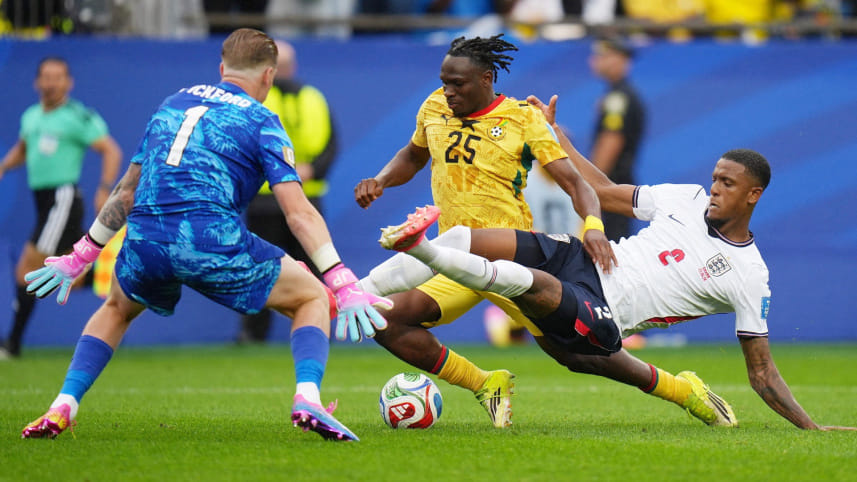
The same concerns resurfaced later in that match. Ghana felt they had been denied a clear penalty when Ezri Konsa appeared to bring down Prince Kwabena Adu inside the area. Replays suggested contact with the midfielder's knee while the ball remained untouched, yet neither the referee nor VAR intervened.
Ghana coach Carlo Queiroz responded with biting sarcasm afterwards.
"Once again VAR went for a coffee. I'm not sure VAR is still working in the World Cup. We still have VAR? It's working?" he remarked.
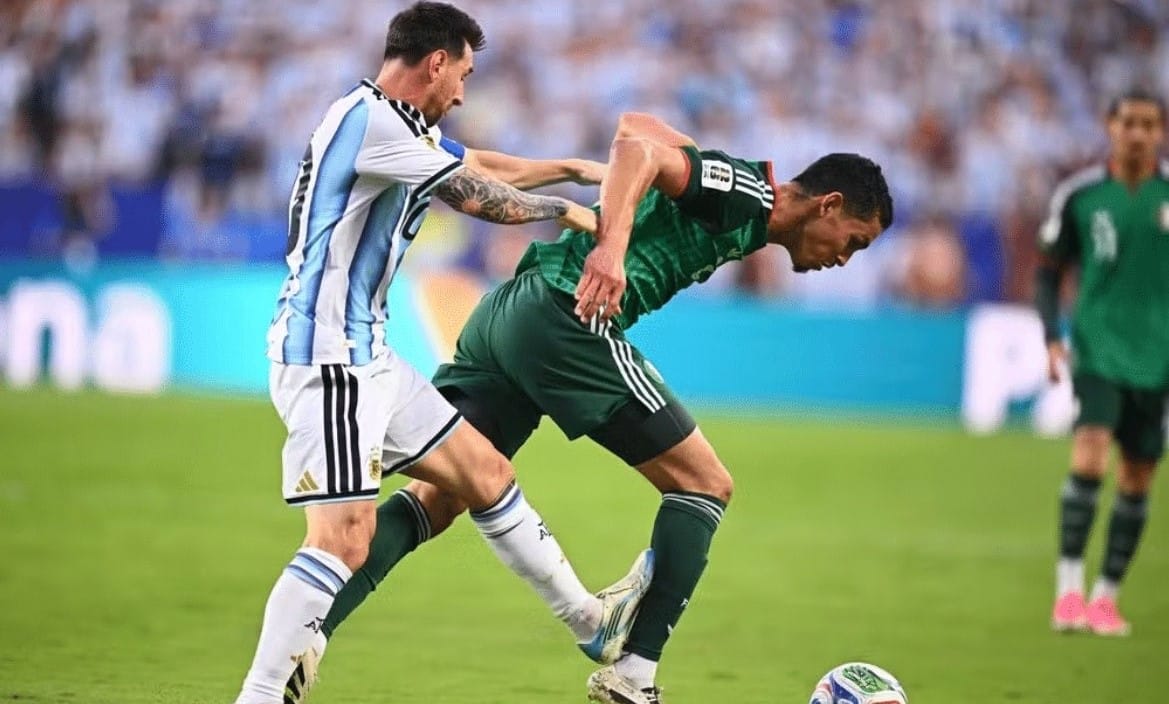
Such frustrations have become a recurring theme throughout the tournament. Lionel Messi escaped even a booking after a studs-up challenge above the ankle on Algeria defender Aissa Mandi, despite similar incidents frequently resulting in red cards in both international and club football.
Questions of consistency have surfaced elsewhere. Uzbekistan were left aggrieved when Azizjon Ganiev's superb goal against Portugal was disallowed after a foul was detected in the build-up. Yet pundits noted that a broadly similar challenge involving Alexis Mac Allister during Argentina's match against Algeria went unpunished, allowing play to continue and a goal to stand.
Football, of course, has never been free from refereeing controversy. The sport's history is littered with disputed decisions, from the notorious allegations surrounding the 1934 World Cup in Italy and the 1978 tournament in Argentina to the controversies involving Belgium and the Soviet Union in 1986, England and Cameroon in 1990, and South Korea's remarkable run to the semifinals in 2002. There was also the match between England and Germany in which the former were denied a goal after goalkeeper Manuel Neuer retrieved the ball from the behind the goal line following Frank Lampard’s long-ranger which had crossed the line. This was a pivotal point in incorporating Goal-line technology.
The introduction of VAR at the 2018 World Cup was meant to reduce such debates, and in many respects it has succeeded. Clear offside errors have become rarer, while goal-line disputes have virtually disappeared.
Yet the final judgement still belongs to the officials interpreting it. Whether on the pitch or inside the VAR booth, those decisions are shaped by individual judgement and can sometimes be influenced by the stature of teams, the reputation of players or external pressures.
That is the uncomfortable reality of modern football. Technology has reduced mistakes, but it has not removed controversy. As long as final calls are being made by human beings, debates over fairness, consistency and bias will continue.


Comments