


Spain solved Messi, Argentina never found themselves
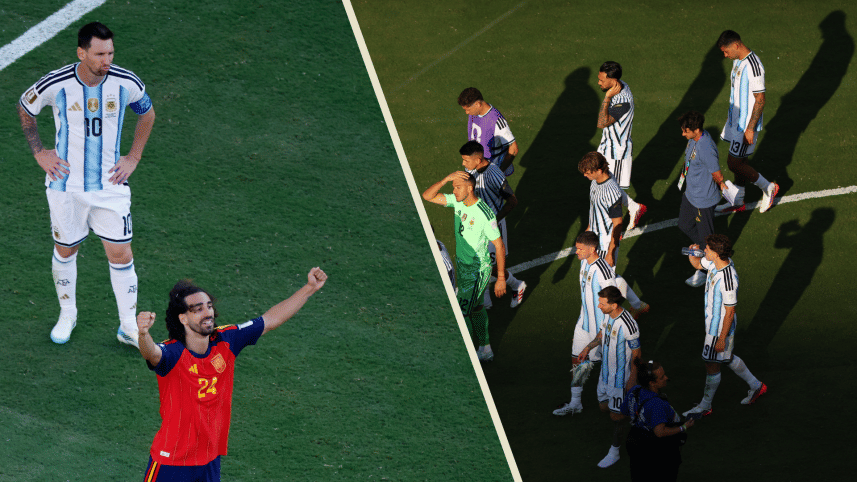
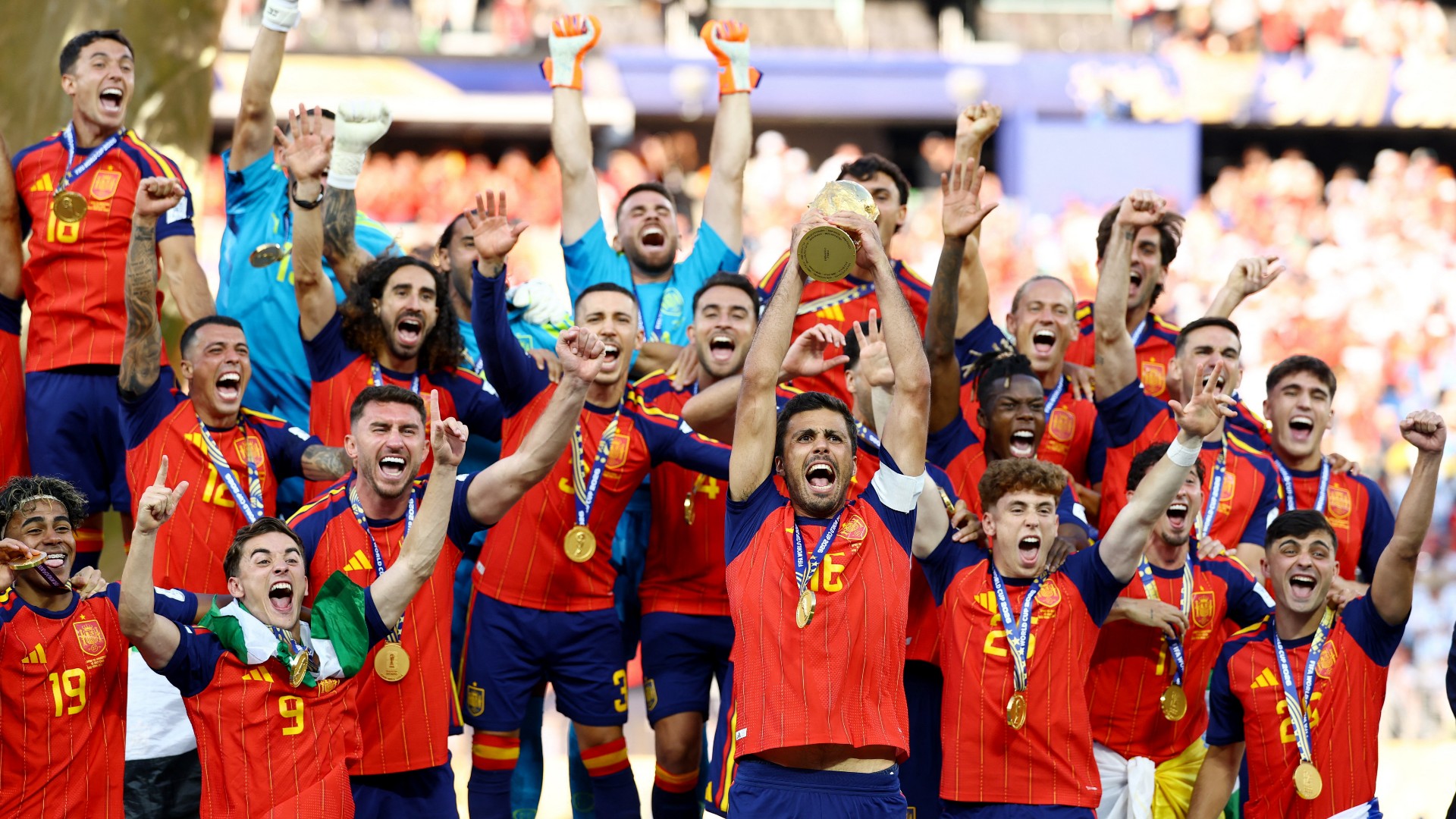
Argentina came to the World Cup final against Spain in New Jersey dreaming to make a difference, but they never refuelled on anything beyond grit and passion and, when footballing traits made the difference, Spain won the most convincing final in decades on Monday (Bangladesh time).
Lionel Messi's genius had been the blinding light in a tournament where frailties from the past were widely exposed, yet Argentina kept on surviving while their talisman could still create something, preventing the dying of the light across the knockout-phase matches.

The dying of the light harkened to their golden generation, which won so much. Angel Di Maria had already retired after the second Copa title came. Messi, Rodrigo De Paul, Alexis Mac Allister, Enzo Fernandez had formed the core of the side alongside defenders Cristian Romero and Lisandro Martinez during the 2022 edition.
Yet, oddly enough, an Argentina side which changed their trajectory by showing vitality in reconstructing their game after their opening loss to Saudi Arabia in the last edition began to feel like a hard-headed unit with an aversion to reinventing themselves for the 2026 edition.
That they got to a final is a mark of the unbelievable World Cup Lionel Messi played.
Messi against time
At 39, he topped almost all the key metrics. His work before the tournament, reportedly putting in double shifts in training, was the one thing that kept them running. In the group stage, he scored all five of Argentina's first five goals. It was a signal.
He rebelled against Father Time to keep the Albiceleste from drowning against Cape Verde, Egypt and England in the knockout rounds. Either his goals were making the difference or he was dismantling opponent structures and creating chances.
Then Argentina found a Spain side in the final with the most nuanced understanding of how to stop Messi. When Argentina's midfield was boxed up, Messi was taken out of the game too.
It was hard to understand why Nico Gonzalez started the match and Leandro Paredes did not. With Spain always overloading midfield, the game quickly went out of hand, evidenced by how long Messi needed to get his first touch. Argentina's cold feet only saw Spain grow into the match.
It quickly became clear that Argentina were waiting to keep the match goalless, not being proactive in their approach to finding a win. Argentina's play had rarely been convincing in the tournament, but they ground out wins.
When Lisandro Martinez found Messi in the box with an aerial through ball against Cape Verde, it was a centre-back pulling one off from the Messi playbook after a conversation with the captain himself. That conversation happened in-game, but Argentina too many times depended on such deliverance on a routine basis, and none came against Spain at the MetLife Stadium.
Argentina always found unlikely saviours when they needed them, but when Lisandro went off injured before half-time, it was their second big blow of the day. Spain overpowered Argentina from the second half. Chance after chance and corner after corner came, overloading the senses. It was Argentina's battle-hardened quality that kept the game goalless.
Spain own the midfield
It was during these periods that the extent of their nullification was truly shown. They bypassed Messi on occasion, not because he could not be provided with a better pass. Argentina's midfield of Enzo, Mac Allister and De Paul were outclassed technically.
Time is a defining factor in football. Here they were too slow to take touches and even slower to release the ball. Their defensive-mindedness not only became the gathering storm Spain needed; it also created the loss of momentum Argentina could not recover.
Most importantly, even when Messi was free in relatively dangerous areas, Argentina failed to get the ball to him due to that gap in technical skill. Spain were always half a touch quicker, a reflection of the model built by Barca.
Spain had freshened their ideas while Argentina had not developed any wing play after Di Maria's retirement. In Nico Paz and Valentin Barco, Argentina had something to offer in the match, but they had already stamped themselves on the foot by going defensive.
The only way Argentina could win, without any accidents, was if they pinned the Spanish centre-backs with forwards such as Alvarez and Lautaro and created more space for Messi to drift into Zone 14, and the half-spaces. Their collective lack of ideas was pronounced by the fact that they bypassed their generator of ideas for almost the entire 90 minutes.
The frustration coming from Spain's growing dominance and their own failure to have an impact resulted in that woeful red card for Enzo in the dying minutes of injury time. After his dismissal for a senseless tackle when extra time was beckoning, the game changed.
 For all latest news, follow The Daily Star's Google News channel.
 Comeback that never came
Down a man and soon down an inevitable goal in the first half of extra time, Argentina finally pushed for something. Spain had been winning the sheer majority of loose balls in the game.
Argentina had looked a man down with 11 on the pitch but, after Ferran Torres's 106th-minute strike, they started to look like a team with 11 players despite having 10 on the pitch. It was as if yet another comeback appeared to be on.
Argentina had produced no shots until the 110th minute and, in the dying minutes, produced two. Their best chance almost saw them get an undeserved goal before Pau Cubarsi doused the gilt-edged opportunity -- Argentina's only one in the game -- with a momentous tackle. It was a defining moment, for it showed Spain had not only found their rhythm and their football but also their passion for the dramatic and the hard-earned.
Success became stagnation
Before the World Cup, Argentina were not only sweating on Messi's injury. Emiliano Martinez, Cristian Romero, Nahuel Molina, Gonzalo Montiel, Paz and Gonzalez were all scrambling for fitness just days prior to the squad announcement.
Lisandro had missed a good part of club football owing to injury. Yet Argentina, instead of redefining themselves like they had done with younger stars such as Mac Allister and Enzo in the previous edition, did not do the same with Paz or Barco. Success made them weaker.
While France and Spain had been building for this World Cup, Argentina built on nostalgia. Their Messi dependency had only grown this edition and it was not completely exposed due to Messi's brilliance itself.
When they failed to find him, it revealed the true extent of the blinding light which had been hiding away their rigidity.
Argentina, in the dying minutes, showed there was another way to play the final, but it was only a reminder of the fact that the spark was lit too late. They had reinvented themselves brilliantly for the 2022 final against France, moving the ball about at great pace. This time, they were found out, having failed to produce a single shot on target before they conceded.
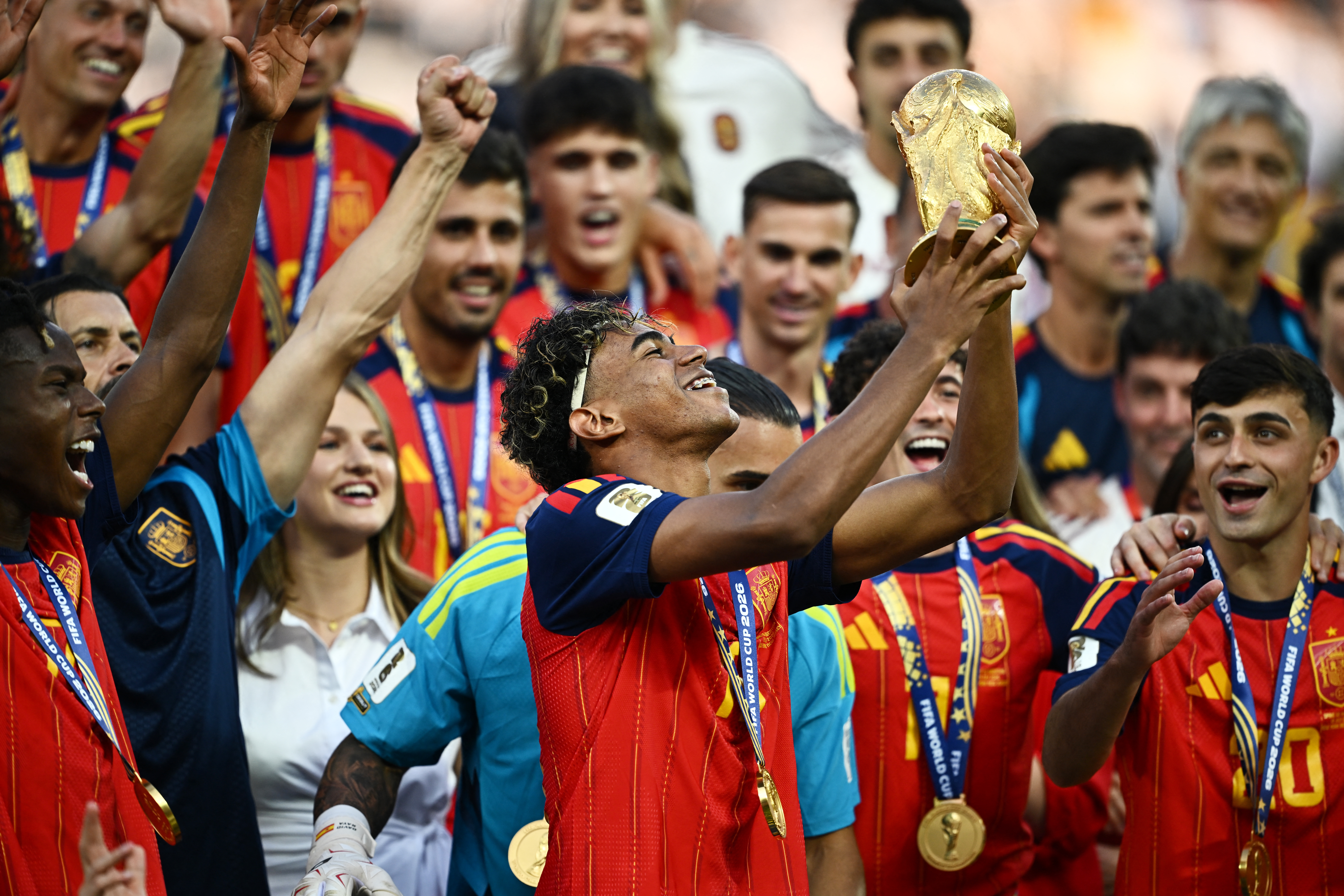
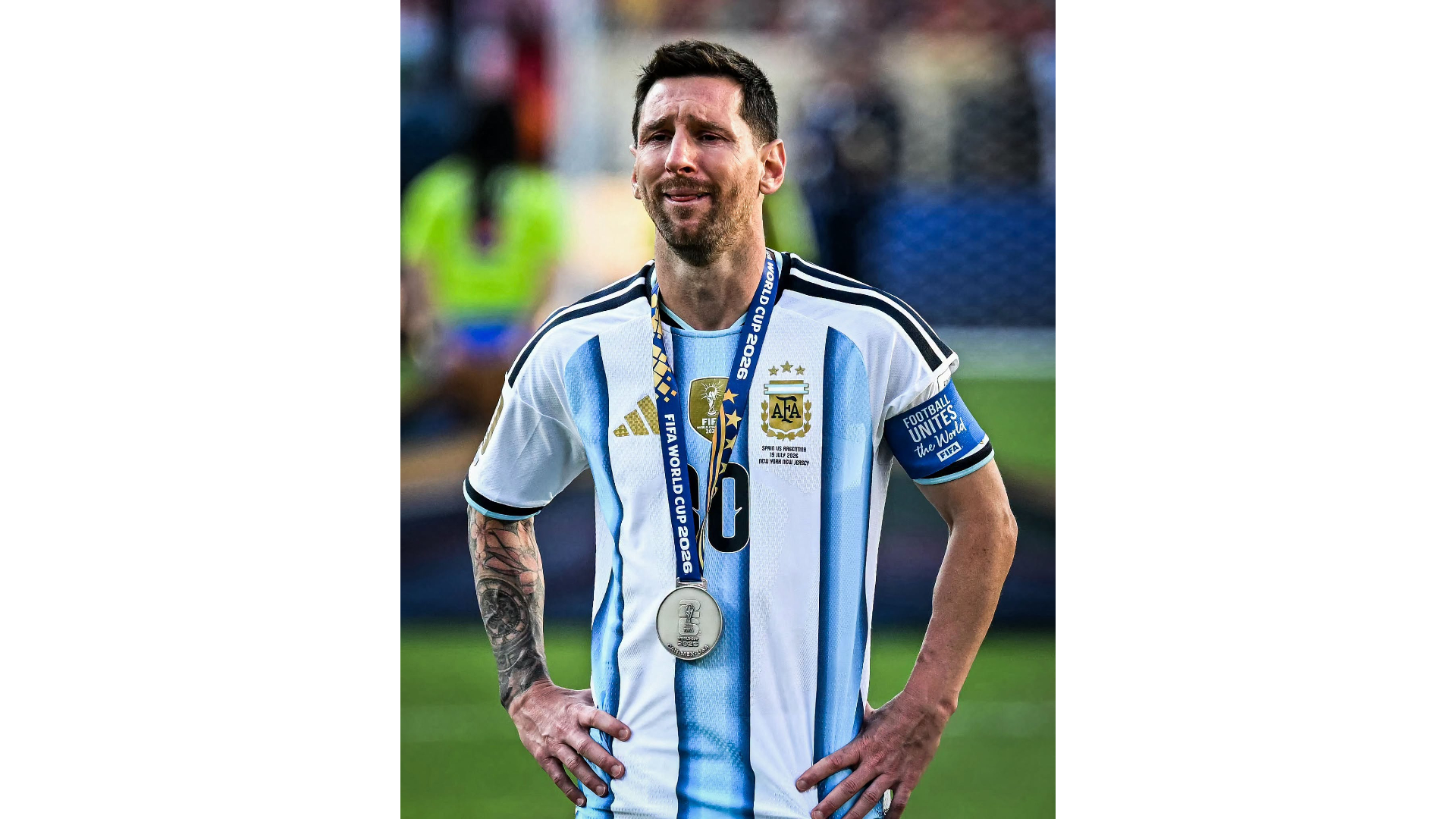
The scoreboard only read 1-0, but the gap in class was much bigger than the scoreline. Messi cried at the final whistle, but his legacy will remain intact. He kept reinventing himself to turn up, at the age of 39, still capable of making the difference. Argentina, on the other hand, did the opposite.
Just as they failed to reinvent themselves, they failed to attack in the final and, this time, emotion and grit were not enough. It was the end of the miracle.
Comments