


Luis Monti: The only man to play World Cup finals for two different nations
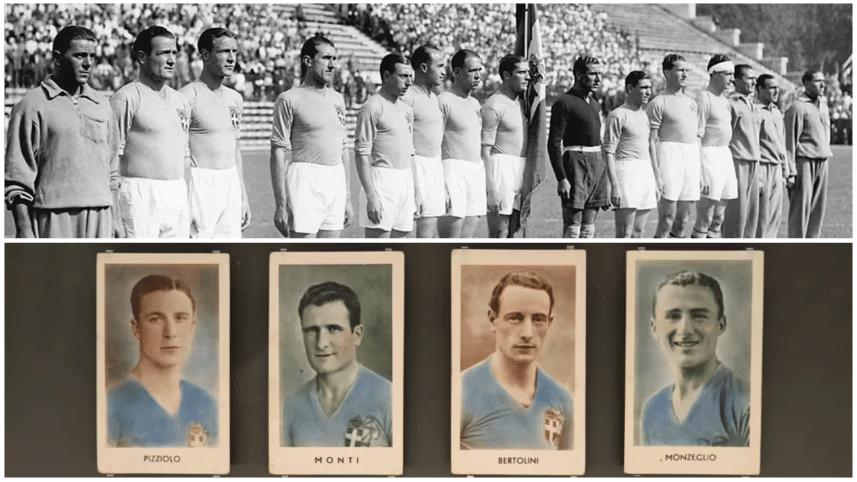
For any footballer, playing a World Cup final for their country is a lifelong dream. Even reaching the final twice -- let alone in consecutive tournaments -- for a single nation is an extraordinary feat. Yet football history witnessed something even rarer, truly unparalleled. Midfielder Luis Monti played in back-to-back World Cup finals -- but for two completely different countries!
Though he failed to win the title with his homeland Argentina, he later achieved the ultimate glory by becoming a world champion in Italy’s jersey. How did he accomplish the impossible? What were the circumstances, performances, and the gripping stories behind the scenes?
 For all latest news, follow The Daily Star's Google News channel.
 An unimaginable record under the shadow of ‘death threats’
Monti didn’t just play finals for two nations -- he did so literally under the threat of death. Performing on football’s grandest stage with such immense psychological pressure, and maintaining that level across two different national teams, remains unmatched. Due to his strong physique and commanding presence on the pitch, he was nicknamed “Doble Ancho” (Double Wide).
1930 World Cup: Horror and heartbreak
Monti began his career with Huracan in 1921, winning the championship in his very first year. He briefly joined Boca Juniors the following year but moved to San Lorenzo without playing a match, where he went on to win three more Argentine titles.
He earned his first Argentina call-up in 1924. The biggest test of his career came in the inaugural World Cup in Uruguay in 1930. Riding on Monti’s aggressive football, Argentina cruised into the final. Though a defensive midfielder, he even scored twice in the tournament. His presence alone struck fear into opponents.
But the final against Uruguay saw a completely different Monti. Argentina lost 4-2. Behind this defeat lay a dark truth. Teammate Francisco Varallo, before passing away at the age of 100, recalled: “Monti and others played very poorly from the start. I later found out he had received an anonymous letter saying that if we won, he and his daughters would be killed.”
The situation worsened at halftime when Argentina led 2-1. Monti’s granddaughter, Lorena Monti, later told FIFA: “When Argentina were leading 2-1, they said if Argentina didn’t lose, they would kill my grandmother and my aunt.”
That day, despite the heartbreak of losing the World Cup, Monti may have felt relief knowing his family was safe.
Rumors suggest Italian mafia involvement behind the threats. Their plan allegedly was for Monti to lose in Argentina’s colors, face backlash at home, and then move to Italian club Juventus and adopt Italian nationality. Monti later admitted: “I was very scared during that match, because they threatened to kill me and my mother.”
Move to Italy and the Juventus chapter
After leaving Argentina, Monti joined Juventus in 1930. Being of Italian descent, he already held eligibility for Italian citizenship. Initially, he struggled with fitness and weight, but through a month of intense solitary training, he regained his form. He won four consecutive Serie A titles with Juventus and even captained the club. Alongside defenders Virginio Rosetta and Umberto Caligaris, he formed an impenetrable defensive wall.
1934 World Cup: Mussolini’s threat and the crown of glory
His stellar club performances earned him a place in the Italy national team in late 1932 as an “oriundo” (foreign-born player). But drama followed him here as well. Monti had a fierce rivalry with Italy’s main striker Angelo Schiavio. In a 1932 club match, Monti badly injured Schiavio’s knee, leading Schiavio to label him a “criminal.”
Ahead of the World Cup, Italy coach Vittorio Pozzo made a historic decision -- he selected both Monti and Schiavio. Pozzo later said, “It was the most difficult decision I ever made.”
Setting aside their rivalry, both players focused on winning the World Cup.
Italy reached the final. But once again, Monti’s life was overshadowed by familiar terror -- death threats. This time, it came from Italy’s dictator Benito Mussolini. Lorena Monti recounted: “My grandfather often said he had to play two World Cup finals under threat. Before the 1934 final against Czechoslovakia, a man came into the dressing room with a message from Mussolini saying we would face consequences if we didn’t win. He used to say -- in 1930 Uruguay, they wanted to hurt him if he won. Four years later in Italy, they wanted to hurt him if he lost.”
This time, fortune favored Monti. In a match that went into extra time, Schiavio scored the winner as Italy defeated Czechoslovakia 2–1 to lift their first World Cup.
Pozzo, the only coach to win two World Cups, later admitted: “I don’t know if we could have won without Monti or Schiavio. I believe it was a decision that made history.”
Will such a record ever be seen again?
In short -- almost certainly not. Today, FIFA regulations are far stricter and more clearly defined. Once a player represents a country in a competitive senior match (like the World Cup or its qualifiers), switching to another nation is generally not permitted.
At the FIFA Museum in Zurich, Monti’s Argentine passport is carefully preserved -- the very document with which he left his country as a runner-up, only to return as a world champion from foreign soil. His astonishing record of playing World Cup finals for two different nations will likely remain uniquely his forever.
Comments