


Brazil get the win, not the spark

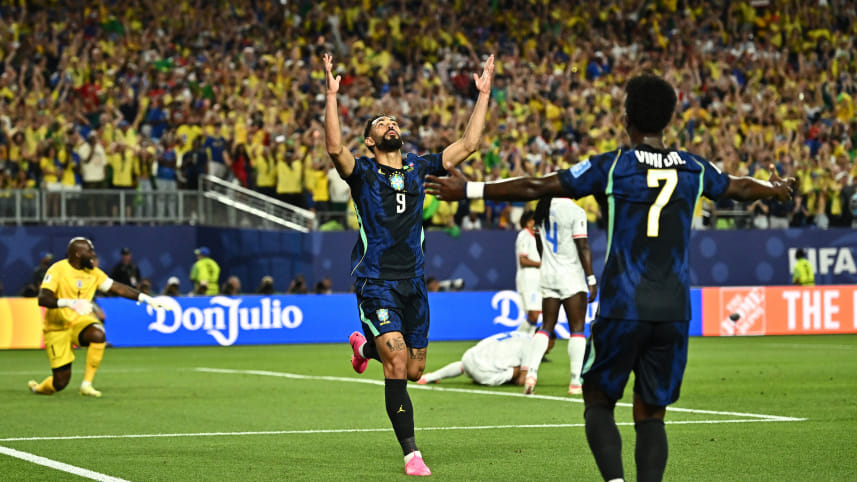
Brazil shrugged off their World Cup opener disappointment with a 3-0 win over Haiti in their second Group C outing at the Philadelphia Stadium yesterday, but it was still not the resounding performance expected from a side chasing a record-extending sixth world title.
There were encouraging signs -- more fluidity in midfield, sharper attacking movements, and a far more cohesive structure than in their shaky 1-1 draw against Morocco last week. But for all the improvement, this was still not the kind of dominant, statement display associated with Brazil at a World Cup.
 For all latest news, follow The Daily Star's Google News channel.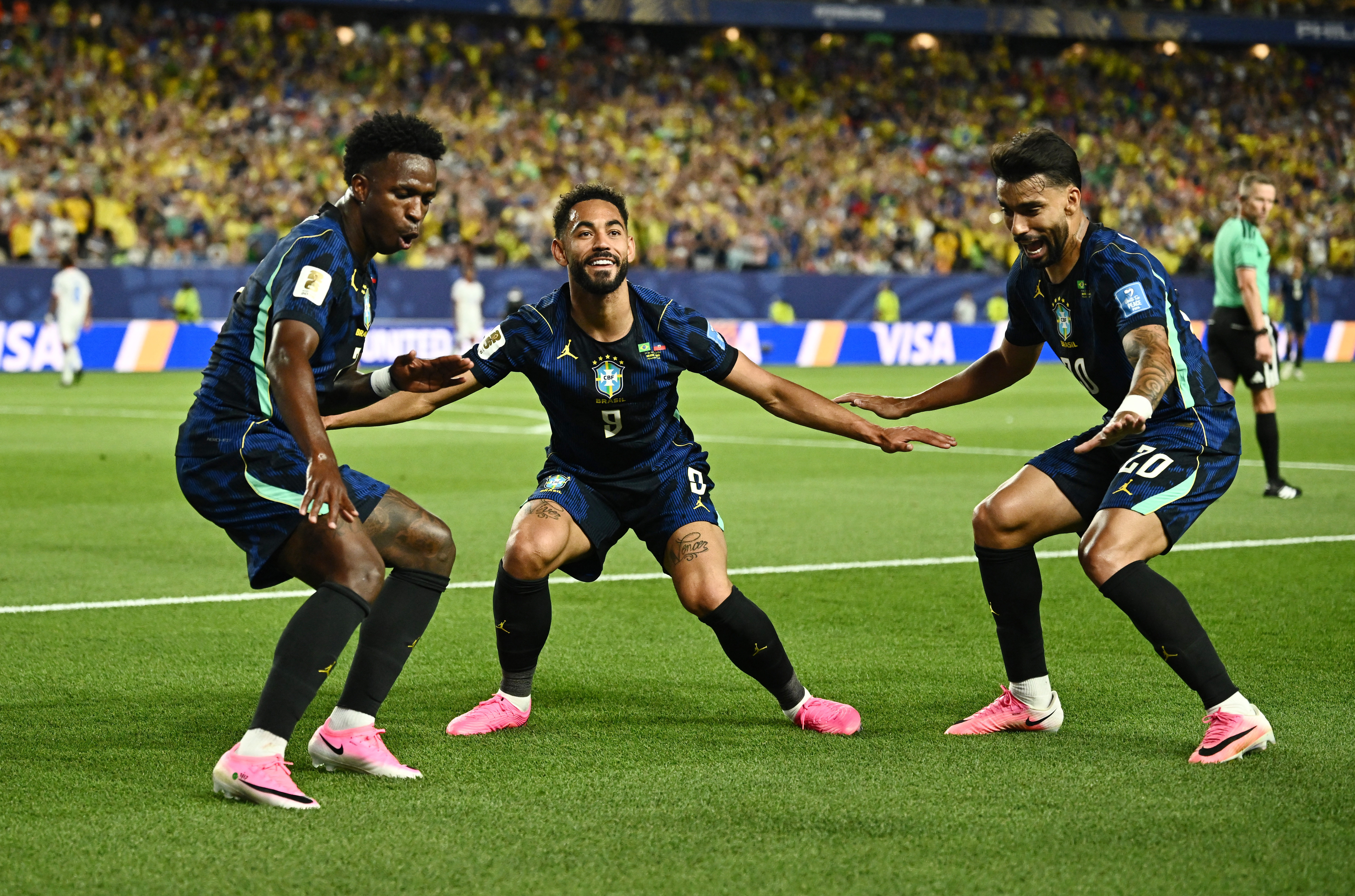
Against a side ranked 82 places below them and featuring in their first World Cup in 52 years, a convincing victory was always the minimum requirement. And in that sense, Brazil delivered exactly what was expected -- nothing more, nothing less.
Whenever Brazil arrive at a World Cup, they arrive as contenders. However, their performances are judged less by results alone and more by the style, authority, and confidence with which those results are achieved.
The discussion inevitably drifts toward Joga Bonito, toward the flowing Samba football that once defined an era. And with figures such as Ronaldo, Kaka, Rivaldo, and Ronaldinho present in the stands as FIFA ambassadors, the nostalgia is unavoidable. Their mere presence serves as a reminder of a time when Brazil did not just win -- they dazzled while doing so.
Which leads to the question that lingers over this current squad: are they anywhere close to the level of those who delivered Brazil’s last World Cup triumph in 2002?
At present, the honest answer is no.
Football, of course, has evolved since those golden days. More than artistry on the ball, the demand is now for precision. More than trickery on the field, the focus now rests on the final product delivered. But even by modern standards -- where artistry must be matched by output -- this Brazil side still feels a step short of true elite rhythm.
Yes, they were clearly the better team against Haiti. But anything less would have been a major shock.
Carlo Ancelotti made adjustments after the Morocco draw, and several of them did click.
Matheus Cunha replaced the underwhelming Igor Thiago up front, and the Manchester United forward immediately made his mark with a brace -- becoming only the third Brazilian to score twice on his first World Cup start in the last four tournaments, after Richarlison in 2022 and Neymar in 2014. The last before that run was Amarildo back in 1962.
Cunha looked far more connected to the players around him, particularly Vinicius Junior on the left and Lucas Paqueta in the central attacking role. Most of Brazil’s dangerous play flowed down that left channel, where combinations began to click with far greater consistency than in their opening match.
His first goal came from instinct more than finesse -- pouncing on a rebound after Vinícius had cut inside and forced a save, even if the finish itself lacked clean striking technique.
The second, however, was far more polished. Vinicius slipped a precise through ball behind the Haitian defence, and Cunha finished emphatically with his left foot -- a moment that finally gave Brazil fans a glimpse of the sharper attacking edge they were hoping for.
Vinicius himself then added a goal, playing off a delicate Paqueta dink that split the defence.
But while the left side showed promise, the right flank remains an unresolved problem. Raphinha, operating in an opposite role that brought the best out of him at Barcelona, again looked uncomfortable -- heavy touches, loose passing, and a lack of influence that disrupted Brazil’s balance.
To make matters worse, Raphinha picked up an injury and was forced off before halftime, leaving Ancelotti with an immediate selection dilemma. Rayan came on as his replacement, but the young winger offered little improvement, making the imbalance between Brazil’s two flanks even more apparent.
Furthermore, Brazil were briefly exposed in the second half when Haiti grew into the game. The Caribbean side showed greater composure after the break, pushing Brazil deeper than expected and creating uncomfortable moments that will concern Ancelotti ahead of sterner tests.
Even the Italian coach admitted the reality. “Obviously, we still have to improve, and we will improve to be ready for the knockout stage,” he said after the game.
That sentiment neatly frames where Brazil stand right now. The win over Haiti has all but confirmed their place in the knockout rounds, and that, in itself, is the minimum expectation met. But beyond qualification, the larger question remains unanswered: how far can this team go playing like this?
There is structure emerging, and there are individual flashes of quality, but the collective rhythm -- the defining trait of great Brazil sides -- has yet to fully appear.
For now, Brazil have done what they needed to do. They are winning, they are scoring, and they are moving forward. But if they are to turn this campaign into something closer to the glory they are chasing, there is still a significant gap between where they are -- and where they are expected to be.


Comments