


Africa’s time to shine?

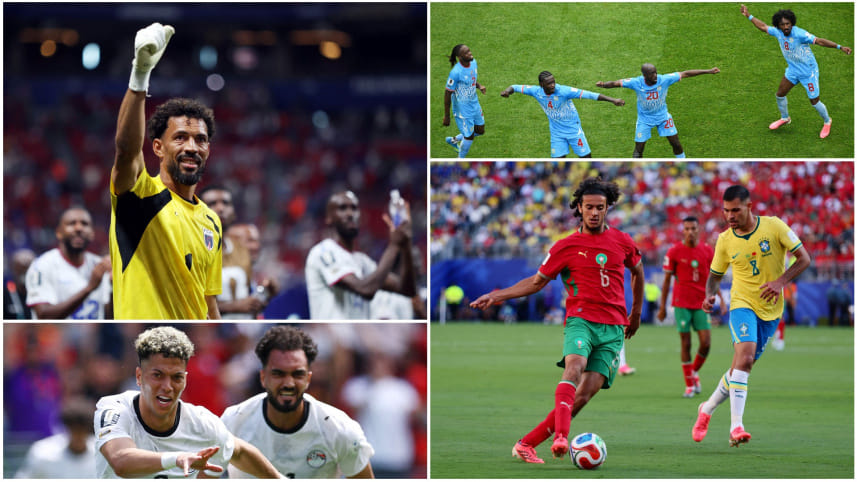
Traditionally, African nations have been among the most underrated sides in the FIFA World Cup. Although no African nation has ever won the tournament or reached the final in any of its previous 22 editions, their steady rise on the global football stage has gradually changed perceptions about their prospects in the sport’s biggest event.
Take Morocco, for instance. Four years ago in Qatar, the reigning African champions became the first African nation to reach the semifinals. Even in this edition, they are considered one of the strongest sides among the 48 participating teams, capable of replicating that feat – or perhaps going even further.
 For all latest news, follow The Daily Star's Google News channel.
 Morocco’s opening-match performance against five-time champions Brazil has only strengthened that belief. The Atlas Lions held the Selecao to a 1-1 draw and arguably looked the better side against the record world champions.
Morocco’s rise is a reflection of the steady progress African nations have made in the World Cup over the years.
From Roger Milla’s Cameroon becoming the continent’s first quarterfinalists in 1990 after stunning defending champions Argentina in the opening match, to debutants Senegal matching that feat in 2002 by defeating reigning champions France on their way to the last eight, and Ghana coming a successful penalty kick away from becoming the first African semifinalists in 2010 before suffering a heartbreaking quarterfinal shootout defeat to Uruguay – African nations have repeatedly demonstrated their capacity for deep World Cup runs.
With the expanded 48-team World Cup featuring a record 10 African nations, the continent has arrived in North America with greater representation than ever before. Alongside Morocco, several other teams have already shown they are not here simply to make up the numbers.
Although the tournament is still in its early stages, African nations have produced statement performances and have already been responsible for some of its biggest surprises.
Cape Verde goalkeeper Vozinha delivered a heroic display against one of the tournament favourites, Spain, helping his side secure a goalless draw and marking a memorable start to the island nation’s maiden World Cup campaign. Meanwhile, DR Congo marked their return to the global stage with an inspiring 1-1 draw against another title contender, Portugal.
In fact, based on the balance of play, DR Congo may feel disappointed not to have claimed all three points. They looked the superior side for long periods and created enough opportunities to defeat Cristiano Ronaldo’s side.
Egypt also produced a surprise by holding 2018 third-place finishers Belgium to a 1-1 draw. Ivory Coast, meanwhile, celebrated their return to the World Cup after 12 years with a 1-0 victory over Ecuador, courtesy of a late goal. The result was particularly impressive considering Ecuador finished second behind Argentina in the South American qualifiers, and few would have expected Ivory Coast to take maximum points from the encounter.
Ghana also began their campaign with a 1-0 victory over Panama. Although the winning goal arrived in stoppage time, it was perhaps the only match in which an African side entered as favourites.
Senegal, too, could easily have started their tournament with a victory. They pushed reigning runners-up and one of the tournament’s hottest favourites, France, throughout the match, with several efforts striking the woodwork. However, they ultimately fell victim to Kylian Mbappe, who scored two sensational goals to continue his remarkable World Cup form and take his tally to 14 goals in just 15 appearances.
Although Algeria, South Africa, and Tunisia lost their opening matches, their hopes of progressing to the knockout stages cannot be dismissed. South Africa have already demonstrated their resilience by earning a 1-1 draw against Czechia in their second match in Atlanta on Thursday.
Overall, among the 10 African teams in the tournament, two began with victories, four earned draws and four suffered defeats. Yet those numbers tell only part of the story.
The impact African nations have made through their performances against some of football’s traditional powerhouses suggests they have arrived in North America with a point to prove. More importantly, they have shown they are capable of competing with the very best.
Players such as Ismael Saibari, Ayyoub Bouaddi, Vozinha, Emam Ashour, Ibrahim Mbaye, Fares Chaïbi, and Yoane Wissa have already made their mark on the global stage, emerging as some of the tournament’s early breakout stars. Their performances have further elevated expectations surrounding African football and strengthened belief that the continent can surpass its previous World Cup achievements, even though the toughest challenges are still to come.


Comments