


From Mao’s China to modern megacities: Irish footballers revisit history after 50 years
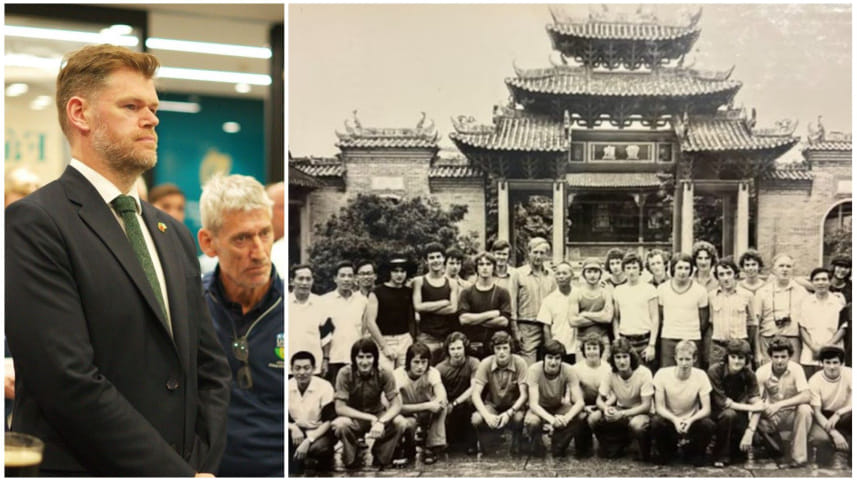
When Paddy Dwyer arrived in China in 1976, crowds jostled to catch a glimpse of him and his companions -- the first Western football team to play in the country.
China at the time was emerging from the tumult of the Cultural Revolution, and on the brink of market reforms that would take the country from economic stagnation to explosive growth.
 For all latest news, follow The Daily Star's Google News channel.
 "All we could see was lines of people running beside our bus, trying to look in the windows, to see their first visual of a white person," he told AFP.
On the streets, "it was all bicycles".
"There were very few cars to be seen," he said.
Dwyer, then only 18, was captain of a soccer squad from University College Dublin who had been invited to play a series of matches across China by the national football association.
The 24 teenagers were unlikely ambassadors of the Western world years before Ireland and China established diplomatic relations, and accidentally found themselves witnessing history when Chairman Mao Zedong died during their trip.
Eighteen members of the 1976 squad returned to China this week to mark the 50th anniversary of their historic tour, the first time back in the country for many of them since that life-changing trip.
- Mao's death -
Friends and family in Ireland initially reacted with disbelief to the idea of travelling to China in 1976.
"People said, that's not gonna happen, that's like going to the moon -- you're not going to China to play soccer," Dwyer recounted.
Through a combination of fundraisers and sponsorships, the squad made it to Asia, stopping first to play in Mumbai.
In one of their first matches against Chinese players in Shanghai, they were roundly defeated 4-1.
The Irish players reunited with their former opponents at the Shanghai Stadium on Friday, in what Dwyer called a "lovely" meeting.
"I think they looked in better shape than us, they looked much fitter, much leaner. I'm sure if we played them again the result would be the same," he told AFP.
The squad was scheduled to follow up their Shanghai match with a game in Beijing's Workers' Stadium in front of an audience of 100,000.
But that showcase was cancelled after Mao died on September 9, 1976.
"I remember it quite vividly," Dwyer said of that fateful day.
"We were in the gardens in Shanghai, and we had a walkthrough, and we went to tearooms to have some tea, and our president Mr David Andrews broke the news to us, and he broke it in Irish."
"Instantly, it came across the tannoys, all over the gardens, that Chairman Mao had passed, and the visible public display of grief was incredible," Dwyer told AFP.
The team later travelled to Mao's birthplace in Hunan province to pay their respects to the late leader.
- 'Incredible differences' -
Dwyer said he was stunned by how China has changed since his last visit to the country 50 years ago.
"It's incredible the difference we have witnessed... the motorways, the buildings, the cleanliness."
Passersby have hardly noticed the group, and "there are so many Westerners in China now," he said.
Time has also given the team a new perspective on the events of 1976.
"It was only in time, as we matured, that we realised the historic nature of the tour, because we just wanted to play football," Dwyer said.
"But it's with us for the rest of our lives. We're still asked back home, are you the guys that went to China in '76?"
Dwyer told AFP he hoped sporting relations between the two countries would get stronger.
"Hopefully, sometime in the near future... we will both qualify for the World Cup and maybe play against each other."
Comments