


Before you sip your tea, remember Chandpur 1921
Today is 20 May 2026. Exactly 105 years ago, on this date in 1921, thousands of tea workers from the gardens of Sylhet and Chittagong walked out onto the roads of colonial Bengal with a single, burning desire: to go home. They carried no weapons, harboured no rage, only a deep, aching longing to return to their native land, their 'mulluke.' That journey, brutally crushed at the Chandpur Steamer Ghat by British Indian forces, has since become one of the most poignant and least-told chapters in the history of the subcontinent's labour movement. We call it the 'Mulluke Cholo' or 'Go to the Homeland' — uprising. Today, as we mark its 105th anniversary, the question that haunts us is not only what happened then, but what has changed since.
The making of a captive labour force
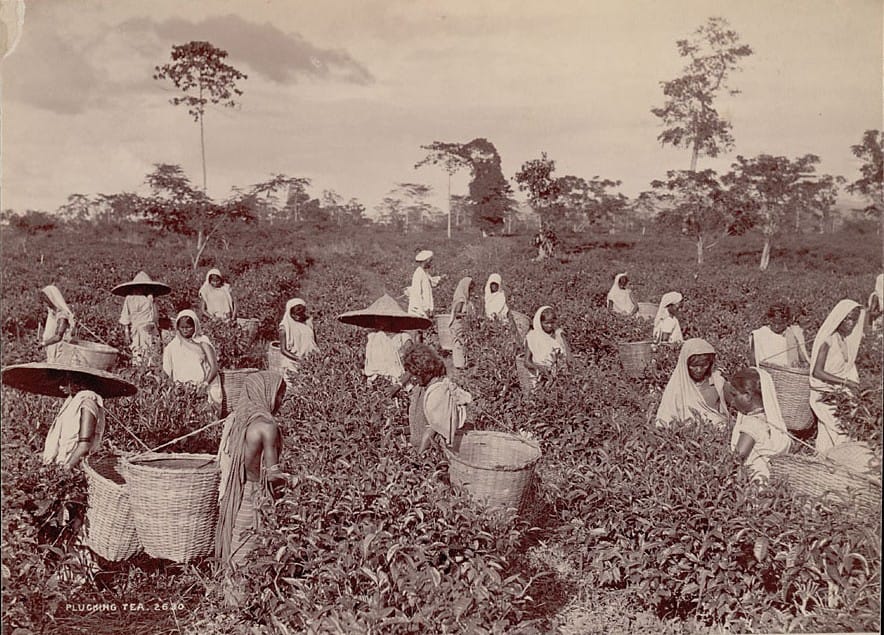
The story of the tea worker begins not in a garden, but in deception. From 1834–35 onward, the British colonial administration, having established tea plantations in Assam, needed a massive, cheap and controllable labour force. They found it among some of the most vulnerable communities of India: the Dalits, Adivasis and marginalised peasants of Orissa, Madhya Pradesh, Bihar, Uttar Pradesh, Madras and Andhra Pradesh. Communities such as the Kurmi, Munda, Santhali, Oraon, Bhumij and Mahato were lured, often fraudulently, with false promises of wages, land and better lives.
By 1838, the first batches of these workers had arrived in Assam. In 1853, the British Parliament passed the infamous Workman's Breach of Contract Act, a law that effectively bound workers to their plantations under threat of imprisonment, fines and physical punishment. Leaving the garden without the owner's permission became a criminal offence. Between 1863 and 1866 alone, some 84,915 tea workers died in Assam from disease, starvation and brutality. These were not workers; they were captives.
A colonial survey conducted in 1830 documented that workers were drawn from 116 different communities across multiple provinces, eventually labouring across every corner of India's tea-growing regions, from Assam to the Nilgiris. They came in waves, generation after generation, and over time their original homelands faded into memory. The tea garden became their entire world, a world designed to keep them in and keep the outside out.
20 May 1921: Blood at Chandpur
The years following the First World War shook the colonial world. The Non-Cooperation Movement launched by Mahatma Gandhi in 1920 spread rapidly across India, and its waves reached even the remote tea gardens. For the workers of Sylhet and Chittagong, already groaning under colonial bondage, it was a spark. Inspired by the idea of self-rule and driven by their own desperate conditions, they began organising. Their demands were simple and fundamental: fair wages, humane living conditions, and the freedom to leave the garden.
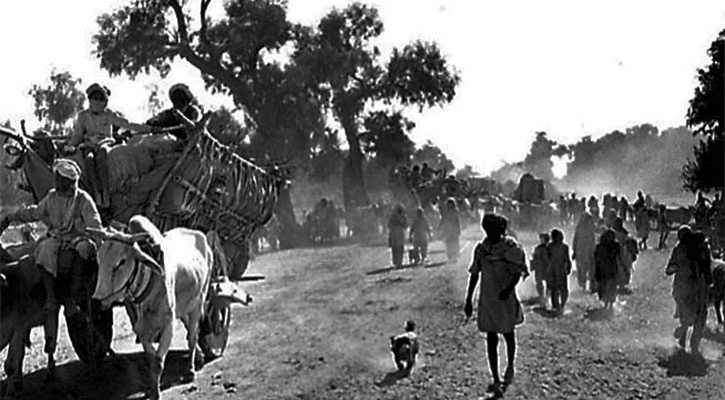
By May 1921, thousands of tea workers had gathered at Chandpur Steamer Ghat — men, women and children — determined to board riverboats and journey back to their native lands. The steamship companies, acting either on orders from or in complicity with plantation owners, refused to sell them tickets. Trapped, hungry and desperate, the workers waited. Then, without warning, Gurkha soldiers moved in. Rifles fired. Batons fell. Many workers jumped into the Meghna River in panic; some drowned. The exact death toll was never officially recorded, a deliberate erasure of an inconvenient truth.
Those who survived the Chandpur massacre were not broken. Many continued on foot through Dhaka, Mymensingh and beyond, only to be intercepted again, beaten, arrested and forcibly returned to the gardens. The 'Mulluke Cholo' movement was crushed, but its memory could not be erased. Today, it stands as the first major labour uprising of tea workers in the history of the subcontinent, predating and, in many ways, inspiring the organised labour movements that followed.
Independent Bangladesh: A changed name, an unchanged reality?
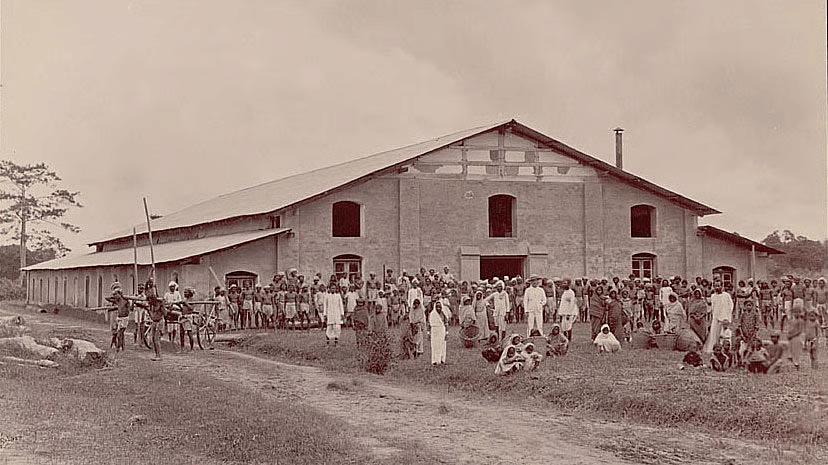
Bangladesh gained independence in 1971. The British left. The plantation system did not. Today, Bangladesh is home to 166 tea gardens, employing over 140,000 registered workers. Including their dependants, the total community numbers approximately 600,000 people. They produce some of the finest tea consumed across the country and exported abroad. And yet, in 2026, the lives of tea workers in Bangladesh remain a study in structural exclusion.
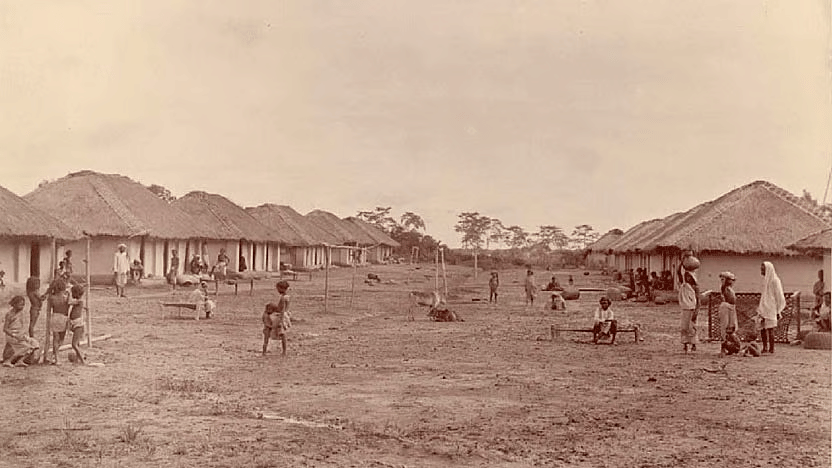
In 2022, after sustained protests that drew national attention, the daily wage of tea workers was raised from Tk 120 to Tk 170. The increase was celebrated as a victory. But in real terms, Tk 170 per day — roughly USD 1.55 — remains far below Bangladesh's own national minimum wage for other industries and is deeply inadequate for a family to live with dignity. The International Labour Organization's living wage benchmarks are not even a distant consideration. Workers are still provided with rations and garden housing, a system that appears benevolent but in practice ties them to their employers with invisible chains.
Education remains a hollow promise. The primary schools operating within tea garden estates are chronically understaffed and under-equipped. Only 5–6% of tea worker children reach secondary school level. Higher education remains a rarity bordering on the exceptional. Healthcare facilities mandated by law exist in name in most gardens; in practice, they are dilapidated, under-supplied and staffed by undertrained personnel. Maternal and child mortality rates in tea garden communities exceed the national average by a significant margin.
Land without title, citizens without rights
Perhaps the most fundamental injustice facing tea workers lies in their relationship — or rather their lack of relationship — to the land beneath their feet. Bangladesh's tea garden area spans approximately 111,663.83 acres, of which just over 51% is under active cultivation. The rest comprises worker settlements, subsistence plots and forests. Generations of families have been born, lived and died on this land. Yet none of them own a single square inch of it.
Article 34(1) of the Bangladesh Constitution prohibits forced labour. Yet the dependency system — combining housing, rations and social infrastructure controlled entirely by garden management — effectively prevents workers from seeking employment elsewhere without losing everything. This is the invisible bondage of the 21st century, no less coercive for being unwritten into law.
What must change: Seven demands for justice
As we mark 105 years since the Mulluke Cholo uprising, we put forward the following demands — not as petitions, but as minimum requirements of justice:
- 20 May must be officially declared 'Tea Workers' Day' (Cha Shromik Dibas) and recognised as a paid public holiday for tea garden workers.
- The daily minimum wage for tea workers must be raised to at least Tk 500, with a transparent mechanism for regular review indexed to the cost of living.
- Permanent residential land titles must be granted to tea worker families for the land they have inhabited across generations.
- All tea garden schools must be brought under government management, with qualified teachers, adequate resources and a clear pathway connecting tea worker children to mainstream education.
- Fully functional health centres, staffed with qualified medical personnel and equipped with maternal care facilities and adequate medicine supplies, must be established in every garden.
- A long-term employment diversification plan must be developed, targeting the creation of at least 250,000 new livelihoods in and around tea garden areas over the next 20–25 years.
- The distinct cultural identity, language and heritage of tea worker communities must be recognised and supported through state policy, documentation and funding.
Not a day of mourning — A day of reckoning
The workers who died at Chandpur in 1921 did not die for a political cause. They died for the oldest and most human of longings: to be free, to belong somewhere, to go home. One hundred and five years on, millions of their descendants still do not fully belong — not to the gardens that consume their labour, not to the state that benefits from it, and not to a citizenship that is theirs by right.
Bangladesh prides itself on remarkable economic progress — garments, remittances, infrastructure. But a nation's true progress is measured not by its peaks, but by the condition of its most vulnerable people. As long as those who wake before dawn to pluck the leaves that fill our cups cannot afford to send their children to school, cannot access a doctor, cannot vote, and cannot own the patch of earth in which their grandparents are buried, we have not progressed enough.
On this 105th anniversary of the Mulluke Cholo uprising, I write as one who carries the blood of those workers — as a son of the tea gardens and as someone who has devoted years to the cause of their rights. Let this day be remembered not only as a date of sorrow, but as a date of determination. The journey that began at Chandpur in 1921 has not ended. It will not end until justice arrives.
Mohan Rabidas, a son of a tea worker, holds a BSS (Hons) and MSS in Public Administration from the University of Dhaka and works as an Advocacy Officer at Nagorik Uddyog. He can be reached at rdmohan.nu@gmail.com.
Send your articles for Slow Reads to slowreads@thedailystar.net. Check out our submission guidelines for details.