


Rangpur station children find hope at Zoom Bangladesh School

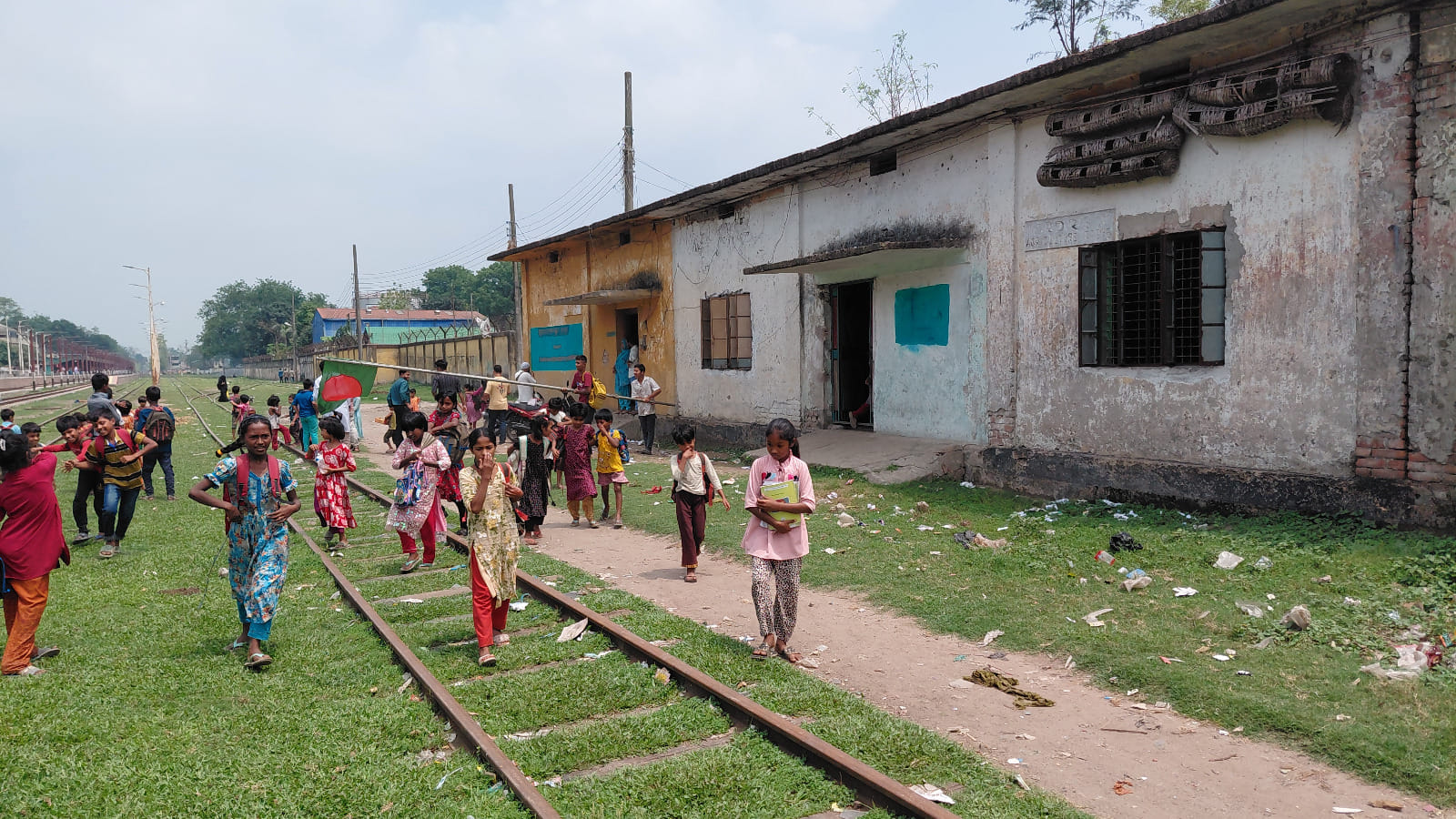
The bustle of Rangpur Railway Station never stops. Trains arrive and depart, while the sound of whistles echoes through the surroundings. Crowds of passengers, the cries of hawkers, and the constant movement mark the beginning of each new day. Yet beside this station exists another world, where a group of children are growing up amid hunger, poverty, neglect, labour, and uncertainty.
Many of these children should have books and toys in their hands. Instead, they carry baskets of flowers, trays of peanuts, goods for hawking, or the burden of labour itself. Yet they have not given up. Despite constant adversity, they continue to attend school. For them, there is a small refuge: Zoom Bangladesh School. At present, 86 children study there, and each carries a different story of struggle, sorrow, and hope.
Tuktuki Akter is only eight years old. Her dream is simple: she wants to study, go to school, and live a beautiful life like other children. But in her family, education is not a priority. Daily life is shaped by drugs, poverty, and violence.
Her parents did not want to send her to school. Most members of her family are addicted to drugs. As a result, Tuktuki’s childhood has been marked by fear, unrest, and hunger.
Through the initiative of local social workers, she was admitted to Zoom Bangladesh School in January this year. Every day, she attends school from 10:00am to 2:00pm. But there is little chance to rest after returning home. In the afternoon, she goes to the railway station platform to sell flowers.
Most of the money she earns is taken by her parents. If sales are poor or she cannot sell enough flowers, she is beaten. Many days, she comes to school without eating. Even after returning home at noon, she often finds there is no food waiting for her.
With tears in her eyes, Tuktuki says, “I want to study. I want to live like other children. But my life is full of suffering.”
Ten-year-old Nurnabi Islam is a fourth-grade student at the same school. Teachers describe him as highly talented, yet he gets very little time to study.
After school, he puts aside his books and rushes to a grocery shop on Station Road, where he works until 10:00pm. Whatever he earns must be handed over to his family.
Nurnabi wears torn clothes and old sandals. Because of poverty, he was not enrolled in school earlier and has been working since the age of seven.
“There is only a drug environment around us,” he says. “It is hard to stay on the right path here. Still, I am studying. I want to become a good person.”
Tanvir Islam, an eight-year-old first-grade student, spends his afternoons roaming different parts of the city selling peanuts. He usually returns home around 8:00pm or 9:00pm. There is no proper environment for study at home. His parents are uneducated and believe earning money now is more important than education. So alongside books, a basket of peanuts has also been placed in Tanvir’s hands.
He comes to school wearing torn clothes, yet still tries to keep a smile on his face.
“I do not get good food,” Tanvir says. “I do not get new clothes either. But I like studying. I want to continue my education.”
Nine-year-old Chand Mia studies in the second grade. Every day after class, he goes to the station platform, where he sells various goods as a hawker.
“I only want to study,” he says. “But my parents force me to work. If I do not listen, they scold me and beat me too.”
Nine-year-old Nayan Islam and his younger sister, seven-year-old Rukaiya Akter, both study in the first grade. They do not have proper clothes and sometimes come to school wearing only vests. The two siblings arrive together every morning. After school, they head to the station platform at noon. They have no home and live with their parents on the platform itself. Nayan sells chocolates there, and at night the family sleeps under the open sky beside the station.
Nayan says, “As long as I stay in school, I feel good. After school, life becomes painful again. We have no place to sleep. Still, my sister and I dream of studying. Even if I cannot study, I will educate my sister.”
Eight-year-old Hasna Hena is a first-grade student. Her mother died four years ago, and she now lives with her father’s second family. Her father works as a rickshaw puller but pays little attention to her wellbeing. She often comes to school hungry. After classes end, she works in a nearby house washing dishes. In return, she receives lunch and Tk10. Every day, she saves that Tk10 in the hope of buying clothes.
Hasna says, “So far I have saved Tk290. When it becomes Tk700 or Tk800, I will buy new clothes. I have been wearing the same dress for eight months. It is hard to continue studying. Still, I study. I dream of building myself through education.”
Tuktuki, Nurnabi, Tanvir, Chand, Nayan, Rukaiya, and Hasna are only seven names among many. Another 79 children like them study at this school. Some have no father, some have sick mothers, some come from families dependent on begging, while others are children of drug-addicted parents. Each child carries a history of struggle.
More than two hundred families live in makeshift shacks on abandoned railway land in Muslimpara beside Rangpur Railway Station. There is no safe housing and no proper environment for education or cultural development. Instead, drugs have become woven into everyday life. Many families survive on the income earned by their children, and much of that money is spent on drugs. In such an environment, many children drop out before they can even begin regular schooling. Some become labourers, some drift into crime, while others become victims of addiction.
In 2023, several social workers visited the area and were shocked by the children’s condition. They decided something had to be done. In an abandoned railway building beside the station, they established Zoom Bangladesh School. Their goal was to educate street children and children from marginalised families and help bring them into the mainstream.
At first, parents showed little interest. Their priority was the money their children could earn through labour. Later, when the school introduced a mid-day meal programme, families gradually began sending their children. Lunch, books, notebooks, and clothes were provided, and attendance steadily increased.
However, after August 5, 2024, financial assistance began to decline. Many local donors stopped supporting the school, forcing the authorities to discontinue lunch, clothing, and other forms of support.
The impact on the children was severe. Many now attend school hungry, while some have stopped coming altogether.
Students say they once looked forward to school because they received lunch there. Now, many sit through classes on empty stomachs.
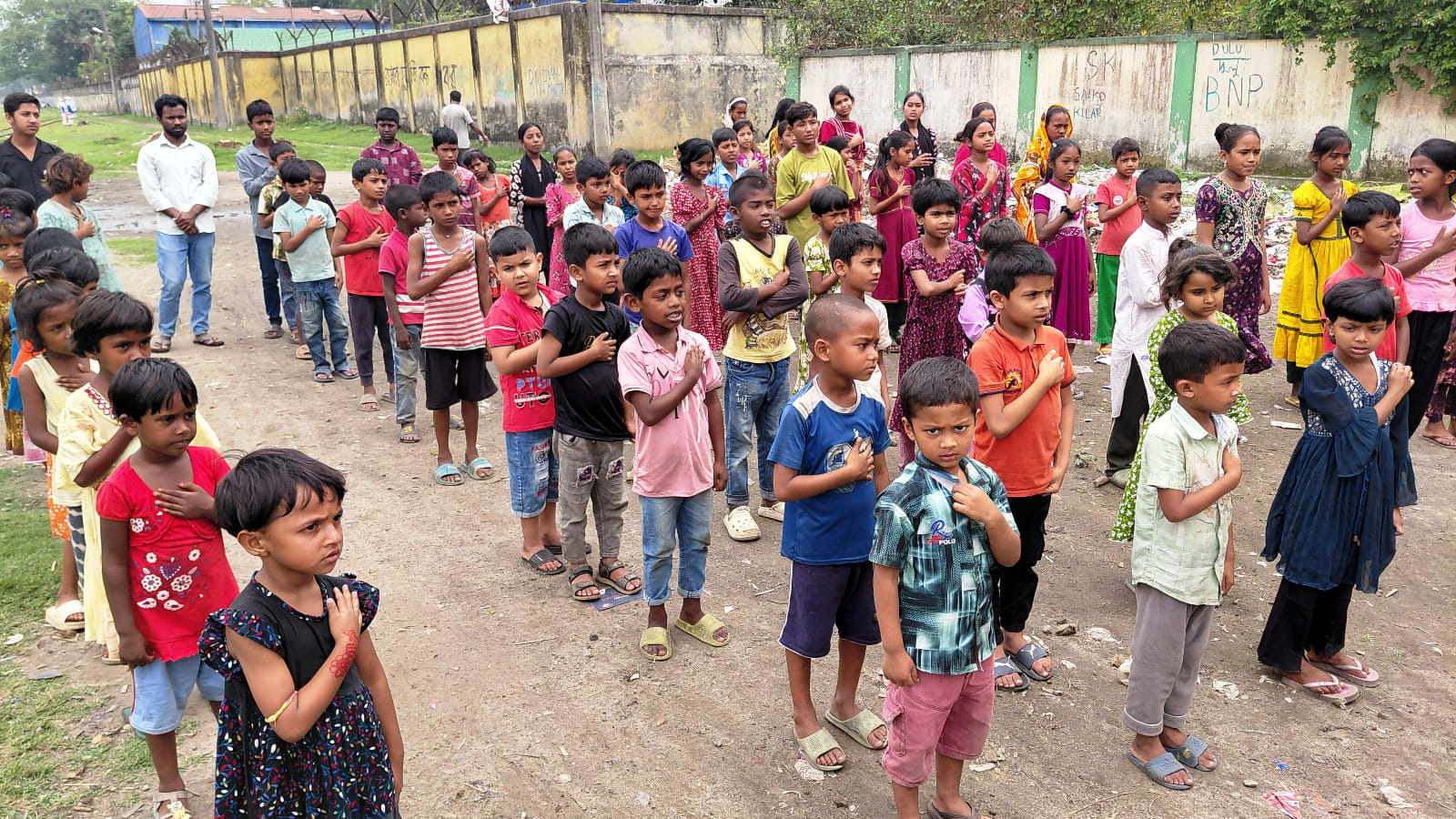
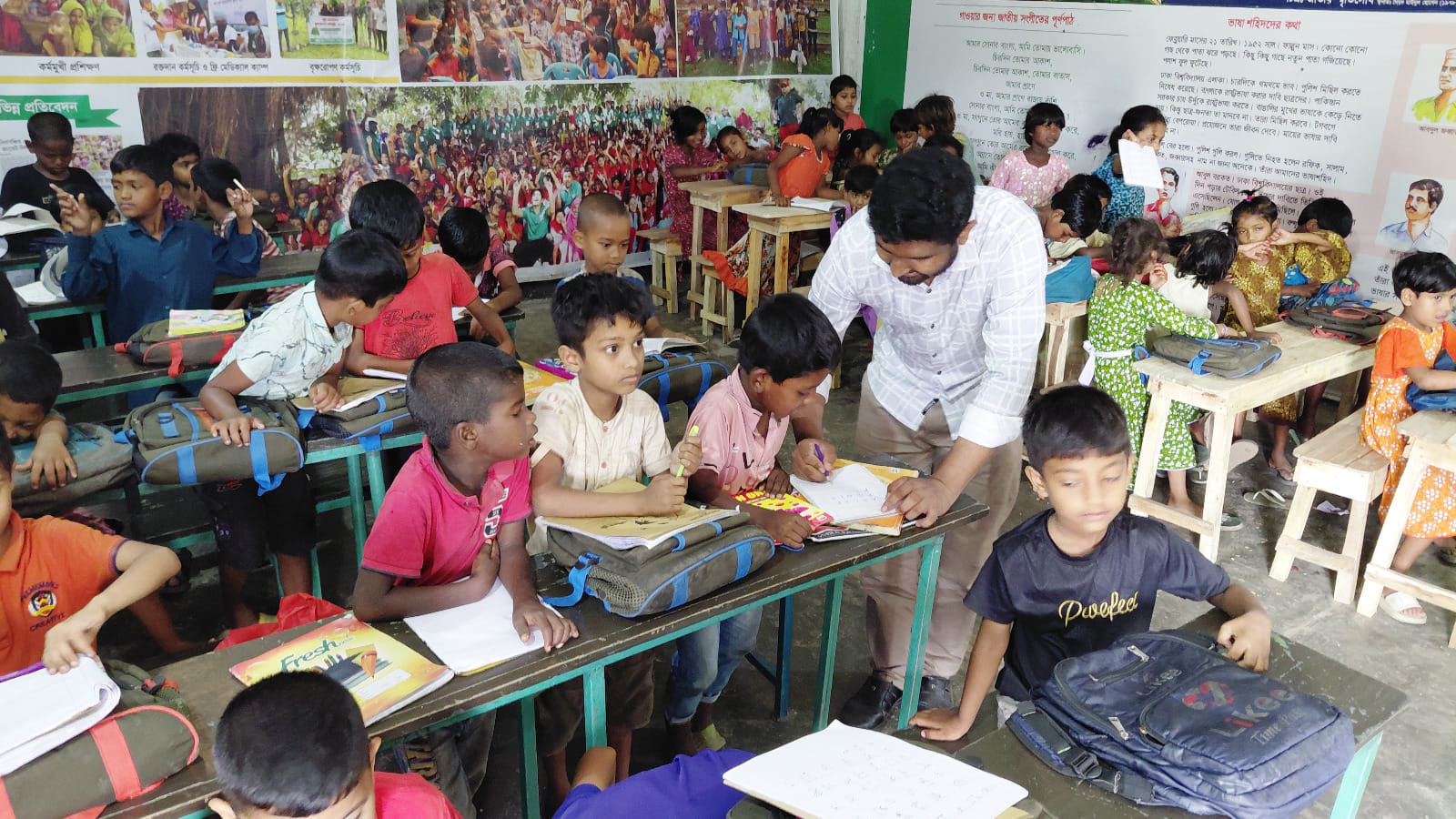
At present, the school has 86 students. There are four teachers and one director. The teachers are students from different colleges who receive only Tk2,500 per month as transport allowance. Despite this, they continue teaching regularly.
Teacher Munira Muni says, “We receive no salary here. Still, we come because these children must not be lost. If a small effort can change their lives, that is our success.”
Head teacher Asif Mahmud says, “Our 86 students have 86 different stories of struggle. They do not get opportunities to study at home. Whatever they can learn at school is their main support.”
“If we cannot educate these children and keep them in the mainstream, they will drop out and walk towards a dark future. We are trying to turn their dreams into reality,” he adds.
School director Nahid Hossain Khondokar says, “The classrooms urgently need renovation. If lunch and clothing can be arranged again, attendance will increase. If this school survives, many children from the station area will not lose their way.”
Zoom Bangladesh School is not just an educational institution. For 86 children, it is a place of shelter, security, affection, and hope for a different life. Where families have failed and society has turned away, this small school continues to tell them: you can succeed too.
So amid the constant noise of the Rangpur station area, one can still see children in torn clothes and on empty stomachs walking to school each morning with smiles on their faces. Because they know that education may one day change the story of their lives.
S Dilip Roy is a journalist at The Daily Star.
Send your articles for Slow Reads to slowreads@thedailystar.net. Check out our submission guidelines for details.