


Why Bangladesh’s ‘Look East’ policy matters more than ever
Begum Khaleda Zia is widely regarded as the pioneer who actively shaped and adopted Bangladesh’s formal ‘Look East’ policy during her tenures as Prime Minister of Bangladesh. On 18 May 2005, calling the ‘Look East’ policy a “cornerstone” of Bangladesh’s foreign policy, Begum Zia asserted that its adoption was “significant” as it would assist Bangladesh in advancing its national interests realistically. However, she clarified that this did not suggest Bangladesh attached lesser significance to the world’s other regions. As Begum Zia put it: “the doors are open to us for West, East, North and South” (2005).
During her tenures (1991–1996 and 2001–2006), Begum Zia pursued a foreign policy that placed increasing emphasis on expanding Bangladesh’s engagement with the emerging economies of East and Southeast Asia. Her government sought to diversify Bangladesh’s diplomatic and economic partnerships by strengthening ties with countries including China, Japan, Malaysia, Singapore, South Korea, Thailand, Indonesia, and other ASEAN members. This engagement was driven by the objectives of attracting foreign direct investment (FDI), expanding export markets, enhancing development cooperation, promoting labour migration, and increasing technology transfer. Her administration also recognised the growing economic dynamism of East Asia and the strategic importance of the Bay of Bengal, encouraging Bangladesh’s deeper integration into regional economic and connectivity initiatives. These efforts laid the groundwork for what later came to be described as Bangladesh’s ‘Look East’ orientation—a pragmatic foreign policy approach. The subsequent Asia-Pacific Outlook (APO) can be viewed as a natural evolution of Bangladesh’s earlier ‘Look East’ policy.
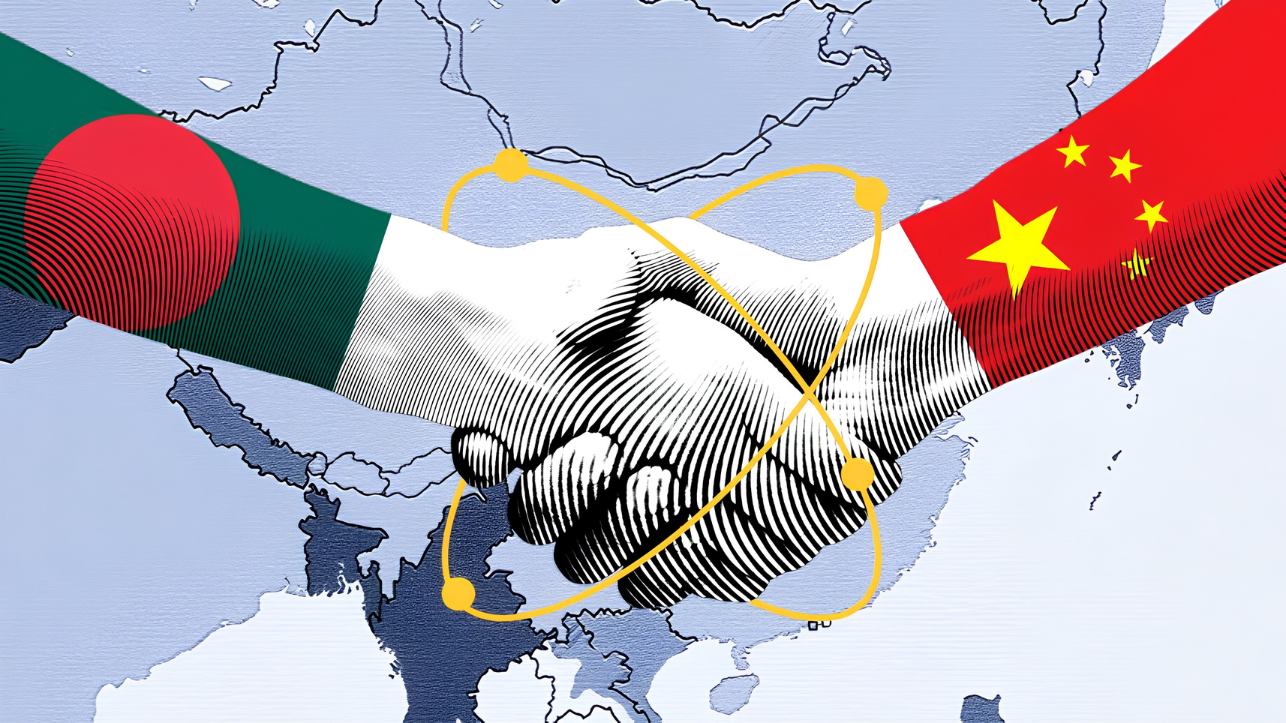
The recent visit of Prime Minister Tarique Rahman to China and Malaysia represents practical expressions of Bangladesh’s evolving ‘Look East’ policy. These visits can also be interpreted as reflecting Bangladesh’s pursuit of strategic autonomy—a foreign policy approach that seeks to maximise national interests by engaging with multiple partners while avoiding dependence on, or alignment with, any single major power. In the contemporary geopolitical environment, Bangladesh’s strategic autonomy is expressed through balanced diplomacy, economic diversification, and issue-based cooperation with a range of regional and global actors.
However, Bangladesh’s interest in eastward engagement dates back to the reign of Sultan Giasuddin Azam Shah, who ruled Bengal from 1393 to 1409. Royal delegations were exchanged between China and Bengal during that period. Bangladesh’s ‘Look East’ policy can be traced to these historical foundations as well as to the interplay of the country’s domestic and external foreign policy determinants. In essence, it is predicated on Bangladesh’s economic and strategic interests in the region. It encompasses multiple dimensions, including political, economic, and cultural engagement. The ‘East’ includes the countries of Southeast and Northeast Asia, as well as those located geographically to the east of Bangladesh.
A key strategic component of Bangladesh's foreign policy is its economic diplomacy. Its 'Look East' policy has evolved as an extension of its economic diplomacy. The forces of globalisation have both pushed and pulled Bangladesh to diversify the direction of its foreign policy. Bangladesh's policy orientation towards the East is consistent with the changing environment, both domestically and internationally.
The then Foreign Minister in Begum Zia’s Cabinet, Morshed Khan (2003), stated in a lecture at the Institute of Defence and Strategic Studies in Singapore that Bangladesh’s ‘Look East’ policy represented an approach towards the “diversification of horizons” and an effort to extend its “neighbourhood”. The policy was not conceived at the expense of Bangladesh’s immediate region or other parts of the world. Rather, it was entirely consistent with the fundamental principles of Bangladesh’s foreign policy.
The main objectives of the ‘Look East’ policy are to strengthen cooperation and coordination with the East on issues of international peace and security; to broaden economic cooperation with the East, particularly in the areas of trade, investment, technology, and employment; and to enhance interaction between the peoples of Bangladesh and the East at various levels through exchanges in education and social and inter-religious activities, thereby fostering greater mutual understanding.
Several ‘push’ and ‘pull’ factors appear to have motivated Bangladesh to pursue its ‘Look East’ policy. The ‘pull’ factors relate to the Eastern countries’ rapid economic growth, political stability, and cohesive multilateral cooperation frameworks. The ‘push’ factors, meanwhile, relate to Bangladesh’s economic needs, strategic compulsions, and aspirations. ‘Asian regionalism’ is another ‘pull’ factor. If the prediction of the ‘Asian Century’ holds any real meaning and Asian regionalism becomes a reality in the coming years, then it provides a strong basis for Bangladesh to pursue its ‘Look East’ policy.
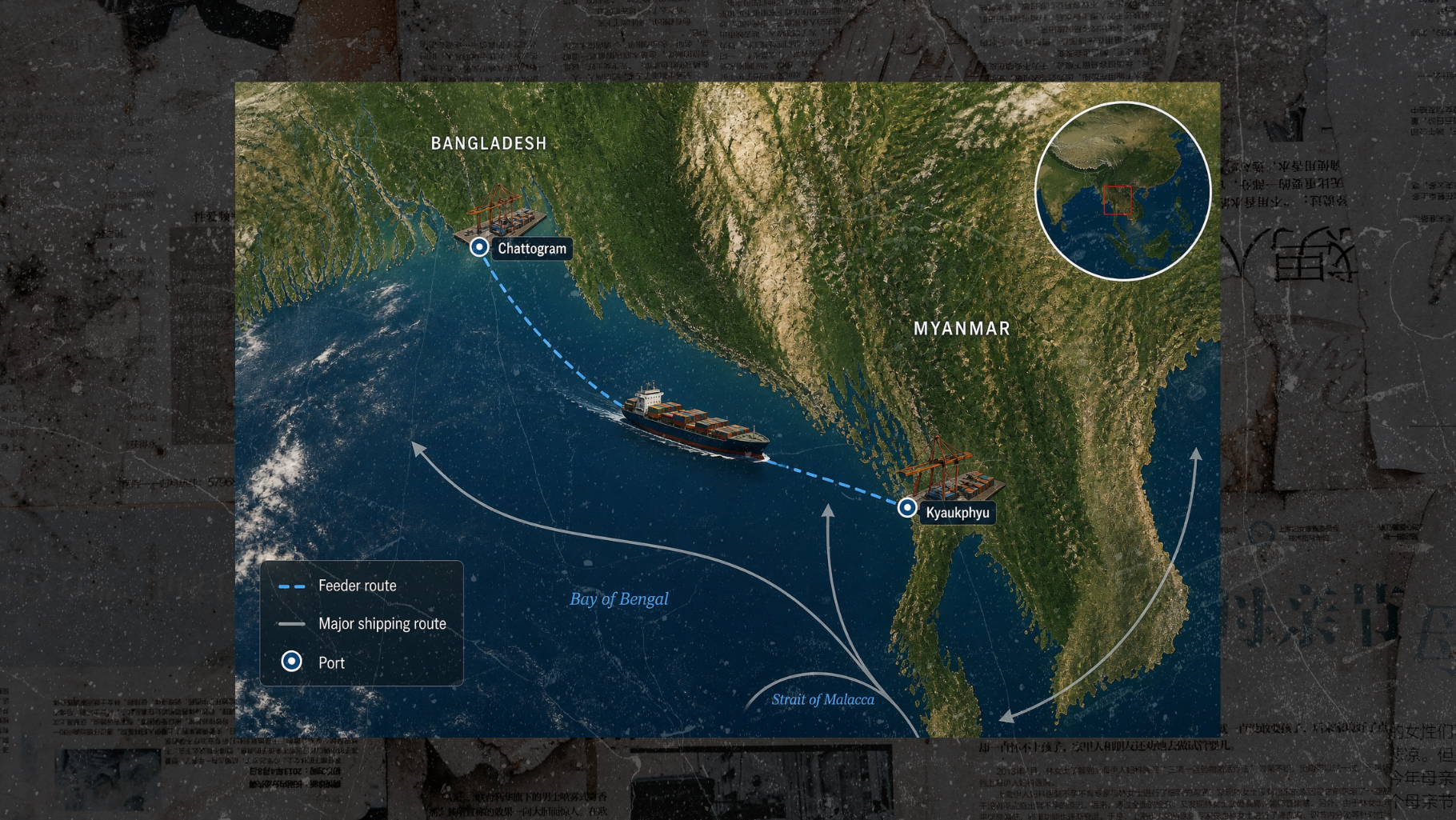
Yet another ‘push’ factor that may have motivated Bangladesh to adopt its ‘Look East’ policy is its geographical proximity to Southeast Asia, which connects the entire ASEAN and Pacific regions. Viewed in this way, geographical proximity gives rise to strategic and economic compulsions for the countries concerned, requiring them to sustain close cooperation and collaboration to maximise their foreign policy goals. Bangladesh’s ‘Look East’ policy is likely to serve as a means of strengthening its ties with South Asian and APT countries.
Bangladesh stands to benefit significantly from deeper economic engagement with East Asian and ASEAN countries, as well as regional economic blocs. Bangladesh has expressed interest in exploring membership of RCEP following its graduation from Least Developed Country (LDC) status. Bangladesh’s evolving ‘Look East’ orientation provides an important strategic framework for expanding trade, investment, connectivity, and economic diplomacy with ASEAN and other East Asian partners. At the same time, intensifying geopolitical competition, supply-chain diversification, and the search for resilient economic partnerships in the Asia-Pacific have further reinforced the importance of East and Southeast Asia in Bangladesh’s foreign and economic policy.
The overall success of Bangladesh’s ‘Look East’ policy can be discerned from the following areas: faster bilateral cooperation, active participation in regional and sub-regional groupings to the East, enhanced political and strategic significance, wider people-to-people contact, and so on. Bangladesh’s trade with the ten major East and Southeast Asian economies is estimated to have reached approximately US$55–58 billion in 2026, representing an increase of around US$3–5 billion (6–10%) compared with 2025.
The main objectives of the 'Look East' policy are to strengthen cooperation and coordination with the East on issues of international peace and security; to broaden economic cooperation with the East, particularly in the areas of trade, investment, technology, and employment; and to enhance interaction between the peoples of Bangladesh and the East at various levels through exchanges in education and social and inter-religious activities, thereby fostering greater mutual understanding.
Currently, China-Bangladesh relations have been described as “eclectic in outlook, nation-building in content, peaceful in purpose”. Japan remains Bangladesh’s largest bilateral development partner and one of its most trusted strategic partners. Japan continues to be Bangladesh’s leading source of Official Development Assistance (ODA), supporting transformative projects such as the Dhaka Mass Rapid Transit (MRT), the Matarbari Deep Sea Port, the Hazrat Shahjalal International Airport Third Terminal, the Bay Terminal at Chattogram Port, and the Dhaka-Chattogram transport corridor.
The eastern countries are a potential market for Bangladeshi manpower. Many Bangladeshi skilled and semi-skilled workers have been employed in Singapore, Malaysia, Japan, and South Korea, contributing to Bangladesh’s economy. After a long interval, the Malaysian government has reopened its market to Bangladeshi skilled and semi-skilled workers. The Singapore government has also become more receptive to recruiting Bangladeshi skilled workers. Thus, great potential exists for Bangladesh and the countries of these regions to prosper if they remain constructively engaged. For Bangladesh, adjusting to these emerging realities, a ‘Look East’ policy appears to be the need of the hour, and it should therefore continue to pursue it.
A key strategic component of Bangladesh’s foreign policy is its economic diplomacy. Its ‘Look East’ policy has evolved as an extension of its economic diplomacy. The forces of globalisation have both pushed and pulled Bangladesh to diversify the direction of its foreign policy. Bangladesh’s policy orientation towards the East is consistent with the changing environment, both domestically and internationally.
Although some economic and strategic gains are evident following the adoption of the ‘Look East’ policy, several key issues require careful consideration to make the policy more effective and pragmatic. To achieve these goals, the Bangladesh government may make greater efforts in the following areas: (i) bringing about an early and concerted solution to its lopsided external trade; (ii) pursuing its ‘Look East’ policy simultaneously at the governmental and non-governmental levels, thereby creating equal opportunities for both Track I and Track II engagement; and (iii) including more countries, such as Australia and New Zealand, thereby further diversifying the overall direction of the ‘Look East’ foreign policy.
Mohammad Aynul Islam is a Professor of Political Science and Director of the Applied Democracy Lab at the University of Dhaka. He can be reached at aynul.islam@du.ac.bd.
Send your articles for Slow Reads to slowreads@thedailystar.net. Check out our submission guidelines for details.

India’s push-ins are not a border problem

The real danger in the US-Iran ceasefire

The real question behind Tarique Rahman's China visit
Can Pakistan fix its problems at home?
How social media is reshaping the Bangladesh-India border conflict

Will Netanyahu derail Trump's Iran peace deal?
Bangladesh–Türkiye relations: Towards a disciplined strategic partnership
The Iran ceasefire deal and the limits of American power

Why the Strait of Hormuz reopening won't ease price pressures anytime soon
