The many gifts of Mustafa Monwar

We had been rehearsing the dance programme for more than three weeks before we boarded the chartered plane for Zambia. Those three weeks resulted in creating new dimensions in the history of dance in Bangladesh. Mustafa Monwar directed the dance, and the story goes that he asked dancer Shamim Ara Nipa to lift her left leg off the ground and raise it in her dance posture. As the director was content with her pose, he asked her to lift the other leg! Nipa asked if any magician was going to join in, as she herself knew of no dance technique other than ‘magic’ which would enable her to take a floating position. These jokes, and many more, were shared among the dancers. Sometimes, when I joined in the rehearsals from my busy teaching schedule at Dhaka University, I was stung by words from fellow artists referring to him as ‘Your Montu Chacha’.
Mustafa Monwar was the Director General of Shilpa Kala Academy in 1988 when we were rehearsing for a tour of Zambia and Kenya as part of a cultural entourage. He was a hard taskmaster. He was deeply dedicated in his pursuit of perfection, especially in the dance items, which were the apple of his eye. I was going to be the compere of this programme, and having known me and groomed me since my childhood, he wove the entire programme around my abilities to speak, recite, sing and join in the dance. As the anchor of the programme, he structured it in such a manner that I would speak about Bangladesh and demonstrate the effect of rain with the song ‘Allah Megh De Pani De’, after which the dancers would fill the stage with a performance to the recorded song.
I had to change my sari four times to match the moods of the various seasons: green for serenity, yellow to match spring, red to denote the fiery summer and, lastly, white to denote peace. Zambian President Kenneth Kaunda was particularly lauded for his role in promoting peace, and our cultural presentation ended with a poem in English. The dancers would then flock around me. They were attired in white, carrying banners of peace and joining in silent mime as I recited the entire poem. It was a very compact programme, and only Mustafa Monwar knew how to bring out the best in everyone and assemble the right combination.
When we landed in Zambia, it was 2 am, and we were very disappointed with the local hospitality because the rooms were too small and no food was available. However, we looked forward to the grandeur of the palace or National Theatre where the programme was to be held the following afternoon. The next morning, we were taken to the premises where the Zambian government wanted us to host our cultural programme. As the minibus full of participants entered the well-guarded palace grounds, one had the feeling that we were entering a safari park. It was the month of June, and the weather was in the twenties, much like a Bangladeshi winter. We were surrounded by miles and miles of lush green grass. We were greeted by ever-friendly peacocks and a few deer, which came peeking into the car windows as if they were welcoming us. As the vehicle sauntered through the gardens, we half expected to see some amphitheatre where the show would be held. Instead, our hosts brought us to an open-air space where there was an elevated stage of grass and told us that the programme would be held there. There was no backdrop, apart from the azure sky with floating white clouds. There was no green room and no sound system. The cackling of the peacocks and the playful frolicking of the deer would be the only background music for our compact programme. We were all at a loss, especially me, because I needed to change my sari four times during the show.
Montu Chacha assured us that he would think of something, and he asked our hosts for some kind of screen that would shield us from the audience. They brought in a huge canvas, completely plain, and told us to change our clothes behind it.
We had two more hours to go before the show. He asked for some coloured chalks and set to work. He poured his entire concentration into this five-foot by eight-foot screen and, in two hours of rigorous labour, turned the entire canvas into a beautiful African landscape. It was unbelievable how he captured the Zambian scenery in those few hours, while we had hardly looked around enough to realise how many elements existed in the surroundings. Starting from the wide array of colours displayed by the healthy peacocks to the minutest details of bumblebees sitting among the ferns in the gardens of Zambia, he had captured it all in his painting. During the cultural show, we actually went behind it to change our clothes and make a success of our programme.
Kenneth Kaunda came to greet us on stage and actually said to me, "Oh, you are so small, and on stage you look so big!"
I feel that I was able to stand tall because of the way Mustafa Monwar had constructed the garden of cultural items.
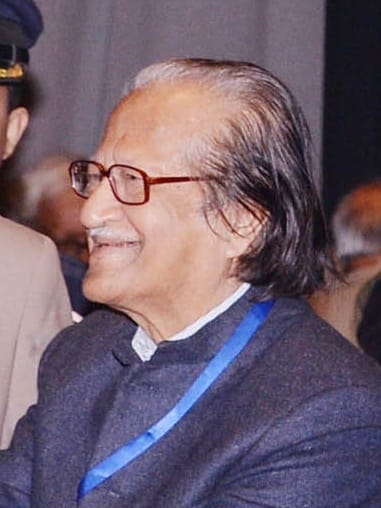
As I read the various write-ups on Mustafa Monwar as a puppeteer, sometimes as a drama director, sometimes as an artist or designer of Notun Kuri and other shows, I wonder whether we have actually captured all his qualities to represent his true persona.
Mustafa Monwar is one of those rare people who can notice a ring on artist Ferdausi Rahman's finger and choose it to adorn the King in Tagore's Rokto Karobi (drama). He can sing his father, poet Golam Mustafa's, songs, such as Ogo Madina Monowara, and bask in their glory by saying, "Can you imagine a desert being compared with a lush green garden?"
(Murubhumi nou ko tumi
Tumi je gulbagicha)
He is the one who can sing Talat Mahmood's ghazals and also draw pencil sketches in children's programmes.
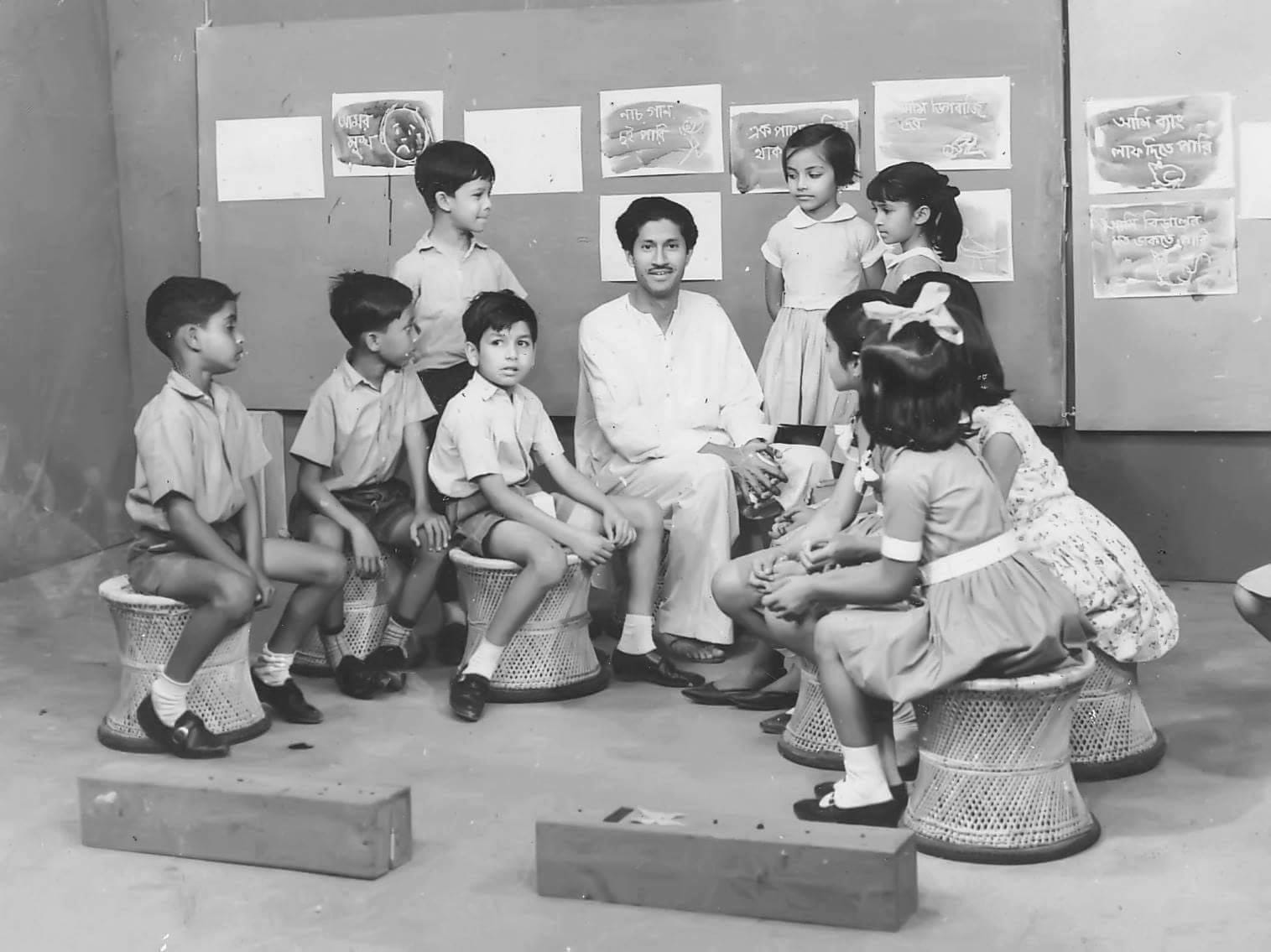
Above all, I feel his greatest contribution to this society has been in creating a new generation of artists. He has been able to nurture many of us from our childhood days during the inception of television in 1964. He not only planted the seeds of art in us but also nurtured them enough to see us bloom to his fullest satisfaction. He is not only an artist himself but also the creator of what can be termed the post-independence cultural cadre.
Nashid Kamal is an academic, orator, singer and translator.
Send your articles for Slow Reads to slowreads@thedailystar.net. Check out our submission guidelines for details.
Bengal, Mysore, and the making of American independence

Consoled by the Brahmaputra: Reflections on the Holey Artisan attack
Beyond the myths of Aurangzeb: Munis D. Faruqui's fresh perspective

Why left-footers like Messi are so valuable in football
The lost Khoda art of Santals: Tattoos, identity and the legacy of the Santal Hul
Yes? Non? Anglo-French power plays in the run-up to Plassey
Bonolata Sen remains after a film hollows you out

Ferdausi Rahman: The making of a music legend
Disappearing middle class and the decline of Dhaka's club culture