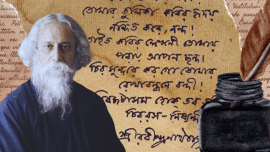
Tagore’s Dan Pratidan and the colonial remaking of Bengal’s moral world
Tagore’s short story Dan Pratidan (Galpa Guccha, Volume 1) explores the paradox of gifting–reciprocation within a particular legalo-cultural moment in the colonial history of Bengal.
In contemporary Bengali language use, the phrasal binary dan-pratidan has often been reduced to the banal, given its repetitive and empty use as the title of crass movies and serials. The phrase, when wrenched out of any particular legalo-philosophic context that would render it meaningful, becomes a mere onomatopoeic jingle, with plenty of ‘da’ and ‘na’ sounds to please the popular ear and create recall value.
Tagore's short story chooses that moment in colonial history (between 1790 and 1810) when the traditional notions of the elder-owner-giver vis-à-vis the younger-subject-receiver were being fundamentally re-examined under the weight of new land proprietorship laws. Expressly, Lord Cornwallis’ Permanent Settlement Act (1793) intended to fix (permanently) the taxation rates that Bengal's large landowners paid the colonial government in lieu of the government’s protection of the zamindar's proprietorship.
However, Cornwallis’ Act (based on the Scottish model of improvement) also intended to fix the relational dynamics between landowners, their ryots or tenant farmers, and all their intermediaries; to transform the traditional feudal lord (enjoying arbitrary and divine powers granted by the Mughal sanad) into the functional and enlightened patron whose relation with the client farmer was contractual.
Such a relation was thus also supposed to be more accountable, equitable, and predicated on the zamindar-patron's willingness to initiate a continuous improvement–optimisation of land and of his farmer-clients thereby. A primary instrument of such improvement–optimisation was the enforcement of the dreaded Sunset Law, by which the defaulting landlord (on tax payment by the sunset of the government-stipulated date) could lose his proprietorship in an instant, his estate be auctioned publicly, and the landlord be stripped of his position, social influence, and prestige instantly.
That these new land proprietorship laws would result in a radical re-examination and reordering of proprietorship–tenantship principles in colonial Bengal was to be expected. What was less understood or expected were the ways in which the Act (with its various corollary regulations) would inflect the relational dynamics of Bengali bhadralok society, especially the position of the ‘natural and divinely ordained ruler’, the ‘elder’, the ‘gift giver’, vis-à-vis the ‘naturally lesser’, ‘subservient’, ‘receiver of munificence’.
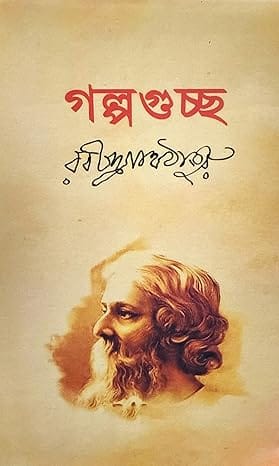
Tagore's story about the mystery, the paradox of gifting and reciprocation, is rendered meaningful in the context of the fictional crisis in Dan Pratidan. The crisis itself is rendered meaningful through the shifting contexts of gifting, munificence, landlordship, and its acknowledgement in Bengali bhadralok society.
II
Crisis in the fictional zamindar family of two brothers (Shashi Bhushan and Radha Mukunda) and their respective wives (Braja Sundari and Rasmani) arrives in the guise of a wayside dacoity that denudes the easy-going zamindar Shashi Bhushan of the money he was sending to the colonial government by way of annual taxation payment. As the Sunset Law is strictly enforced, Shashi has neither the time nor the wherewithal to make good his loss, and his estate-zamindari is auctioned off. Suddenly, from being a prosperous zamindar who had enjoyed considerable social prestige and naturally supported dependants such as a brother-by-village-association, Radha, and his wife, Shashi Bhushan slides into a dispossessed person, without having any compensatory skills for resistance or recovery.
Radha is distraught, rattled by constant domestic diatribes describing him and his wife as parasites. Shashi Bhushan, however, is unperturbed, dismissing these attacks as meaningless. After all, wife Braja Sundari (like the colonial ruler) was a late entrant into a system where traditional networks of brotherhood, kinship ties between raja and ryot, giver and dependant, brother and sibling of all hues, had been forged through time and shared histories. In fact, it is giving that produces the idea of the divine right of the raja to rule over the praja.
All, however, was not well even before the crisis arrived in the form of Cornwallis’s new laws. This zamindar family— informed by a traditional hierarchy of munificence for the prajas, younger siblings, other dependants, and reciprocal deference for the raja, the elder brother, the gift-giver — was already showing its cracks. Shashi Bhushan’s wife, Braja Sundari, was expressing her utter dislike of her husband's ‘munificence’ towards a ‘brother’-by-village-association, Radha Mukunda, and his wife Rasmani on a daily basis. Very much in the manner of colonial administrators, she perceived such giving as ‘waste’ and had already initiated the Cornwallisean rhetoric of give and take, of the cash nexus, into a traditional family.
It makes perfect sense to pay attention to a recorded altercation between the zamindar of Idrakpur (Munshiganj, Dhaka, in Bangladesh today), Gokul Nath Ray, and a British Collector who was dissatisfied while examining the Idrakpur estate accounts in 1793. The Collector is displeased with Gokul Nath’s extravagance, particularly his spending on feeding the poor and supporting religious institutions. Gokul Nath, however, believes that such dān (gifting) is productive of the very idea of a zamindar, and that “the ryots… would have no confidence that he would treat them well if he refused” such munificence. A tight-fisted zamindar would shake praja confidence, cause them to migrate to other estates, and make revenues suffer consequently. Gokul Nath believes that “giving was instrumental as it tended to support the zamindar’s own authority, and the Company’s revenue would suffer if it were taken away”.
Raja Tejchandra Bahadur, the Raja of Burdwan, also reinforces the idea of munificence as producing faith in the zamindari through his logic regarding the giving away of rent-free land to Brahmins and elites. He argues that such dān supports the idea of an ideal zamindari, induces cultivators to stay in the district of Burdwan, and pay greater rent.
To return to Tagore's story, Radha is distraught, rattled by constant domestic diatribes describing him and his wife as parasites. Shashi Bhushan, however, is unperturbed, dismissing these attacks as meaningless. After all, wife Braja Sundari (like the colonial ruler) was a late entrant into a system where traditional networks of brotherhood, kinship ties between raja and ryot, giver and dependant, brother and sibling of all hues, had been forged through time and shared histories. In fact, it is giving that produces the idea of the divine right of the raja to rule over the praja.
Radha, however, has bought into the colonial logic of give and take, and determinedly prepares for a mukhtarship examination. He successfully clears the examination, sets up a practice, acquires considerable professional standing, and earns money thereby.
The centrality of the legal profession in the wake of Permanent Settlement laws is a related story. Cornwallis' Act was an attempt to transform a ‘lawless’ state into a legally governed one, and almost every other colonial administrative discourse harped on how written laws would determine the exactitude of relations between raja and praja, between jama (rent that was agreed upon) and chalan (rent that was to be submitted).
Sirajul Islam’s masterful thesis reveals how the Permanent Settlement Act created a moment of boom in court activities, with lawyers, ukils, mukhtars, and other subcategories of the legal fraternity flourishing. With the great flush of land exchange, the lawyers themselves often turned into landowners by being involved in such transactions and profiting from them. Sirajul Islam records the actual number of lawyers who became zamindars, often buying those very lands and estates that they had represented while the litigation process ensued.
The Act not only created a new moment in landownership and land revenue taxation patterns but also a point of radical social reordering, marking a changing pattern of ownership of lands, from feudal lords to the baniya and professional classes. This marked a moment of rapid change in ownership through forced auctions, the sale and gifting of lands, and often benaami transactions violating the laws of ‘natural’ agnate transfer, in order to avoid the heavy burdens of taxation and the threat of auction on non-payment of dues.
In the Shashi Bhushan family, the tables are turned when the zamindari is auctioned off, as it is now Radha who is the principal earner as a legal practitioner, and it is his money that runs the family. This turn of events improves the family situation as Braja Sundari is now utterly respectful towards Radha Mukunda, recognises him as a ‘natural brother’, and recounts the long relationship that the ‘brothers’ shared at every opportunity.
Rabindranath Tagore’s fictional delineation of unnatural land transfer in the wake of Cornwallis’ Permanent Settlement Act in Dan Pratidan is based on a real-life event in post-Permanent Settlement Bengal and perhaps on Tagore's knowledge of many similar events as a zamindar. Significantly, Tagore was connected to the Chandradwip raj family of the Bakhargunj estate and Barisal in many different ways.
Radha's resolve, qualities of entrepreneurship, and legal acuity help him fight back and find opportunities to harass the new zamindar. The new zamindar, who had bought Shashi Bhushan’s estate in the hope of profit, is perceived as an ‘outsider’ and a person of lesser social standing. The ryots, who have accepted Shashi Bhushan as their natural lord, do not buy into the colonial logic of zamindari through cash exchange. They resist the new zamindar's attempts to collect khajna, or rent. Radha capitalises on these praja sentiments, their enduring loyalty towards the ‘high-caste’, socially respected Shashi Bhushan, and works relentlessly to harass, litigate against, and destabilise the new owner of their original estate. Finally bled dry, the zamindar sells off the estate at a nominal price, and Radha Mukunda buys it back with the money he has accrued from his legal practice.
This elaborate, traditional, and complex operation of munificence and reciprocity must be completed by inviting and acknowledging the prajas, celebrating the reinstatement of the ‘natural’ zamindar to his rightful place, and recording gratitude for praja support.
However, the completion of this celebratory feast leads to the breakdown of Shashi Bhushan’s health. He is unable to cope with the psychological toll that comes with such roller-coaster rides on the wheels of fortune.
III
Rabindranath Tagore’s fictional delineation of unnatural land transfer in the wake of Cornwallis’ Permanent Settlement Act in Dan Pratidan is based on a real-life event in post-Permanent Settlement Bengal and perhaps on Tagore's knowledge of many similar events as a zamindar. Significantly, Tagore was connected to the Chandradwip raj family of the Backergunge estate and Barisal in many different ways. He frequently visited an estate he owned in Barisal. He married off his youngest daughter Mira to Nagendranath Ray, a scion of the Chandradwip family. The ‘mistreatment’ of his daughter by one of the Chandradwip Rajas finds expression in one of his earliest novels, Bou Thakuranir Haat.
In the late 1790s, the Rani of the Chandradwip estate of Backergunge (now in the Barisal district of Bangladesh) would, like the fictional Shashi Bhushan, describe the sudden upheavals in their estate as “the vicissitudes of fortune”. The then Raja of Chandradwip, Durga Kumar Ray, was forced to sell his estate at a public auction as he had not been able to pay the East India Company’s revenue demand.
Alexander and George Paniotty, the two Anatolian Greek merchants, bought the estate at auction hoping to make a quick profit. The colonial government also thought that such an estate transfer would automatically inflate the Company’s revenue coffers. The Paniottys had built their trading empire through commerce between Northern Bengal and Assam.
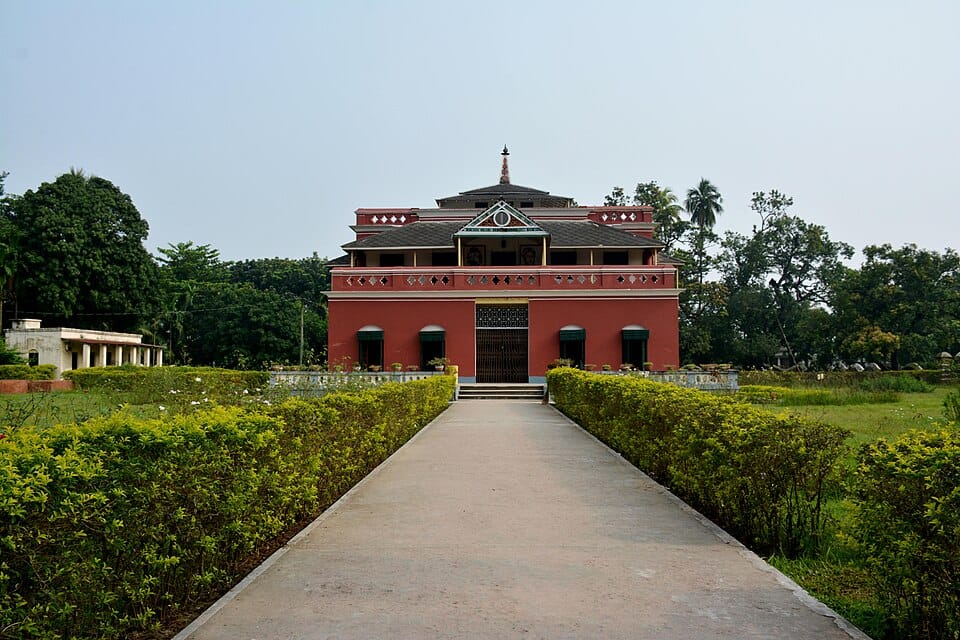
However, the Paniottys quickly discovered that paying cash to the Company did not guarantee practical possession of the estate. Durga Kumar Ray and his ancestors had established their centrality to local society through consistent patronage of a range of religious and civic institutions. They had also consistently protected ryots with money and force. The Greeks found it impossible to break the sentimental bonds that bound Chandradwip’s subjects to their previous rulers.
As Job E. Wilson notes, “the Paniottys were interested in making a series of short-term tactical manoeuvres to shore up their power, not laying up and investing to improve their estate for the long term.”
“We do not,” the Paniottys noted, “purchase the Zumeendaree for after years, that it might be of use after our deaths.” The Greek merchants tried to enlist the East India Company to take possession but failed to tackle the determined resistance of the Chandradwip prajas and their steadfast loyalty to their local Bengali Brahmin lord.
In Tagore's short story, Radha hopes to settle matters on Shashi Bhushan’s deathbed by applying the colonial logic of give and take once again. Radha admits to the dying Shashi Bhushan that it was he who had organised the looting of the chalan money (meant for the payment of dues), and he who had colluded with the ryots to destabilise the new estate owner through a relentless cycle of litigation, in order to get back Shashi Bhushan’s zamindari and return it to him. This, Radha believed, would restore the balance of power in the family and complete the process of reciprocation.
Radha had tragically bought into Braja Sundari’s and the colonial masters’ ‘unnatural’ logic of the cash nexus, ignoring his brother's assurance regarding the organicity and naturalness of such munificence–dependence.
Shashi Bhushan’s raised hand at the moment of death could mean anything. It could signify his forgiveness of Radha's infraction and Radha's attempt to introduce the colonial rationality of give and take within a different order of relations. It could signify the utter futility of trying to breach a cultural system informed by a very different set of values regarding giving and taking. It does signify the impossibility of reciprocity and the inevitability of such attempts in times of colonial modernity.
Nandini Bhattacharya is an Adjunct Professor in the Department of English at Saint Xavier's University, New Town, Kolkata. She can be reached at nandini.bhattacharya@sxuk.ac.in
Send your articles for Slow Reads to slowreads@thedailystar.net. Check out our submission guidelines for details.
Memories of Indigo Rebellion and the question of national identity
Part 1 / The forgotten art of Bengali advertising
Re-reading Nizamuddin Auliya in history and memory

Remembering Mrinal Sen: Through rain, memory, and cinema

Rethinking the origins of Bongabdo through Bengal’s ecological civilisation
The forgotten front: Rumour, resistance, and the uprising of 1857 in Eastern Bengal
The Burma we imagined in Bengali literature

The Dhaka Masterpiece Paintings

Nehrus, Mians, and the lost tradition of Hindu-Muslim political coexistence