


Will 2026 be the turning point for women farmers in Bangladesh?




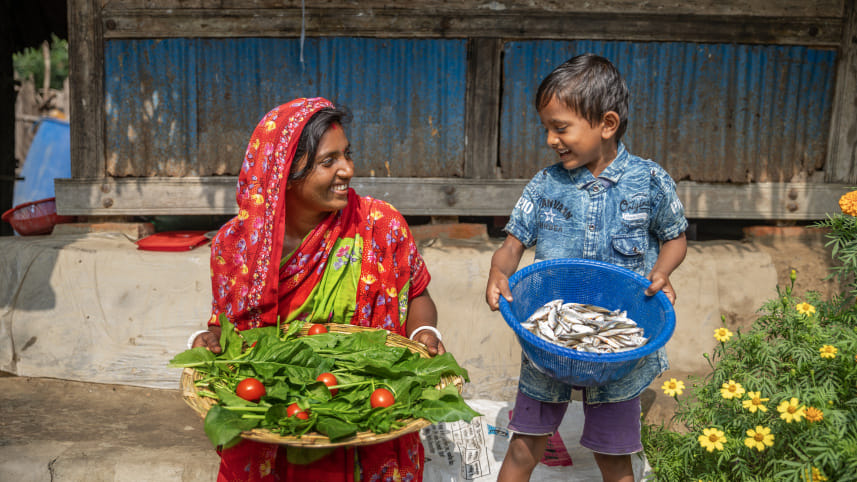
The United Nations General Assembly’s designation of 2026 as the “International Year of the Woman Farmer”is a landmark recognition of the central role women play in agriculture, food systems, and rural economies. It also confronts a long‑standing truth: while women farmers feed communities and families, safeguard ecosystems, and drive economic growth, they continue to face structural and cultural barriers that limit their full participation.
Women constitute 58 percent of the agricultural workforce in Bangladesh, yet they remain largely invisible in policy and statistics. According to the latest Labour Force Survey by the Bangladesh Bureau of Statistics (BBS), women perform key roles in crop production, livestock, fishery, and post-harvest production. In livestock alone, nearly 60 percent of smallholder cattle farms are run by women. Despite this central role in agricultural production, these contributions go largely unrecognised, limiting farming women’s access to agricultural subsidies and extension services. Beyond the fields, this marginalisation is compounded by a profound time poverty, with women spending 7.3 times as many hours as men on unpaid care and domestic work daily. This disproportionate burden of unpaid care work is not incidental but rooted in structural inequalities, including unequal power relations and limited access to resources.
 For all latest news, follow The Daily Star's Google News channel.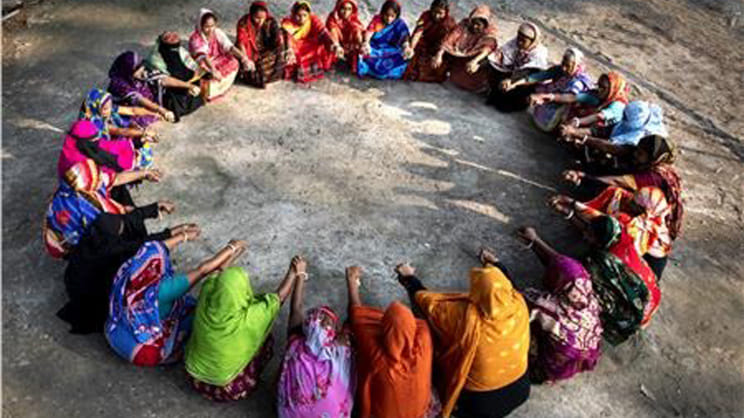
Only about 13 percent of rural women have sole or joint land ownership, compared with 70 percent of men, due to inheritance practices, legal barriers, and social norms. Even when women cultivate land, their influence over decisions about what crops to plant, how to market produce, or how to invest income remains limited. The latest data from the Food and Agriculture Organization (FAO) shows that women represent 40 percent of the global agricultural labour force but earn only $0.78 for every dollar earned by men in agrifood employment. Women tend to farm smaller plots and face disproportionate exposure to climate impacts, which constrain productivity and income. Closing gender gaps in employment, education, and income could reduce global food insecurity by more than 50 percent, benefiting millions.
A 2025 joint study on Economic Returns to Women’s Empowerment, commissioned by the International Fund for Agricultural Development (IFAD) and conducted with FAO, World Food Programme (WFP), UN Women, and the UN Resident Coordinator Office (UNRCO) found that targeted investments in women’s empowerment in rural Bangladesh generate a benefit-cost ratio of 4:1, with measurable gains not only in household income and financial inclusion but also in women’s decision-making power, mobility, and community leadership. This tells us that economic investment alone is not enough. Deliberate attention to gender norms and decision-making power is what can unlock the full benefit.
In Bangladesh, the UN system is working with the government and key partners to strengthen the economic participation of rural women, linking production to markets and finance while generating evidence to inform policy and scale successful models.
Across UN agencies, these initiatives reflect complementary efforts to advance women’s empowerment. FAO works through farmer organisations to strengthen capacity and expand women’s access to finance, markets, and business skills, enabling them to take leadership roles in agricultural value chains. IFAD delivers integrated investments in agriculture, climate-resilient infrastructure, inclusive finance, and markets, complemented by youth and women-led enterprises and nutrition initiatives, anchored in gender-transformative, community-driven approaches that strengthen women’s economic power and decision-making. WFP supports vulnerable women in transitioning from food assistance to self-reliance, supporting them in establishing and scaling income-generating enterprises that strengthen their economic independence and resilience to shocks. UN Women provides the normative and policy anchoring that connects these field-level gains to national gender equality commitments.

Where these efforts have reached women farmers, the results are measurable. In rural enterprise development interventions, incomes have increased by nearly 50 percent and enterprise profits by over 40 percent. These are not marginal gains; they reflect what women farmers can achieve when finance, training and market access come together.
This pattern holds across diverse contexts. In Kurigram and Satkhira, where climate vulnerability is pronounced, and in Cox’s Bazar, where complex humanitarian pressures persist, this integrated approach has delivered particularly striking results. There, UN agencies and partners work with smallholder farmers, mostly women, applying climate‑smart production practices and connecting farmers to local retailers and humanitarian food assistance supply chains to Rohingya refugees. As a result, nearly 40,000 farmers have received support and been linked to reliable markets, enabling their transition from subsistence food production to market-oriented production. With access to real‑time market information and skills and enterprise development support, these women are no longer seen simply as labourers; they are recognised as economic actors with the capacity to negotiate fair prices and engage in markets.
Scaling this success from regional hubs to a national standard requires more than technical training. Beyond these market-based successes, advancing equitable land rights and inheritance protections remains essential to fully realise Bangladesh’s agricultural potential. By combining anticipatory action and climate risk insurance with inclusive agricultural planning, the state can ensure that women’s contributions are not only recognised in data but safeguarded and reinforced through policy and law.
At the same time, policy reforms must be matched with effective delivery systems that enable women to access finance, extension services, and markets in practice, not just in principle. Governments, organisations, and communities must move beyond recognition to ensure that women are formally included, equitably resourced, and meaningfully represented in agricultural systems and decision-making. Strengthening their access to land, finance, extension services, and markets is not only a matter of gender justice but also a foundation for resilient food systems and sustainable development.
As the International Year of the Woman Farmer progresses, is it translating into real change such as empowering women-led groups, expanding access to climate-resilient technology, and driving policies that finally recognise women as independent farmers. For Bangladesh, this year is both a call and an opportunity. The evidence is clear, and the returns are real. The only question is whether the ambition to act will match the scale of the need.
Jiaoqun Shi is representative of Food and Agriculture Organization (FAO) in Bangladesh.
Valantine Achancho is country director and representative of International Fund for Agricultural Development (IFAD) in Bangladesh.
Simone Parchment is country director a.i. of World Food Programme (WFP) in Bangladesh.
Gitanjali Singh is representative of UN Women in Bangladesh.
Views expressed in this article are the author's own.
Follow The Daily Star Opinion on Facebook for the latest opinions, commentaries, and analyses by experts and professionals. To contribute your article or letter to The Daily Star Opinion, see our guidelines for submission.
Comments