


An uncomfortable question facing Bangladesh's universities


University leaders in Bangladesh eloquently describe a compelling vision of what their universities should aspire to be. They speak of advancing knowledge, developing human potential, and serving society through teaching, research, innovation, and public engagement. They are enthusiastic about nurturing critical thinkers, ethical leaders, and informed citizens capable of addressing complex societal challenges. However, vision alone does not create great universities; people do. The success of any university ultimately rests on the quality of its academics. This raises an uncomfortable but unavoidable question: where are the academics who will fulfil this mission?
For decades, many of the country’s brightest young people have sought educational and related opportunities abroad: brain drain. Among those who remain, the most talented often gravitate towards the civil service, multinational corporations, military service, banking, entrepreneurship, or family businesses. These careers generally offer greater prestige, better remuneration, clearer career trajectories, and stronger rewards for excellence than academic life. On the other hand, teaching, at the university level, is often regarded not as a destination career but as a fallback option—or a temporary holding pattern until a better opportunity presents itself. The commitment of these individuals often debilitates higher education.

It is not that Bangladesh lacks qualified and dedicated university teachers. Many work diligently under challenging circumstances. The deeper problem is that the country’s academic talent pool and pipeline has steadily weakened. Universities are simply not attracting enough of the nation’s strongest and most capable minds. The consequences are becoming visible in longitudinal data.
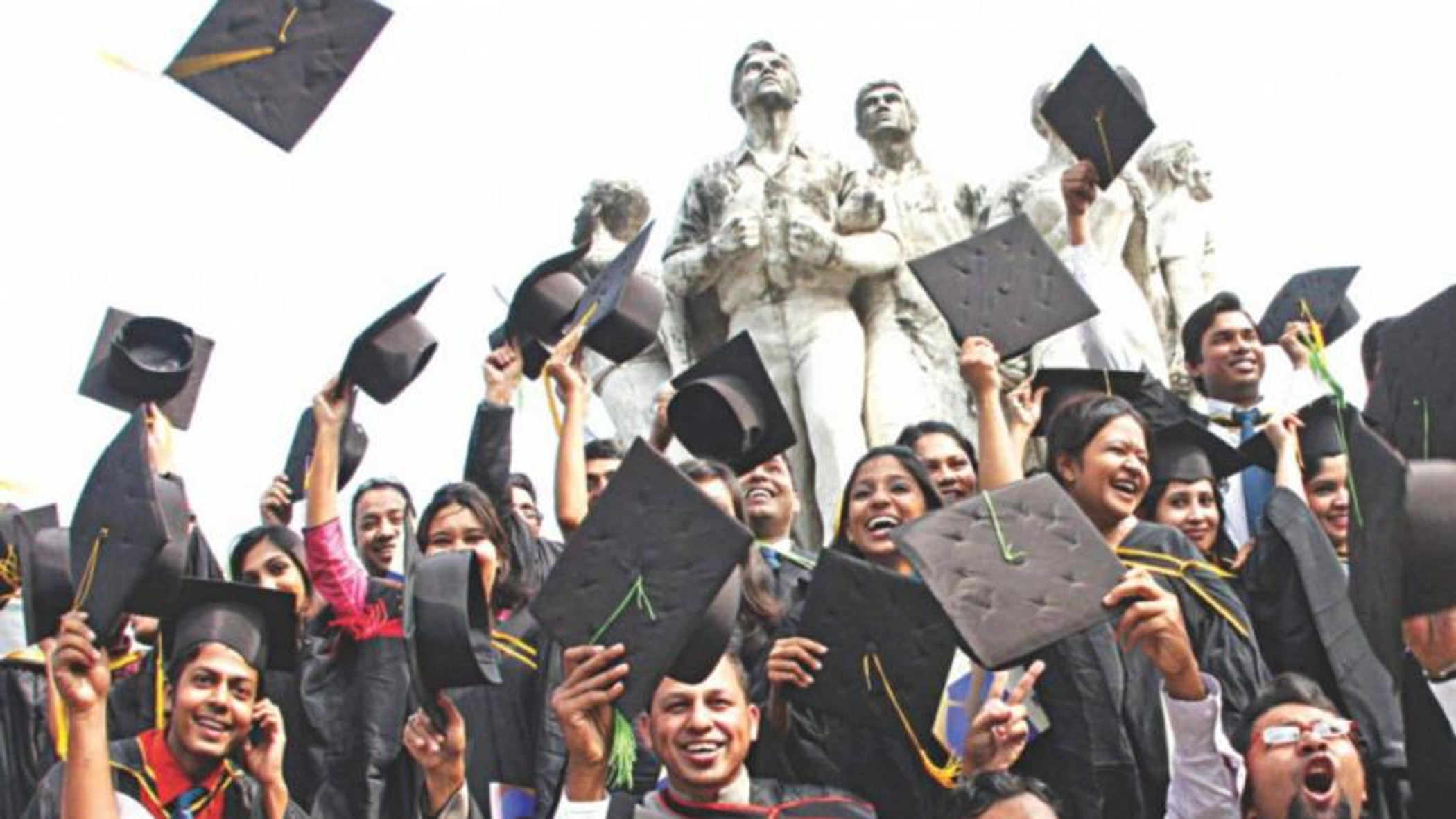
In a study that I have been pursuing for over two decades, involving students from both public and private universities, one finding stood out: attributes traditionally associated with good teaching—making coursework interesting, demonstrating competence, showing concern for students, communicating effectively, and inspiring learning—have become progressively less influential in shaping students’ overall satisfaction with their university experience. This is a deeply troubling signal.
At first glance, one might conclude that university students have changed, and they have. But a more compelling explanation is that the locus of value creation in higher education has shifted. Universities increasingly prioritise enrolment growth, student retention, fee generation, pre-university programmes, higher pass rates, grade inflation, institutional rankings, and campus embellishment over academic excellence. Degrees are awarded by the thousands, yet persistent weaknesses in formative and summative assessment leave open the question of whether meaningful learning has actually occurred. These are unmistakable signs of a deteriorating academic ecosystem.
That deterioration has been compounded by weaknesses in faculty recruitment and promotion. Too often, appointments have been influenced by political affiliation and other non-merit considerations, displacing academic excellence as the principal criterion for recruitment. Promotion systems, likewise, reward seniority, conformity, and loyalty more than research, teaching innovation, meaningful service, knowledge transfer, or international scholarship. Under such conditions, universities cannot consistently attract or retain the country’s brightest minds.

The roots of the crisis run even deeper. An education system dominated by coaching and rote learning rather than intellectual inquiry produces too few exceptional students. Universities must recruit from this diminished talent pool, making it increasingly difficult to identify and develop the next generation of outstanding academics. The result is a self-perpetuating downward spiral in academic quality.
As the academic talent pool weakens, the classroom inevitably loses much of its transformative power. Disgruntled students increasingly turn to the internet, coaching centres, peers, and artificial intelligence for learning that once came primarily from inspiring teachers.
Bangladesh’s higher education system undoubtedly faces challenges of funding, curriculum, infrastructure, technology, governance, rankings, and discipline. Corruption and moral transgressions are no longer rare. But at its core, it faces a far more fundamental challenge: a steadily eroding academic talent pool.
No country has built world-class universities without first making academic careers attractive to its brightest minds. Bangladesh must do the same. Recruitment should be rigorously merit-based. Doctoral training should identify and nurture exceptional young scholars. Promotion should reward excellence in teaching, research, and stakeholder engagement, rather than longevity, loyalty, or patronage.
It is also important to create an ecosystem of academic freedom and intellectual independence, offer competitive compensation and benefits, provide research support and appropriate infrastructure, ensure transparent and professional governance, reduce bureaucratic burdens, give recognition and prestige, guarantee career mobility and growth, and build a sense of national purpose within the universities. These elements are essential for attracting top talent.
Employers are already experiencing the consequences. Survey after survey highlights concerns about graduates’ communication skills, analytical ability, problem-solving capacity, and workplace readiness. Increasingly, organisations are relying less on university grades and more on aptitude tests, internships, and practical assessments to identify talent. Some recruit almost exclusively from a handful of institutions, reflecting their declining confidence in the broader higher education system.
Ultimately, it all comes back to one major issue: the quality of those who teach in the universities. Bangladesh’s higher education system can never rise above the quality of its academic talent pool. To expect world-class universities from a system that fails to consistently attract its best and brightest minds is illusory. Until the country rebuilds its academic talent pool and restores a rigorous merit-based pipeline, any effort to transform higher education will remain little more than cosmetic change.
This article draws upon the author’s research over two decades on student satisfaction with higher education.
Dr Syed Saad Andaleeb is distinguished professor emeritus at Pennsylvania State University in the US and former vice-chancellor at BRAC University.
Views expressed in this article are the author's own.
Follow The Daily Star Opinion on Facebook for the latest opinions, commentaries, and analyses by experts and professionals. To contribute your article or letter to The Daily Star Opinion, see our guidelines for submission.
 For all latest news, follow The Daily Star's Google News channel.
Comments