


The real cost of an absent information commission

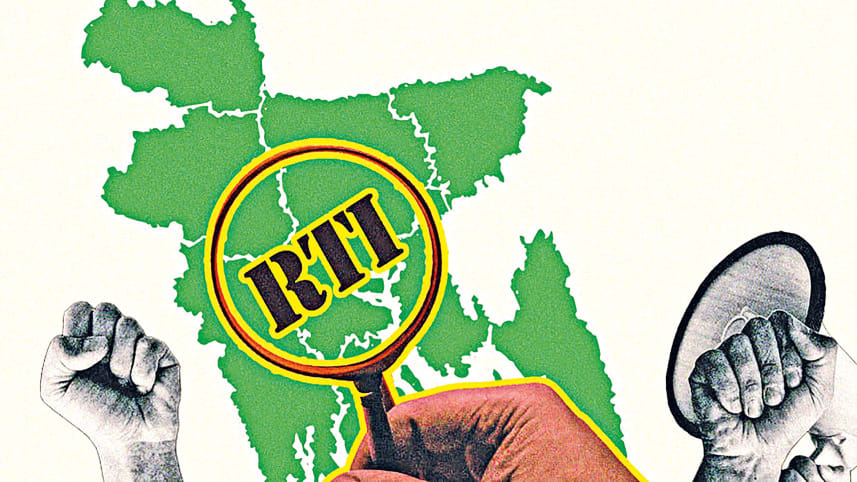
It may sound like a broken gramophone record for us to continue lamenting the absence of the chief information commissioner and two information commissioners in Bangladesh since September 2024, following the political transition after the July uprising. We make no apology for doing so. Their absence has rendered the Right to Information (RTI) Act, 2009 largely ineffective, depriving citizens of one of the most important legal instruments for promoting transparency and accountability. We persist because we believe the RTI Act has enormous potential to strengthen democracy by enabling citizens to play a meaningful role in promoting transparent, accountable and responsive governance. That potential makes the present vacancies all the more troubling.
Almost two years have passed since the posts became vacant. Neither the interim government, which remained in office for about 18 months, nor the government popularly elected nearly five months ago has completed the appointments. Reports suggest that both governments have, at different times, initiated the process. The current government reportedly formed a five-member selection committee on July 9 to appoint the chief information commissioner and information commissioners. Still, we must wonder why it has taken so long to take this step to fill the positions that are indispensable to implementing the RTI Act.Does this reflect a diminished commitment to transparency and accountability, or merely administrative inertia? Whatever the explanation may be, the consequence is the same: a law enacted to empower citizens has been left without the institutional leadership necessary to make it work. The people have the right to know why, because the consequences are serious, though not immediately visible.

Unlike a power outage or disruption to public transport, the weakening of an oversight institution produces no instant crisis. Instead, transparency gradually erodes, accountability weakens, and citizens lose an effective means of seeking redress. To appreciate what is at stake, it’s worth recalling what the RTI Act and the Information Commission, although often very weak, have already achieved. They will also help us understand what to expect.
One of the best known examples is the BGMEA Tower in Dhaka’s Hatirjheel area. While many remember the building’s eventual demolition, few know that RTI played a crucial role. The Bangladesh Environmental Lawyers Association (BELA) sought information from Rajdhani Unnayan Kartripakkha (Rajuk) about construction approvals. When the information was withheld, the Information Commission ordered its disclosure. The released documents exposed irregularities and strengthened efforts to protect one of the capital’s most valuable wetlands. The case demonstrated that public authorities can be required to explain their decisions and that citizens have a lawful means of demanding accountability.
RTI has proven equally valuable in addressing local environmental concerns. In Nilphamari, residents concerned about pollution of the Burikhora River allegedly caused by a nearby ceramic tile factory submitted RTI applications to the Department of Environment. The applications prompted inspections, warning notices, and measures to ensure that the factory’s effluent treatment plant was functioning properly. Follow-up RTI requests enabled citizens to monitor implementation, illustrating how access to information can encourage timely administrative action before environmental damage becomes irreversible.
The RTI law’s impact extends well beyond environmental protection. At Nilphamari general hospital, RTI applications seeking information on patient privacy and staffing led to the installation of privacy screens for women undergoing ultrasound examinations and to greater transparency regarding service responsibilities, including gender sensitivity. At Panchagarh railway station, an RTI application prompted the restoration of a long-defunct drinking water facility within weeks. In the same district, citizens investigating the distribution of agricultural inputs in Debiganj upazila insisted that officials provide information through the legal procedures prescribed by the law, reinforcing the principle that access to public information is a legal right, not an administrative favour.
These examples may appear modest individually, but together they demonstrate the transformative power of transparency. RTI has improved public services, strengthened environmental governance, and enabled citizens to participate directly in improving local administration. It has also been used to examine school management, development projects, local government expenditure, public resource allocation, and the delivery of essential services. Information obtained through the RTI Act has enabled communities to identify shortcomings and press for corrective action. Good governance is built not only through major reforms but also through thousands of everyday acts of accountability.
This is especially important in Bangladesh, where ordinary citizens often have limited opportunities to influence public institutions. RTI gives them a peaceful and lawful means of engagement. It enables farmers, parents, patients, and local communities to question public authorities and demand better services. Many young Bangladeshis aspire to build stronger public institutions; RTI offers one of the most practical ways of doing so by encouraging constructive citizen participation rather than confrontation.
However, the system functions only when there is an independent institution capable of enforcing the law. When public authorities fail to disclose information, citizens need an impartial body to hear appeals, investigate complaints, and order compliance. The central ask is clear: appoint the Information Commission so that it can do this work. An RTI law without a functioning Information Commission is like a court system without judges. Rights may remain on paper, but citizens are left without an effective remedy. Every day without commissioners weakens the implementation of the law. Appeals remain unresolved, complaints cannot be adjudicated, and public authorities receive the unfortunate message that non-compliance may carry no consequences.
The vacancies at the Information Commission are more than empty chairs. They represent a growing silence in which citizens should be able to seek answers, challenge arbitrary decisions, and hold public institutions accountable. Restoring the Information Commission is therefore not merely an administrative task but an urgent step towards reaffirming Bangladesh’s commitment to transparency, accountability, and democratic governance.
Dr Shamsul Bari and Ruhi Naz are chairman and assistant director (RTI), respectively, at Research Initiatives, Bangladesh (RIB). They can be reached at rib@citech-bd.com
Views expressed in this article are the author's own.
Follow The Daily Star Opinion on Facebook for the latest opinions, commentaries, and analyses by experts and professionals. To contribute your article or letter to The Daily Star Opinion, see our guidelines for submission.
 For all latest news, follow The Daily Star's Google News channel.



Comments