


Ad-din tragedy shows why every hospital needs an air quality alarm

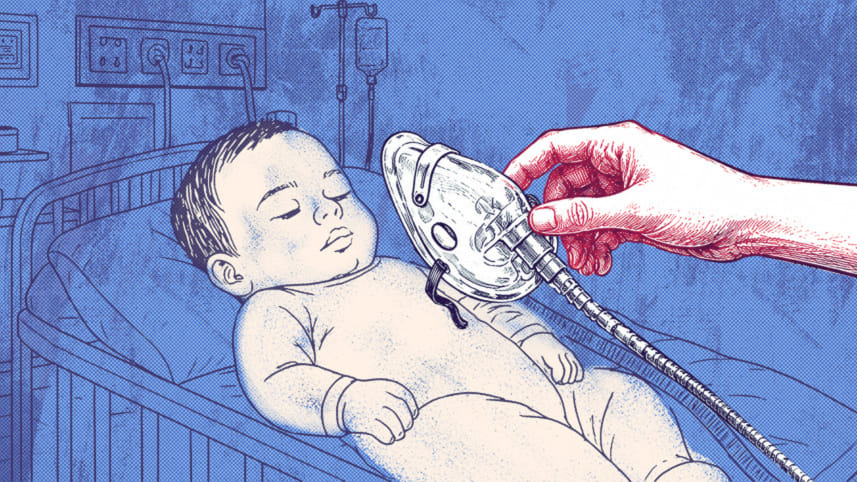
On the morning of May 27, 2026, six newborns died within hours of each other in the post-operative ward of Ad-din Medical College Hospital in Dhaka’s Moghbazar. The infants, just one to three days old, had been resting beside their mothers when a guardian first raised alarm that the babies felt unusually cold. By the time the staff members responded, it was unfortunately, too late.
A government probe found negligence and “gross dereliction of duty” by the nurses. Preliminary findings pointed to the ward’s air conditioning being switched off with no one tracking how the indoor environment changed afterwards. The fallout has been severe: the hospital’s licence was revoked, its executive director resigned, and a criminal case was filed. Yet more than three weeks on, hospital leadership admitted it could not say with certainty what killed the six children, because no continuous environmental data existed for that ward and no autopsy was performed.
 For all latest news, follow The Daily Star's Google News channel.
 That last detail is the real scandal. In a unit housing some of the most fragile patients in the entire hospital, the temperature and air quality of the room were neither controlled nor monitored, with nothing flagging the danger in real time. It was a failure of basic instrumentation, not of medical science.
In early 2021, ICU patients at several Egyptian hospitals died after oxygen supplies ran out, with no automated early-warning system to alert staff before the tanks emptied, a doctor’s verbal warning to administration having reportedly gone unheeded for over an hour. In 2017, India’s Gorakhpur tragedy became a byword for similar failure: dozens of children died at a government hospital after the oxygen supply was disrupted, again because the system depended on someone noticing and acting in time rather than on a sensor that would not get distracted or overruled.
Different countries, different decades, the same underlying gap: critical-care environments where temperature, oxygen levels, humidity, or air quality can mean the difference between life and death are still, in too many hospitals, managed by human vigilance alone. By contrast, in the US, the National Fire Protection Association’s Code 99 requires every hospital’s oxygen, medical air, and vacuum lines to carry master and area alarm panels that automatically trigger when pressure deviates by as little as 20 percent from normal, placed where staff keep continuous watch. Britain’s National Health Service runs a near-identical regime, requiring certified alarm panels on every medical gas pipeline and a standing committee to review gas-related incidents.
So, Bangladesh would not be inventing a new safety culture here; it would be catching up to one. The fix is neither expensive nor complicated. Continuous environmental monitors that track temperature, humidity, carbon dioxide, particulate matter, and oxygen concentration, paired with an audible and visual alarm when readings drift outside a safe range, are standard equipment in many ICUs and NICUs in developed countries. They are built from commodity sensors, microcontrollers, and basic alerting software. None of this requires imported, proprietary hardware. Bangladesh has a growing base of electronics assemblers and engineering graduates who already build similar Internet of Things (IoT) devices for agriculture and other industries; adapting that capability to a hospital-grade monitor with a tamper-resistant alarm is well within domestic reach, especially with input from biomedical engineering departments at universities such as Bangladesh University of Engineering and Technology (BUET).
What is missing, then, is not technical capacity but regulatory will. There is currently no requirement that Bangladeshi hospitals install continuous, automated environmental monitoring in high-care and enclosed-care areas such as NICUs, ICUs, post-operative wards, and isolation rooms. Where such equipment exists, it is often there because an individual hospital chose to invest in it, not because the Directorate General of Health Services (DGHS) requires it as a condition of licensing.
A credible policy response should include some elements. First, every ICU, NICU, post-operative ward, or other enclosed high-care unit must have certified monitors covering temperature, humidity, and air quality, including oxygen concentration where gas is piped. Second, devices must sound and flash an alert, ideally also paging a duty nurse’s phone, the moment readings cross a safe threshold. A reading nobody is required to watch is not a safeguard. Third, continuous data logs give investigators objective evidence after an adverse outcome, instead of the conflicting accounts seen at Ad-din.
Fourth, like fire extinguishers, these devices need scheduled checks, with proof of calibration required for licence renewal. Fifth, since the Ad-din incident reportedly began with someone switching off the AC, any system controlling the ward climate should require authorisation and log recording. Sixth, fast-tracked approval and tax relief for domestically made monitors would cut costs for smaller hospitals and build a local safety-technology industry.
None of this is about distrusting nurses or doctors, who are themselves overstretched in many of these wards. It is about not asking exhausted human beings to be the only line of defence against an entirely preventable, measurable hazard. Bangladesh has seen this cycle before: a tragedy, a public outcry, an investigation, a licence revoked, and then, gradually, the news cycle moves on. The danger is that the Ad-din case becomes another entry in that pattern rather than the trigger for a permanent rule change.
The six newborns are gone, and no regulation will bring them back. But their deaths can still serve a purpose if they force a simple, durable change: no enclosed high-care unit in any hospital, public or private, should operate without a device watching the air the patients breathe, ready to sound an alarm long before any guardian has to notice their keen being cold. That is a modest technical fix for what is, ultimately, a question of how much we are willing to invest in protecting the country’s most vulnerable patients.
Dr Sayem Mohammad is associate professor of medicine at Holy Family Red Crescent Medical College and chief organiser of Stakeholder of Bangladesh.
Views expressed in this article are the author's own.
Follow The Daily Star Opinion on Facebook for the latest opinions, commentaries, and analyses by experts and professionals. To contribute your article or letter to The Daily Star Opinion, see our guidelines for submission.


Comments