


Reassess the future of Khulna's jute mills
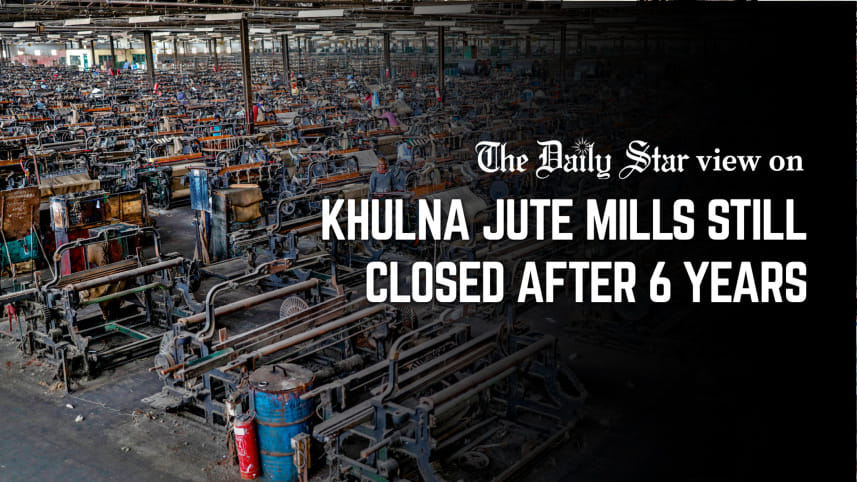
In 2020, the government shut down all 25 state-owned jute mills under the Bangladesh Jute Mills Corporation (BJMC), citing heavy losses and hefty maintenance costs. Some 14 jute mills have since been leased out for operation, and nine of them have already resumed production, according to the textiles and jute minister. However, six years on, the mills in Khulna have not seen much luck.
Initially, after the shutdown, the government promised to modernise the mills and reopen them in three months; however, neither that promise nor the workers’ hope of getting their jobs back materialised. According to a recent report published in this daily, the government has gradually started to lease out the factories in Khulna to private companies. BJMC says six of Khulna’s seven state-owned mills have been selected for leasing, while leasing for four mills has already been completed. Crescent Jute Mills, once the country’s largest state-owned factory employing around 8,318 workers, was recently leased to a firm that, interestingly, is not obligated to produce jute products.

These developments raise a few questions. If leasing was always on the table, why was the authority not transparent about this from the beginning? And if it was a result of an evolving decision, why haven’t there been enough safeguards for the workers whose labour sustained this industry for years? And finally, why have the lease agreements reportedly not required operators to continue jute production?
Jute has historically been a source of pride for Bangladesh, but due to the increased popularity for artificial fibres and low incentives for farmers to grow the crop, jute production decreased over the years. However, with the rising momentum for sustainable alternatives to plastic packaging around the world, appreciation for this crop increased, which one hoped would prompt its revival in the country. Against this backdrop, the closure of the state-owned jute mills and the decision to discontinue jute production make little sense, especially at a time when Bangladesh itself needs to take transitioning away from plastic more seriously. We regularly witness the adverse effects of plastic use, perhaps most recently made evident in clogged drainage systems that have worsened urban waterlogging, leaving cities inundated after heavy rainfall and putting lives and livelihoods at risk.
As for the mills, experts have proposed reopening the factories through government-to-government partnerships or restructuring them as limited companies jointly owned and operated by workers and other stakeholders. We strongly urge the government to pay attention and reassess the future of the mills, prioritising labour rights, and community wellbeing.
 For all latest news, follow The Daily Star's Google News channel.


Comments