


Protect small traders from extortion
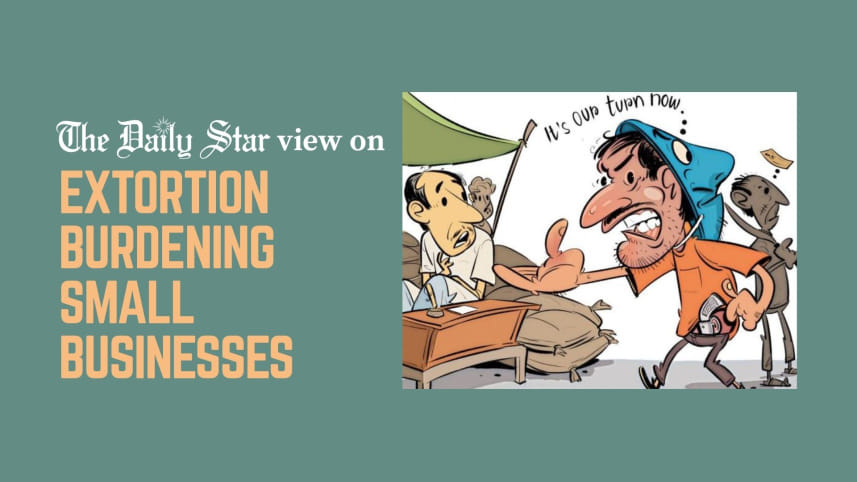
We are deeply concerned that extortion continues to plague small traders in Dhaka despite repeated government promises to end it. A recent police intelligence report has identified around 1,200 extortionists operating around the capital city, exposing how political patronage and, in some cases, police protection continue to sustain these criminal networks. While the ongoing police crackdown and the arrest of 759 people since May deserve recognition, senior police officials themselves admit that only a handful of those identified in the report have been arrested, most of them lower-level operatives. This raises an important question: where are the masterminds behind these extortion rackets?
Per the police intelligence report, thousands of roadside vendors, shopkeepers, and small traders are forced to pay regular extortion money simply to keep their businesses running. A scrap metal trader in Karwan Bazar, for example, now pays Tk 8,000 per month to local musclemen—double what he paid before the political changeover. A roadside tea stall owner on Eskaton Garden Road pays daily "tolls" regardless of how much he earns. For many, refusing to pay means losing their livelihoods altogether.

Clearly, the political transition in 2024 has done little to change the reality for thousands of small traders. Instead, the business of extortion appears to have simply changed hands. According to the report, 197 identified extortionists have explicit political affiliations, 181 of whom are directly linked to the BNP or its affiliated bodies. Police also identified 329 individuals providing protection to extortionists, including 214 from the ruling party. Equally alarming is the report's documentation of police involvement in 35 extortion cases. Whether through political patronage or institutional failure, the result is the same: criminal networks continue to operate with impunity. The recent allegations of extortion, forced evictions, and land-grabbing in Kallyanpur Porabosti in Dhaka point to the same disturbing trend.
This cannot continue. Small businesses are the backbone of the urban informal economy and support thousands of families. If traders are forced to hand over a significant share of their income to extortionists, how can they sustain their businesses or support their families? The government must take decisive action to dismantle this extortion business. Arresting only lower-level operatives will not solve the problem if those who operate these networks remain free. As the ruling party, the BNP must ensure that no one can use political affiliation as a shield for extortion. Law enforcement agencies must identify and arrest the masterminds with the same determination they have shown in pursuing lower-level operatives. Only by breaking these organised networks apart can this long-standing menace be ended once and for all.
 For all latest news, follow The Daily Star's Google News channel.



Comments